
Jeep Compass, the plug-in hybrid tailor-made for car lists
Based on the StLA Medium architecture, it features a 225 cv PHEV powertrain with a range of around 100 km in 100% electric mode

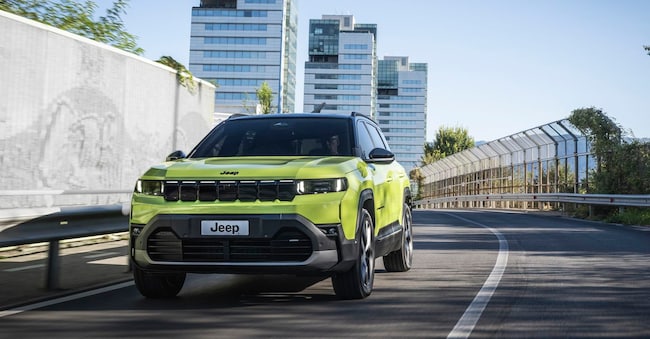
From a weekend away, venturing off the tarmac, to a quiet cabin where you can make that first call on Monday morning whilst on your way to the office. The third-generation Jeep Compass is even more versatile than before, thanks to its larger dimensions, premium on-board features and, above all, a comprehensive range of engines. Because, following the phasing out of diesel, a large proportion of customers – particularly business users – were waiting for a version capable of combining long-distance travel with low running costs.
The solution came in the form of the plug-in e-hybrid version, powered by a 1.6-litre turbocharged four-cylinder PHEV petrol engine delivering a total of 225 cavalli, with front-wheel drive, paired with an 18 kWh battery.
Manufactured at the Melfi plant in Italia, it is based on Stellantis’ STLA Medium platform, which is used by a wide range of models, including the Peugeot 3008 and Citroën C5 Aircross. This foundation sets the stage for its multi-energy range, featuring 1.2-litre hybrid, plug-in hybrid and electric powertrains with either two- or four-wheel drive. Characterised by bold styling with strong references to the Jeep brand, it is longer, measuring 4.55 metres compared to the previous model’s 4.40 metres.
Despite its front-wheel drive and being designed primarily for on-road use, it also performs well off-road thanks to a ground clearance of up to 200 mm, an approach angle of 20°, a ramp angle of 15°, a departure angle of 26° and a wading depth of up to 470 mm. These specifications make it an attractive option for those seeking fleet vehicles that are also suitable for light off-road use on low-grip surfaces.
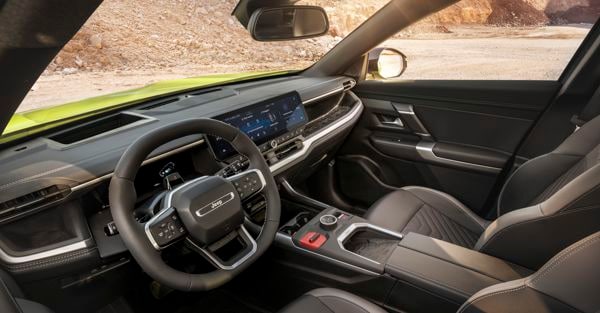
Stepping inside, we find a well-organised and thoughtfully designed cabin, featuring a 10-inch digital instrument cluster and a large, 16-inch horizontal central screen from which to control the connected infotainment system, compatible with CarPlay and Android Auto. The Selec-Terrain system is situated on the centre console, allowing you to select different driving modes to ensure optimum grip on any surface.

