
Jerry Inzerillo: 'In Diriyah we innovate luxury shopping in the heart of the desert'

3' min read
3' min read
Forty luxury hotels, 30,000 residences, a thousand shops and restaurants, a 27-hole golf course designed by Greg Norman, an opera house, and a museum dedicated to digital arts. In the middle of the Saudi desert, 15 minutes from the centre of the capital Riyadh, the Diriyah project is one of the latest in the ambitious Vision 2030 plan that, in the year Saudi Arabia will host the Expo, aims to evolve the kingdom's economy with the ambition of becoming one of the most innovative and sustainable countries on the planet. A formula that also embraces the new spaces dedicated to hospitality and luxury retail and that among the many brands has also attracted Giorgio Armani: After announcing his first hotel in Diriyah three years ago, the third in the world, the 15 residences designed by the Italian designer were also presented at the recent Mipim in Cannes, about to be put up for sale and ready to replicate the success of the other 'signature' projects (designed by Ritz-Carlton, Aman, Oberoi, among others) "which are already sold out, with revenues of about 4 billion dollars", explains Jerry Inzerillo. After a long career in the luxury hotel industry, in 2018 Inzerillo was chosen by Saudi Prince Mohammed Bin Salman to lead Diriyah Gate Development Authority, the company in charge of developing the area, which, once completed, will be expanded as Beverly Hills, thanks to $64 billion in funding.
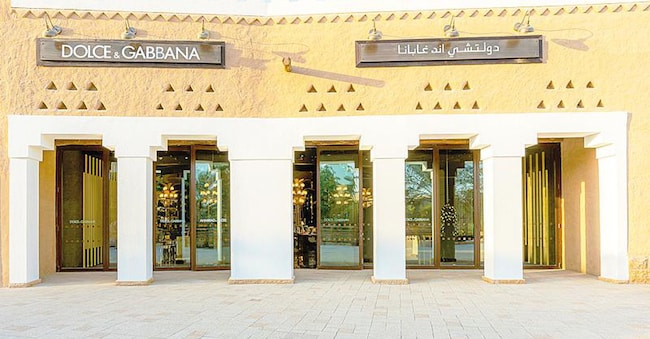
Armani follows Dolce&Gabbana, who in December opened their first 'brand centre'in Saudi Arabia in Diriyah. What makes you attractive?
Our formula is very different, I would say disruptive, compared to the mall-based formula that still predominates in the Gulf countries. We will not even have a mall of the kind we have known to date. We offer an experience much closer to what one can have in a European city like Florence. The architecture echoes the traditional Najdi architecture in a contemporary way, the exterior of the buildings is uniform, the walls have the same golden earth colour, recently codified by Pantone in 'Diriyah Tan'. It is a tribute to the country's culture and history: the Saudi dynasty had its first capital in the nearby site of At Turaif, now a Unesco heritage site. Shops of major global brands will be mixed with workshops of local artisans, among mosques, Cafés and museums, recreating the experience of walking through an authentic city.
Summer will soon arrive, however, and walking outside will be very difficult. Don't you fear the effects of global warming on your project?
Sure, and the Saudi government is investing heavily in finding solutions: today Saudi Arabia is the largest producer and developer of blue and green hydrogen (alternative fuels, ndr) and desalinated water in the world, it has spent trillions of dollars on wind and solar energy. In Diriyah, we have already planted 6.5 million trees and, thanks to smart city technologies, we know exactly how much water is needed to irrigate them. We are building 60,000 underground parking spaces; all the traffic will pass under the ground. Above ground by 2030 there will only be electric cars. The streets will be very narrow, so shady and cool, with tents and cooling systems even on roofs and pavements. Sustainability, on the other hand, is also an increasingly important issue for luxury consumers.


