
Jet fuel: Namibia is also among the alternatives to the Strait of Hormuz for supplying Europe
Since the conflict began, the Dangote refinery has increased its exports to the EU by 40,000 barrels a day. Stocks in Europe are below the five-year average.

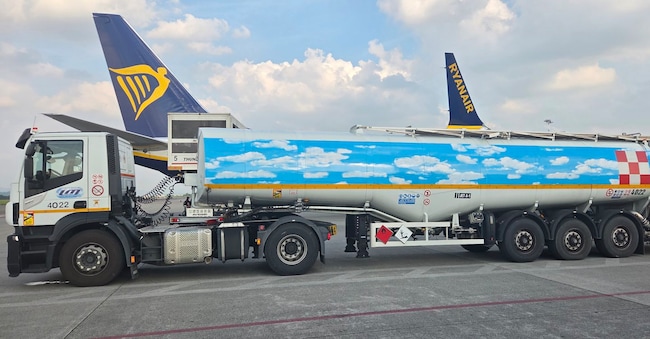
The de facto closure of the Strait of Hormuz has reshaped the balance of the European jet fuel market. From 28 February, the Dangote refinery in Nigeria increased production and channelled around 40,000 additional barrels per day to Europe compared with the same period in 2025, helping to offset the loss of supplies from the Middle East. European imports of aviation fuel thus rose from around 612,000 barrels per day in January 2026 to 750,000 in June, remaining at similar levels in July. The new supplies are primarily coming from the United States and Nigeria, whereas before the crisis around 20 per cent of European imports came from the Middle East via the Strait of Hormuz.
According to Kpler, before the crisis, Europe imported a total of 550,000–600,000 barrels of jet fuel per day, of which around 300,000 came from the Middle East. The closure of the strait has therefore deprived the European market of almost 300,000 barrels per day. In April, the US and Nigeria accounted for almost 75 per cent of European imports, amounting to around 375,000 barrels per day. The United States was able to rely on its extensive refining capacity: US jet fuel exports reached around 443,000 barrels per day in August, just below the record of 455,000 set in May. Meanwhile, the new capacity at the Dangote refinery has transformed Nigeria into an increasingly important supplier to Europe.
Replacing Middle Eastern supplies, however, has not been without its challenges. Europe, Asia and other buyers have had to compete for the available supplies, whilst European refineries have had to decide which products to prioritise. The result is an apparent paradox: Europe avoided an acute jet fuel crisis in the height of summer, but has shown growing vulnerability when it comes to diesel, with imports falling from 1.97 million barrels a day in January to 1.56 million in July. By mid-August, the price of European diesel had thus exceeded that of jet fuel for the first time in over a year.
The safety margin for aviation fuel remains low, however. In July, European stocks were below 30 days’ consumption, and in August, stocks at the ARA hub were around 39 per cent below the five-year average. The question now is how long the system can hold out if the Strait of Hormuz remains closed. Jet fuel is trading at over $1,300 per tonne, whilst forward prices remain higher than a month ago and at April’s levels. For airlines, this means higher procurement costs and increasing pressure on margins. Should the situation persist, the response could come from the supply side: capacity cuts during the winter, when demand for air travel is traditionally weaker.
© ALL RIGHTS RESERVED


