Jewellery and more: hunting for bargains at auction amongst lots worth millions
Amidst the Romanovs’ sapphires and multi-carat diamonds, even in a world of ultra-luxury jewellery and gemstones, you can still unearth a bargain

Key points
Twice a year, in May and November, on the shores of Lake Geneva, the titans of sustainable luxury compete at auction with carats, historic jewellery houses and royal – if not legendary – provenance. As always, it is the unattainable pieces that dominate the headlines and social media posts: the multi-carat pink or blue diamond, the Tsarina’s tiara, Marie Antoinette’s earrings or the film star’s jewel: auction results totalling so many millions (of francs, dollars or euros) that it makes no difference whether the figure is 5, 10, 15 or even more.
From ‘Bugari Pink’ to the Saint Christopher prayer card
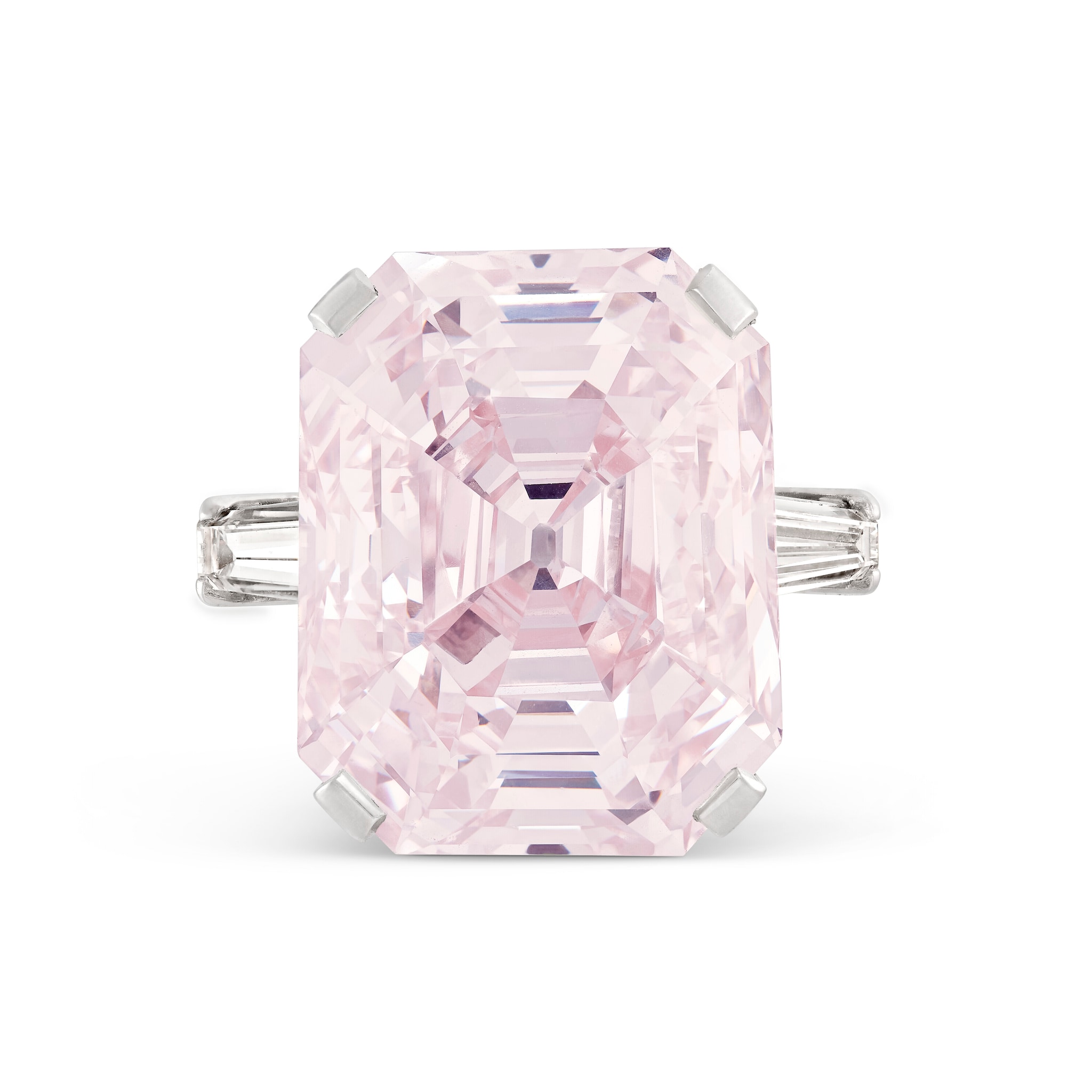
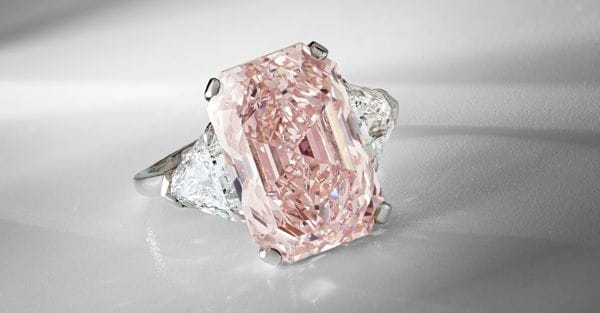
‘The Bulgari Pink’, a stunning 24-carat fancy intense pink emerald-cut diamond set in a platinum ring dating from the 1950s, is expected to fetch between 10 and 15 million francs. Sourced from the legendary Golconda mines in India – which have been exhausted for two centuries now – it is the star lot of Christie’s ‘Magnificent Jewels’ auction, scheduled for 10 November at the Four Seasons Hotel des Bergues. “Diamonds mined at Golconda have characteristics that set them apart from all others, being particularly pure and transparent,” says the auction house’s specialist Louisa Haniel-Jackson.
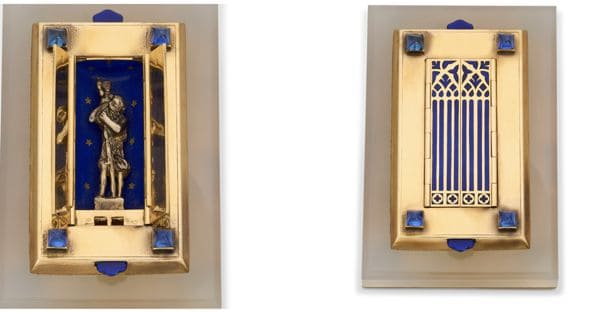
As part of the same auction, Christie’s will present ‘Exceptional Jewels & Objects of Elegance: A Connoisseur’s Collection – Part I’, an exceptional collection of nearly 300 pieces of jewellery, assembled over almost four decades of research. The highlight of the collection is the 14.63-carat orange-pink diamond ring by the London jeweller David Morris (1936) (estimated at 1.6–2.6 million dollars), but it is the sub-collection of precious gold boxes and toiletries cases that will appeal to the collector’s taste, ranging from Cartier’s Art Deco enamelled cases in Japanese and Chinese styles to small caskets, snuff boxes and pill boxes dating from the 18th and 19th centuries, crafted in gold and enamel. The lowest estimates for this group of lots start at 7,000 francs, the highest at 120,000. There is also (by Cartier, 1930s) a small devotional plaque for a car dashboard, dedicated to Saint Christopher, the patron saint of travellers – apparently a very common motif as motor vehicles began to take over the world. It starts at 2,500 francs.
The opulence of the Romanovs and the legend of Nureyev
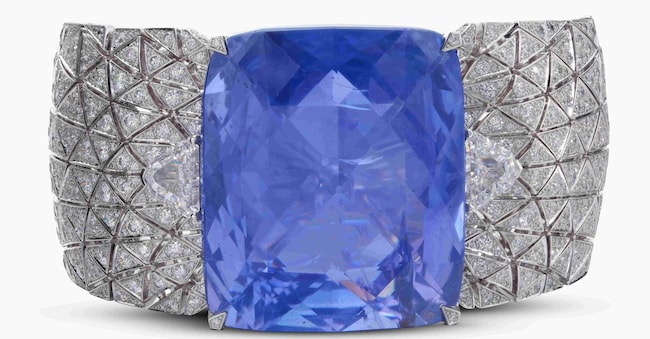
Sotheby’s will dedicate its flagship auction to jewellery of high noble provenance: the star lot of its ‘Royal and Noble Jewels’ auction on 11 November is the enormous ‘Romanov Sapphire’, weighing 197.80 carats and originating from Ceylon. The stone, which has not been heat-treated, was once set by Fabergé for the Empress Dowager Maria Feodorovna. Having survived the dispersal of the tsars’ treasure, in 2015 Cartier set it into the bracelet that Sotheby’s is presenting in Geneva with an estimate of 850,000–1.7 million francs.
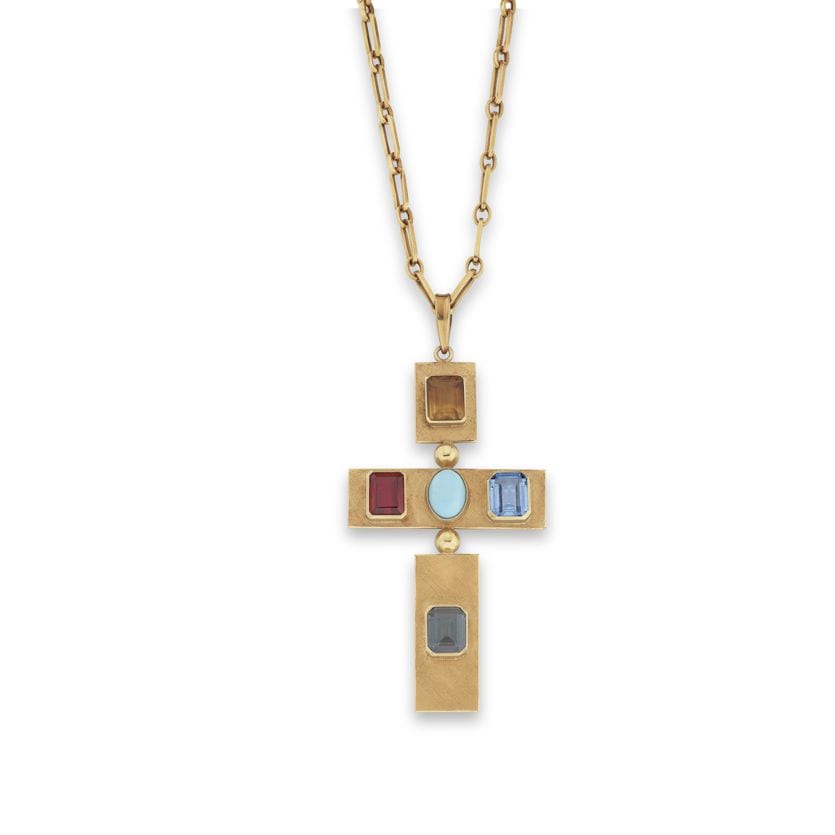
Phillips, too, through its Collections & Provenance section, provides a platform for jewellery of exceptional provenance. During its ‘Geneva Jewels Auction: VII’ on 9 November, for example, Benoît Repellin will be auctioning a pearl and diamond necklace that belonged to Queen Elizabeth II’s grandmother, Mary of Teck (125,000–180,000 francs) and a satin-finished gold cross pendant set with gemstones (a step-cut citrine, synthetic ruby, blue and green synthetic spinels, and light blue cabochon details) and an open-link chain belonging to the legendary Soviet-born, Austrian-naturalised dancer and choreographer Rudolf Nureyev (1938–1993).
At jewellery auctions, millionaires on the hunt for bargains
So is this a world beyond the reach of enthusiasts with less cash to spare? Not at all. Nureyev’s jewel, for example, has an estimate starting at 1,700–2,600 francs (1,800–2,800 euros). And the major auction houses themselves shrewdly set aside some of the lots – including those from stellar private collections – for online sales, which are generally more accessible (for auction houses, this is the most effective way to attract and cultivate new collectors). These auctions often accompany major live events: Christie’s, for example, is holding the second part of the aforementioned ‘Exceptional Jewels & Objects of Elegance: A Connoisseur’s Collection’ from 5 to 17 November, with numerous lots starting at 1,000 Swiss francs, such as a striking Italian white gold ring, adorned with numerous diamonds (lot 293), or a pair of Venyx rings, also studded with small round-cut diamonds (lot 317).