
Johann Strauss Son, quintessence of Viennese music
The Austrian capital celebrates the bicentenary of his birth on 25 October.

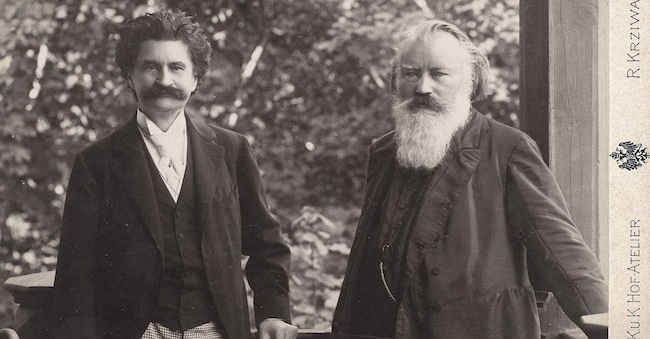
It is no coincidence that Johann Strauss Son went down in history as the 'King of the Waltz'. In the second half of the 19th century, he made every social class in Vienna dance with his almost 500 compositions. Even after his death in 1899, he continued to dominate dance floors around the world and with his operettas entered the repertoire of the great international theatres. His 'On the Beautiful Blue Danube' also entered 20th century film history as the evocative backdrop to one of the most famous scenes in Stanley Kubrick's '2001: A Space Odyssey'.
25 October marks the bicentenary of his birth. In the Austrian capital there have been events, exhibitions, publications, but of course the highlight is around the anniversary.
Fra le mostre in corso spiccano quella promossa dalla Biblioteca Nazionale Austriaca su vita e opere del compositore, nella splendida cornice della Sala di Rappresentanza: (“Star mondiale per passione” fino all’11 gennaio), e quella proposta dal Museo Ebraico fino al 16 gennaio, il cui titolo, “Segreto di stato”, rimanda alla clamorosa falsificazione che Joseph Goebbels ordinò per emendare l’inaccettabile macchia di un antenato ebreo nella genealogia dell’amatissimo (anche dai nazisti) Johann Strauss Figlio: “Qualche sapientone ha scoperto che Johann Strauss è per un ottavo ebreo. Proibisco di rendere la cosa pubblica”, annotava il ministro della propaganda nel suo diario il 5 giugno 1938. I registri anagrafici del Duomo di Santo Stefano indicavano infatti che il bisnonno Johann Michael Strauss, di origini ebreo-ungheresi, si era convertito in occasione del suo matrimonio con Rosalia Buschinin l’11 febbraio 1762.
Some time after Goebbels' irritation, making use of the then brand new possibility of creating photostatic copies, Nazi officials then simply made the offending paragraph disappear, authenticated the copy and put the original register under lock and key. A measure that worked during the Third Reich and safeguarded the person and creations of the composer and musician in the eyes of the National Socialists, making it possible to celebrate him and use him to 'improve the people's feeling of belonging'. It is precisely that original register, found in the archives of the Curia, and the related documents, including the photostatic manipulation, that are on display at the Jewish Museum in Vienna until 16 January.
That forgery of an official act also made it possible to create on 31 December 1939, when the war was already raging, a special concert centred on Strauss compositions, conducted by Clemens Krauss: an initiative that was transformed in 1941 into the 'New Year's Concert' that millions of fans all over the world still listen to on 1 January each year at the Musikverein.

