Show

John Giorno pushes poetry off the printed page

At MAMbo until 3 May to look again at the US for respect for human rights and not for a scene of oppression

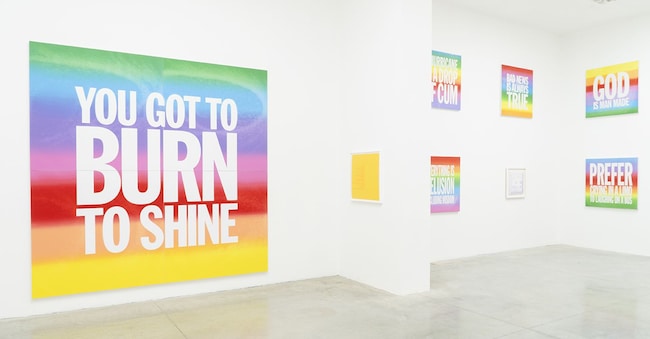
by Giorgia Basili

Veduta di allestimento - «John Giorno: The Performative Word» - MAMbo - Museo d’Arte Moderna di Bologna | Sala delle Ciminiere

5' min read

Translated by AI
Versione italiana

5' min read

Translated by AI
Versione italiana

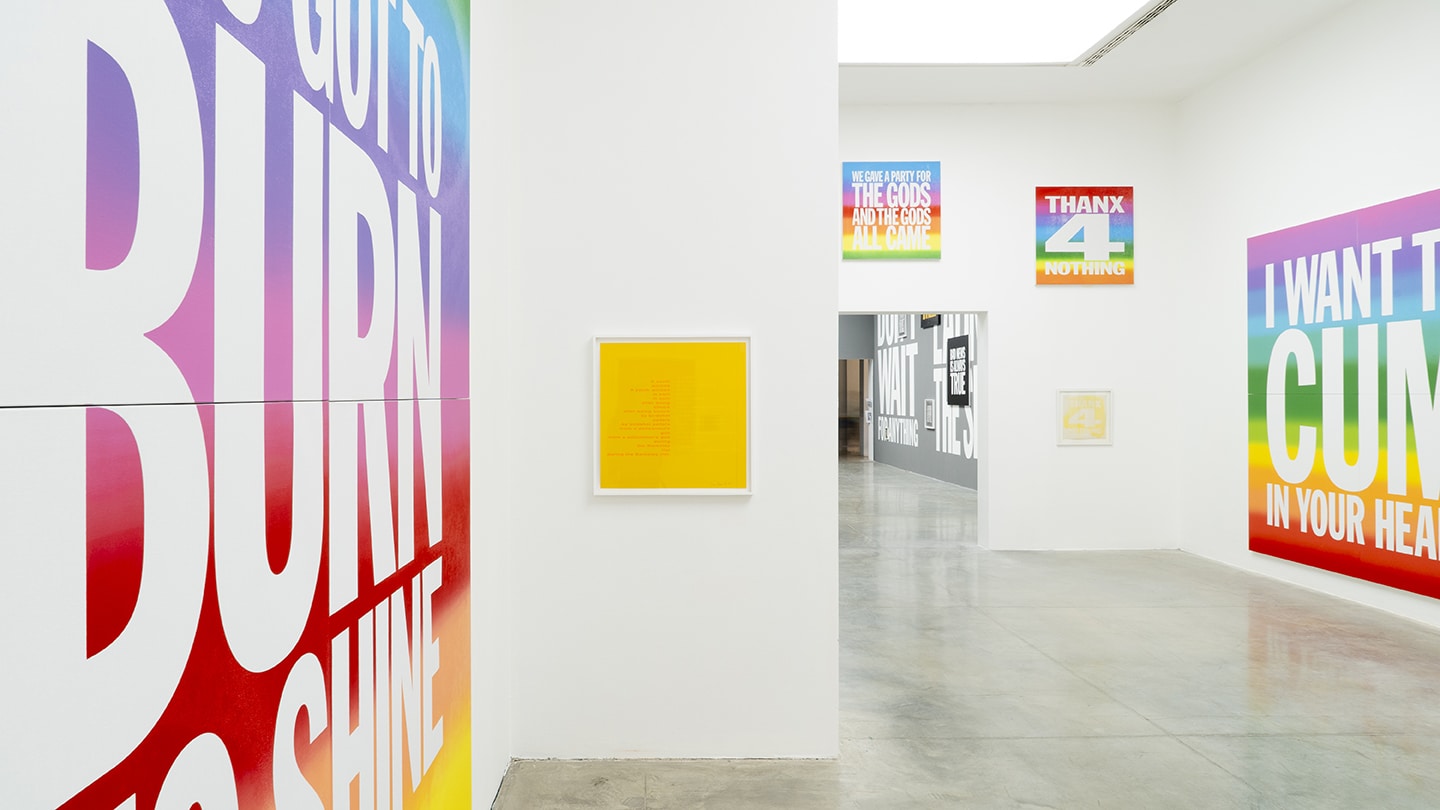
On rainbow canvases stand the words 'preferring crying in a limo to laughing on a bus, God is man made'.John Giorno knows how to be incisive, manages to shock the well-meaning and makes people think about both seemingly trivial topics and crucial realities... yet it is 'bad news that is always true'.
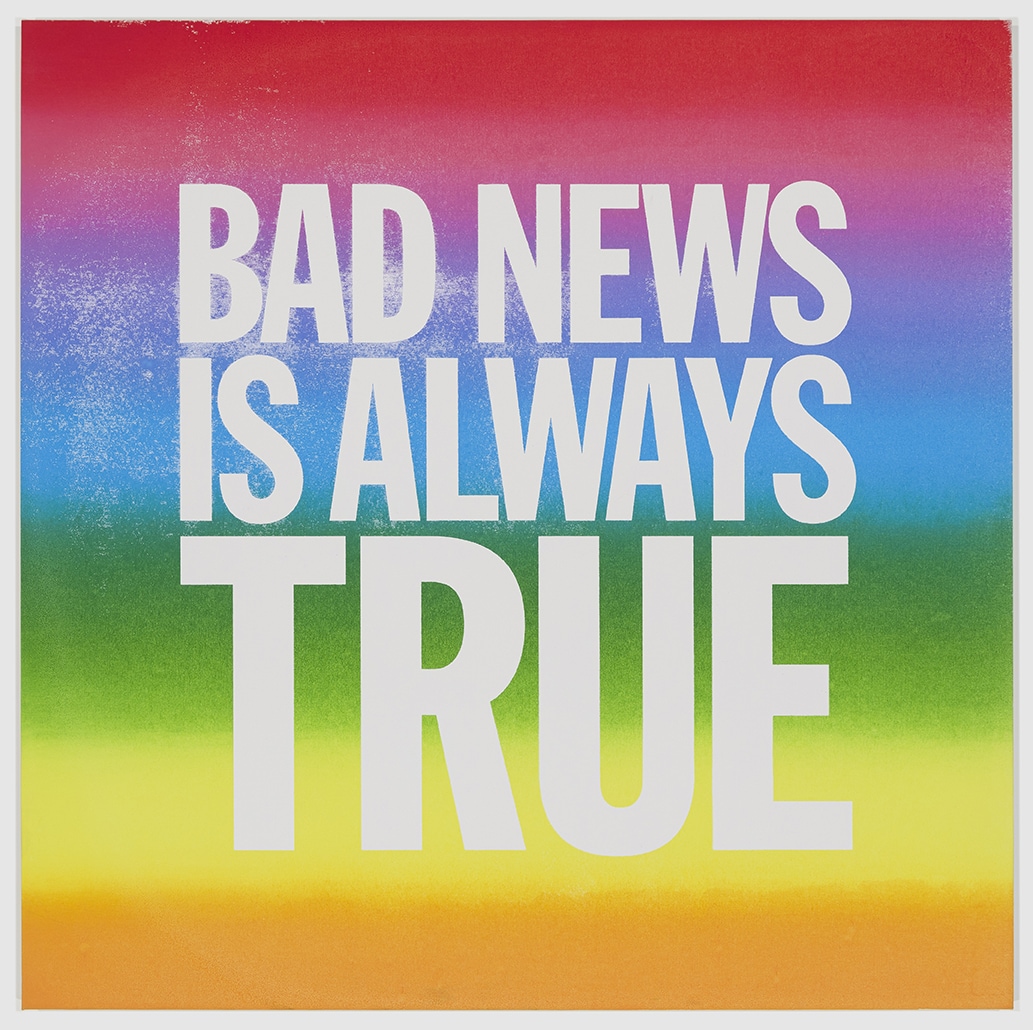
«BAD NEWS IS ALWAYS TRUE», 2015, acrylic on canvas, 40 x 40 inches

The exhibition dedicated to him at the MAMbo presents a glimpse through all the most significant cycles of his career. As director Lorenzo Balbi says, the curatorial project makes us understand how "personalities like his have redefined the very way of being an artist and of working with the performing arts".
Loading...

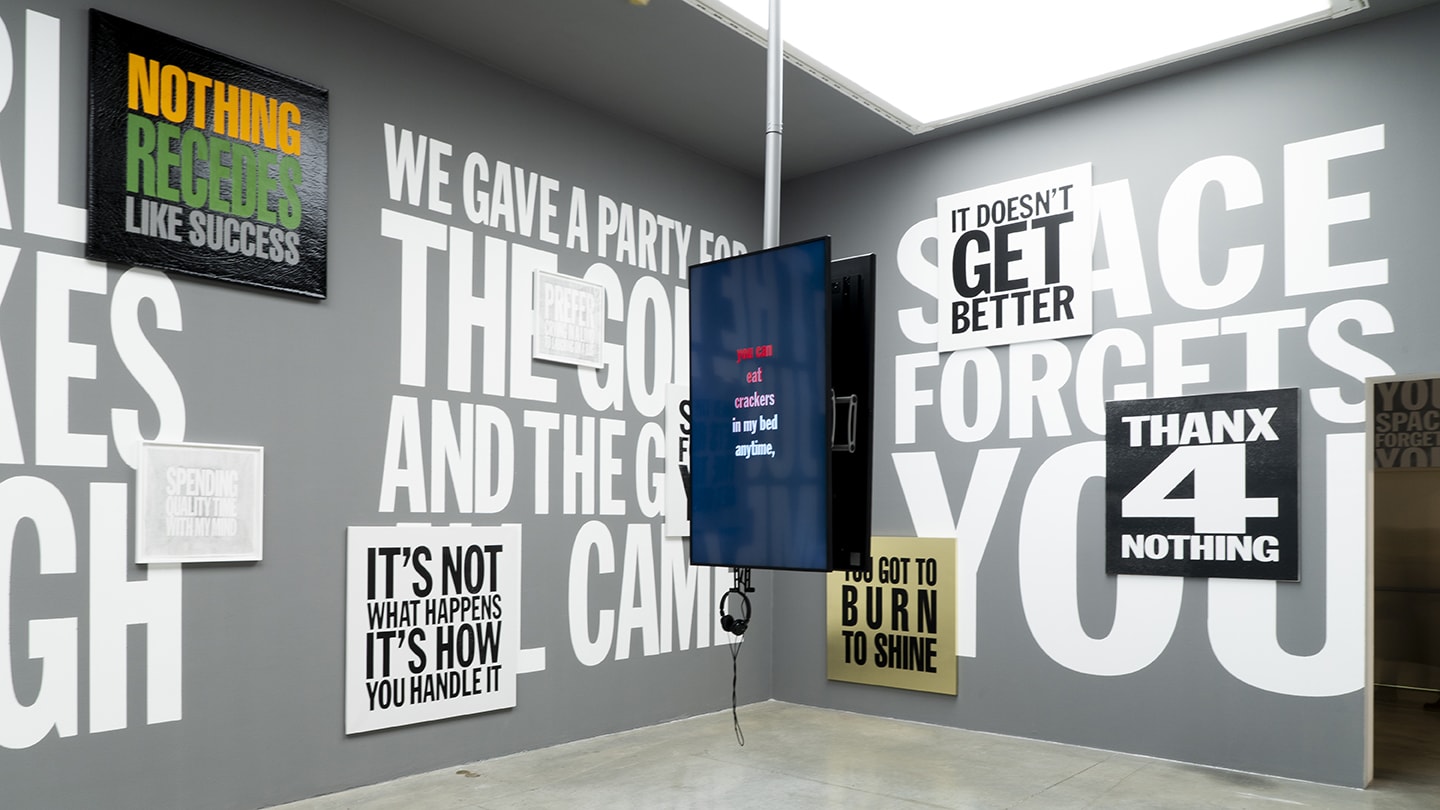
Veduta di allestimento - «»John Giorno: The Performative Word - MAMbo, Sala delle Ciminiere

In addition to 'John Giorno: The Performative Word', at MAMbo from 5 February to 3 May 2026, there is a current exhibition in Los Angeles, at the Marciano Art Foundation. In 2015, a major exhibition was held at the Palais de Tokyo in Paris "UGO RONDINONE : I ♥ JOHN DAY", the same exhibition was then articulated in numerous exhibitions in New York in 2017.
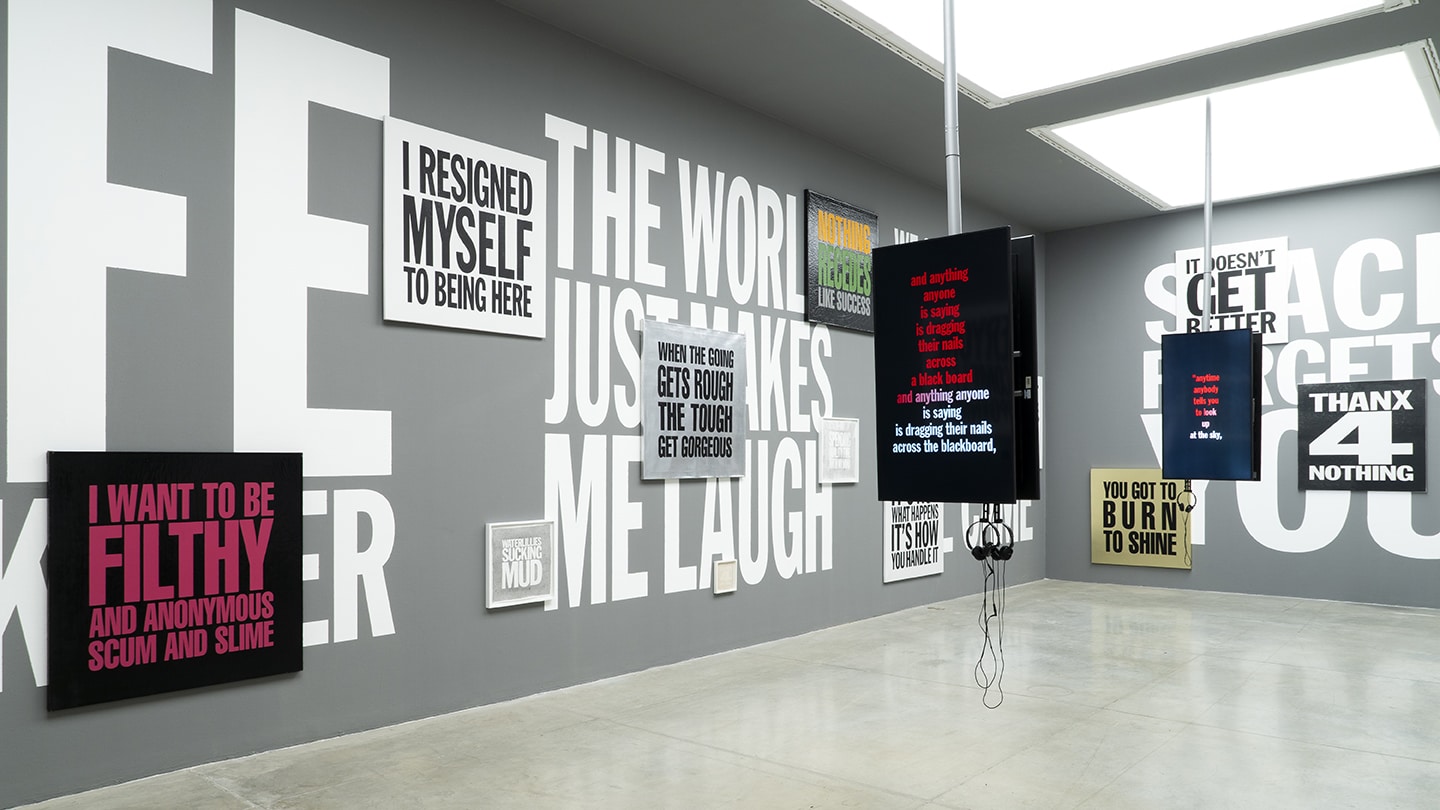
Veduta di allestimento - John Giorno: The Performative Word - MAMbo, Sala delle Ciminiere

An artist beyond

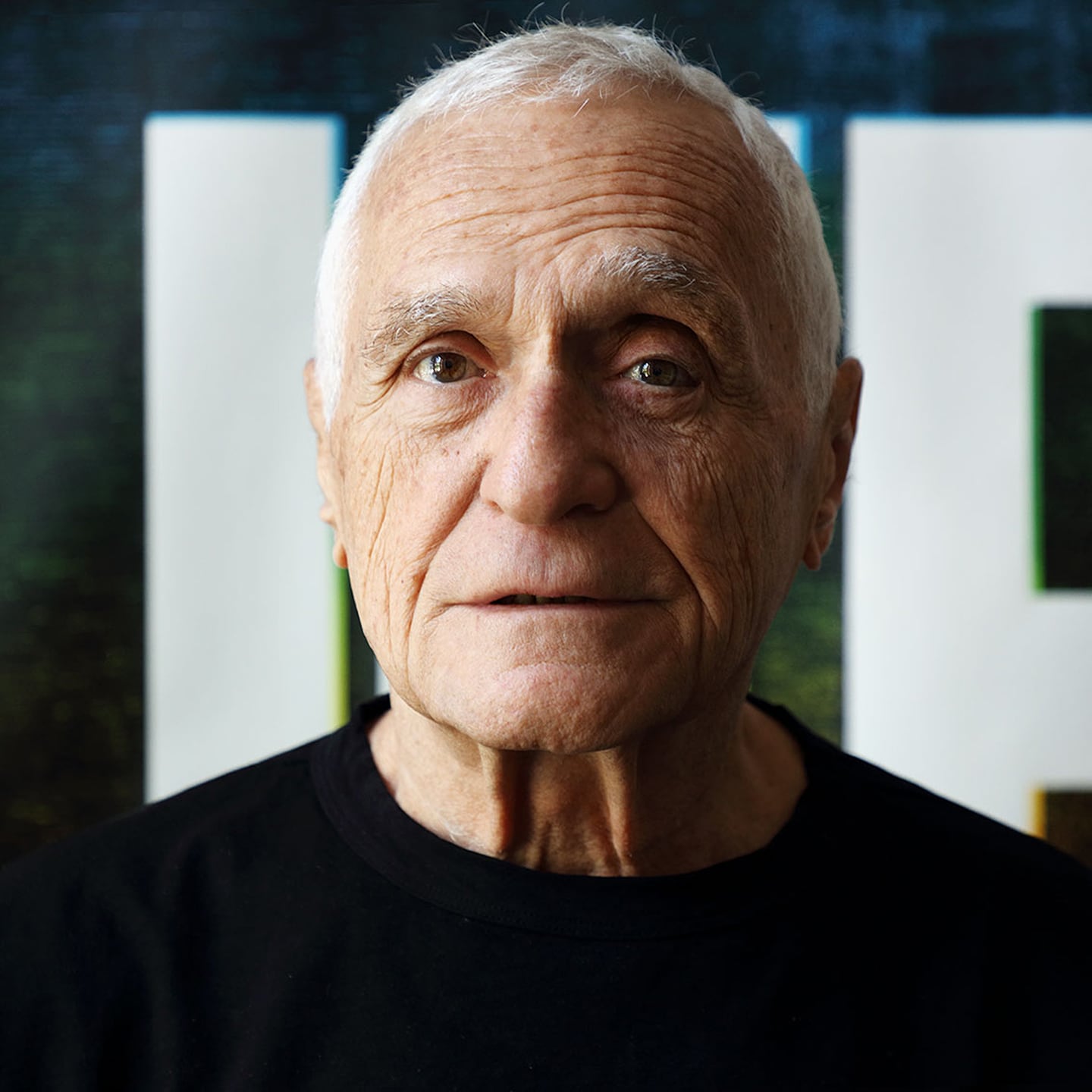
John Giorno (New York, 1936 - New York, 2019) was able, literally, to push poetry off the printed page. He met artists such as Andy Warhol, Jasper Johns, Robert Rauschenberg, John Cage, Trisha Brown and Carolee Schneeman and wrote: "I realised that poetry was seventy-five years behind painting, sculpture, dance and music".
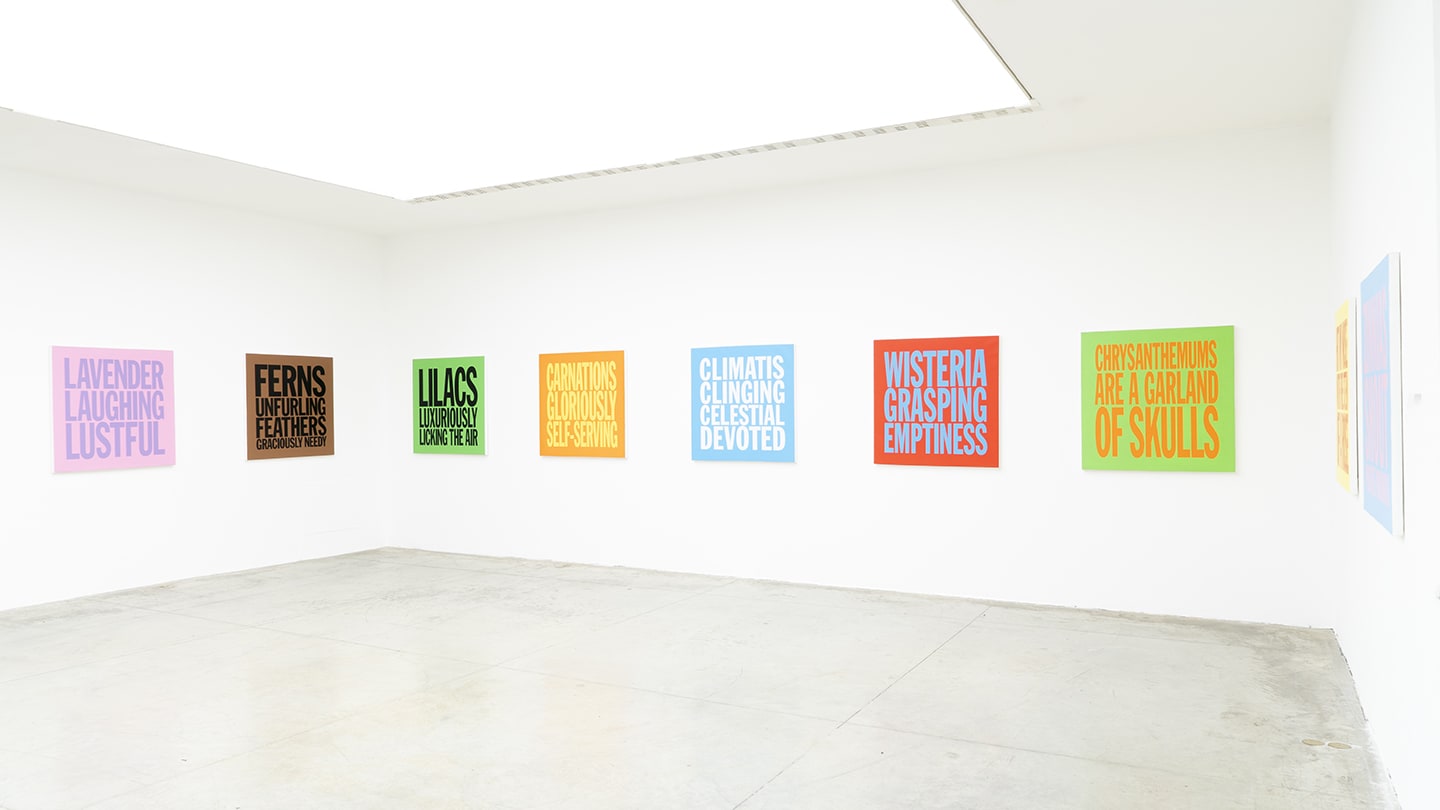
Veduta di allestimento - «John Giorno: The Performative Word» - MAMbo - Sala delle Ciminiere

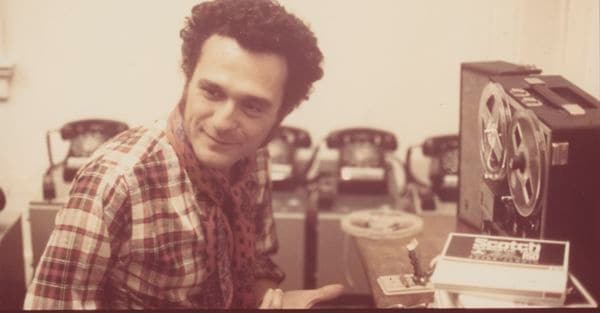
The itinerary at MAMbo opens symbolically with a "bouquet of flowers": the first room brings together almost all of Giorno's flower paintings, born from the extraction of verses from his poems - in particular from "Welcoming the Flowers" (2004) - translated into painting. It is a practice that synthesises the heart of Giorno's work, suspended between the written, painted and performed word. In the Sala delle Ciminiere is the work-manifesto "Dial-A-Poem". Conceived in 1969 for MoMA, the work uses the telephone as a poetic vehicle: by dialling a number, the public listened to a poem, without being able to choose, from those recorded using the answering machine. Participants included Vito Acconci, William S. Burroughs, Charles Bukowski, John Cage, Frank O'Hara, Patti Smith, among others. Today, 'Dial-A-Poem' has 282 recordings of 132 personalities, and is conceived as a continuously updated monument, entrusted to the institutions that preserve it. Editions have been made in Thailand, France, Switzerland, Mexico and Brazil.
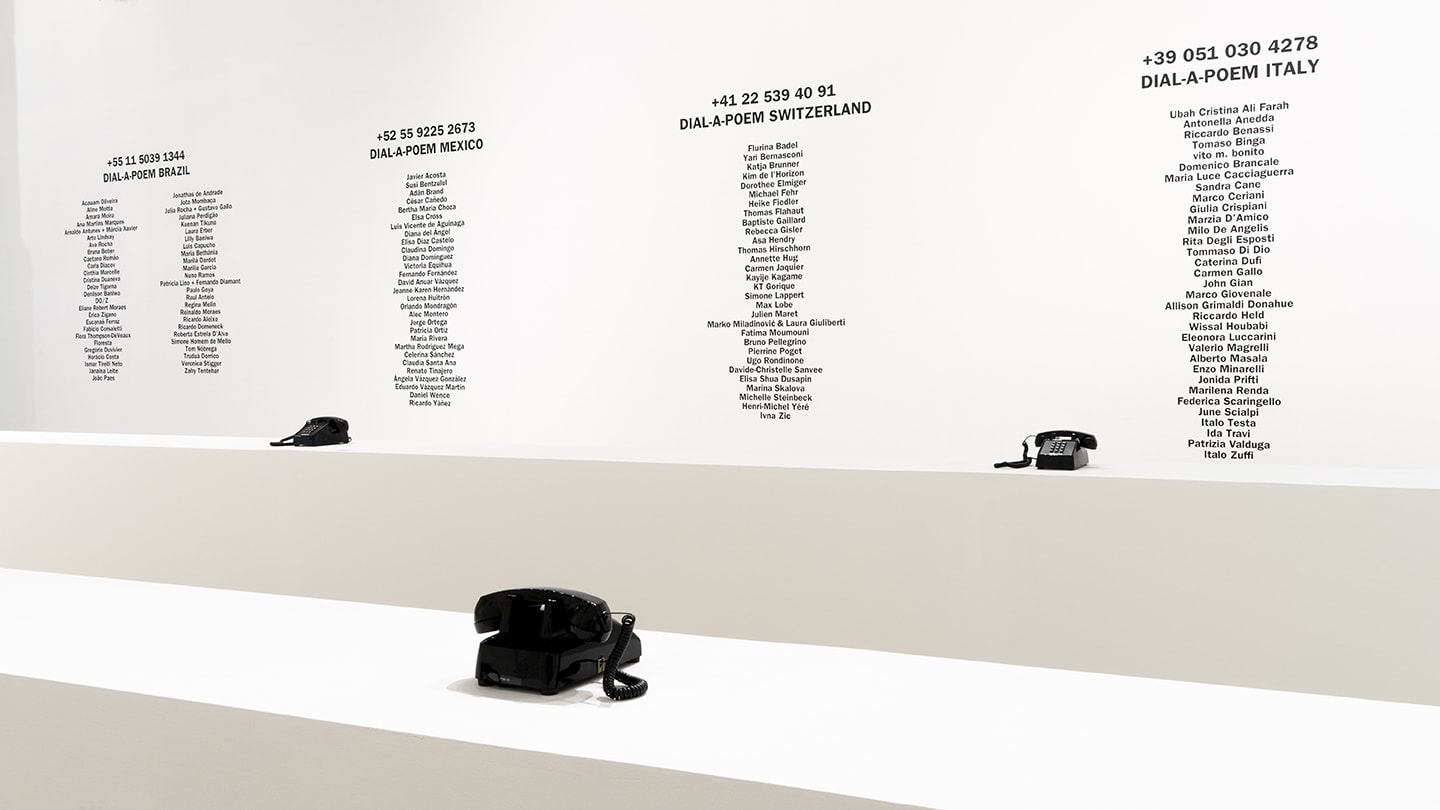
Veduta di allestimento - «John Giorno: The Performative Word» - MAMbo - Sala delle Ciminiere

MAMbo has produced 'Dial-A-Poem Italia', curated by Caterina Molteni, which will enter the museum's permanent collection. Thirty-three entries were selected. Molteni travelled across Italia meeting poets and poetesses, artists* and musicians* called upon to read their own texts, unpublished or already published, according to the rules of the Giorno Poetry System - belonging to the territory, language of the country, authorship. The "sculptural" version of the work is also presented, with a series of telephones dedicated to the different countries, flanked by an always active number, also spread throughout the Bolognese urban space: +39 051 030 4278.

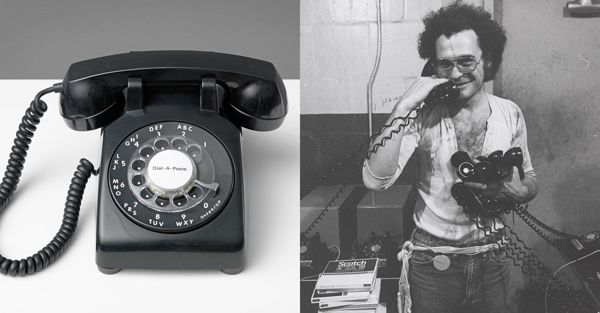
A sinistra: John Giorno, «Dial-A-Poem» (2012 version), 1968-2012, Telephone, soundfile player with 200 digitally recorded poems from 80 poets, 4 3_8h x 4 7_8w x 8 5_8d in

An extensive archive section, curated by Nicola Ricciardi - who was also in charge of the exhibition at the Triennale -, is divided into six chapters and portrays his multifaceted and unclassifiable figure: poet, performer, visual artist, musician, activist for the rights of creative people and the LGBT community. The original materials come largely from Bowery 222, his New York home-studio, a crucial place in his life and in the underground art scene. It is the home of Giorno Poetry System, a non-profit organisation he founded in 1965: it holds the archive of John Giorno and is dedicated to promoting the visual arts and poetry.

John Giorno’s Studio New York, April 10th, 2018

Between documents, fake biographies written in his own hand, letters of refusal from magazines - not only The New Yorker but also Playboy - to publish his writings and memorabilia, Giorno's constant tension towards the impossibility of self-definition emerges. A timeline of personal objects and calendars - in which we find annotated appointments and key dates, e.g. Andy Warhol's funeral - accompanies the visitor up to 2019, the year of his death. Ample space is also dedicated to the AIDS Treatment Project, a pioneering fund founded in the 1980s to financially support artists affected by the virus.

John Giorno with Dial-A-Poem, photo by Michael McClanathan, 1970 Courtesy of Giorno Poetry Systems

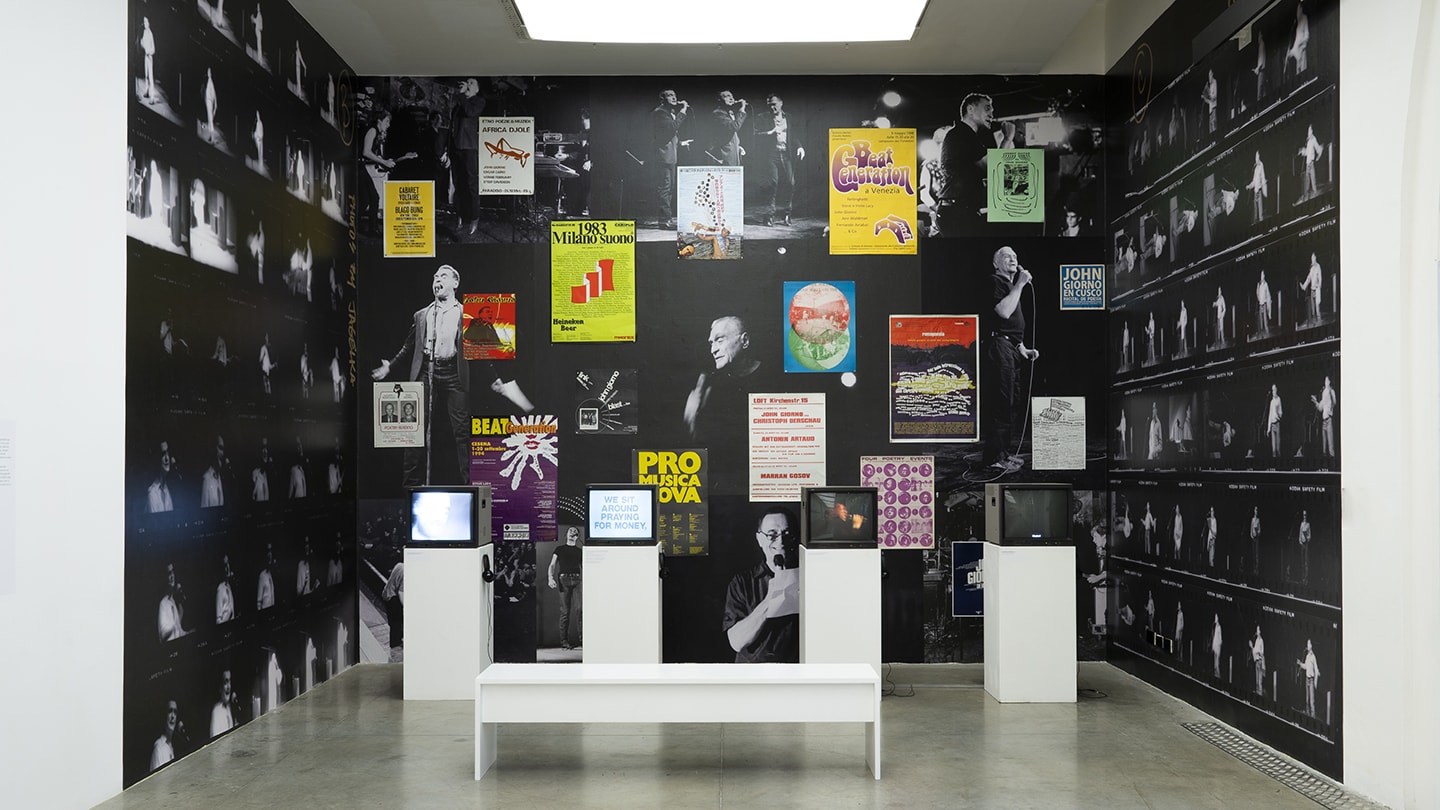
The relationship with Italia occupies two specific showcases: from his Lucanian origins - accompanied on a journey by Domenico Brancale - to the search for his ancestors, to his numerous performances and appearances at international festivals. One room immerses us in a performance Giorno gave on the occasion of his 78th birthday, in which he thanks the audience and himself: 'Thank you for allowing me to be a poet, a noble endeavour doomed to failure but the only possible choice'.

One room was commissioned by the artist Ugo Rondinone, who became her husband during the last years of her life, as a direct quotation from the Paris exhibition (2015). The room is organised with wall paintings of John Giorno's poems, in the format, font and block letters chosen by the artist. The original paintings are displayed on the wall - with English phrases such as "nothing fades like success", "it is not what happens but how it is managed" - while, in the centre, monitors with headphones play the poems interpreted aloud by the artist himself. The exhibition closes with the emblematic video 'Sleep' (1963) by Andy Warhol in which the young artist himself is filmed sleeping, in a 5 hour and 21 minute long piano-sequence.

Veduta di allestimento - «John Giorno: The Performative Word» - MAMbo - Sala delle Ciminiere

In the 1970s and 1980s, the US was a model of creative community and freedom of expression. This exhibition sends out a political and cultural message: "we would like to look at the US again for respect for human rights and not for a scene of oppression". Rereading the aphorism 'Bad News Is Always True' in a contemporary key raises, like a punch to the stomach, a scenario that John Giorno could never have imagined.

Veduta di allestimento - «John Giorno: The Performative Word» - MAMbo - Sala delle Ciminiere

The market

John Giorno's works often play on the misunderstanding of the market, despite this they went to auction 61 times, mainly in the Print-Multiple category. This year the artist realised his best sales, mainly concluded in the UK. A silkscreen entitled 'LIFE IS A KILLER' estimated at £ 15,000 - 20,000 was sold at Phillips' live auction in London on 26 June 2025 (Modern & Contemporary Art) for £ 12,000 (€ 14,074). It was first exhibited at Almine Rech's Paris exhibition (2012). Better performance was achieved by the painting 'We Gave a Party for the Gods' (2013), acrylic on canvas, which fetched $34,000 at Christie's New York auction on 22 November 2024, far exceeding the highest estimate of $20,000. Depending on the size and date, prices for the paintings range from $35,000 to $120,000.

The galleries representing the artist are Thomas Brambilla, Eva Presenhuber, Kurimanzutto and Almine Rech. Their role is to promote his work worldwide and consolidate it: Brambilla focuses on the Italian market, Presenhuber on Switzerland and Italia, Almine Rech on Asia, the UK and Europe, and finally Kurimanzutto on North and South America. As Thomas Brambilla explains, the price also varies depending on the series: the 'rainbow' proposed at ArteFiera ('I want to cum in your heart') is worth about USD 66,000, the 'black and white' paintings are about USD 45,000, the 'flowers' about USD 35,000.

Copyright reserved ©
Loading...

Brand connect

Loading...

Newsletter

Notizie e approfondimenti sugli avvenimenti politici, economici e finanziari.

Iscriviti