Cinema and tourism

Journey through Emilia (red and black) in the footsteps of Bertolucci's 'Novecento

An exhibition in Parma celebrates 50 years of the masterpiece starring De Niro and Depardieu. The sets of which are tourist destinations. Between Roncole di Busseto and Guastalla

by Francesco Prisco

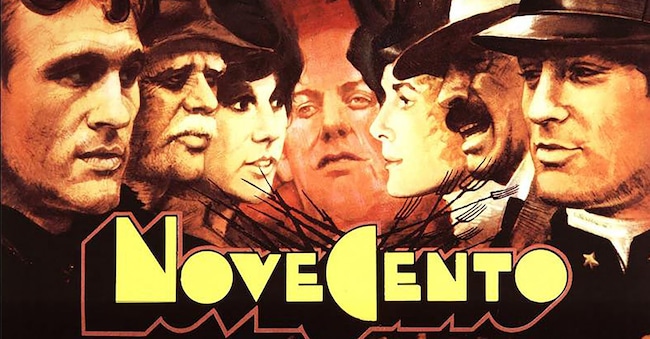
La locandina di «Novecento», film in due atti di Bernardo Bertolucci uscito nel settembre del 1976

5' min read

Translated by AI
Versione italiana

5' min read

Translated by AI
Versione italiana

Some films never end. In a broad sense, and not only: this is the case with Novecento, Berdardo Bertolucci's political masterpiece on the short century released half a century ago. Infinite is the length of the film: its two acts, released two weeks apart in September 1976, together measure 320 minutes.

Infinite is the ambition of the director. Indeed: Author. That is the only way you can define a 35-year-old gentleman who takes the parallel lives of two boys born on the same day in 1901 on the same farm in the Po Valley - a rich bourgeois and a proletarian of an unknown father - and turns them into the perfect metaphor of class struggle. Between the end of the Belle Epoque, the Great War, the first agrarian strikes, the rise of fascism and the Resistance, culminating under the sun on 25 April.
Loading...

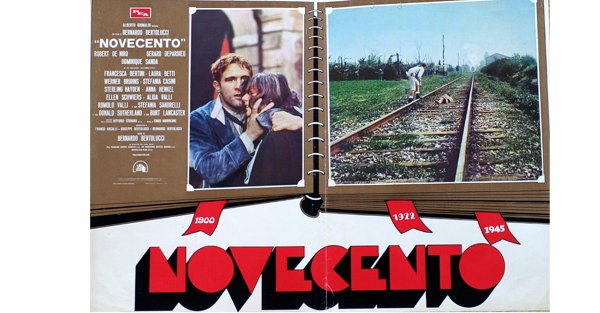
La locandina di «Novecento», dalla mostra «Bernardo Bertolucci. Il Novecento»

Infinite, for the time, was the budget of the Italy-France-Germany-USA co-production with 20th Century Fox sitting at the head of the table: 4 billion old lire, twice the amount Napoli needed to wrest Beppe Savoldi from Bologna, in what was the most expensive football coup of all times up to that time. In Novecento, on the other hand, there were stars of the calibre of Robert De Niro, fresh from Padrino Part II, and New Wave icon Gerard Depardieu, Dominique Sanda and Stefania Sandrelli, Burt Lancaster and Donald Sutherland, the photography of Vittorio Storaro and the music of Ennio Morricone. And we stop here, though we could go on and on.
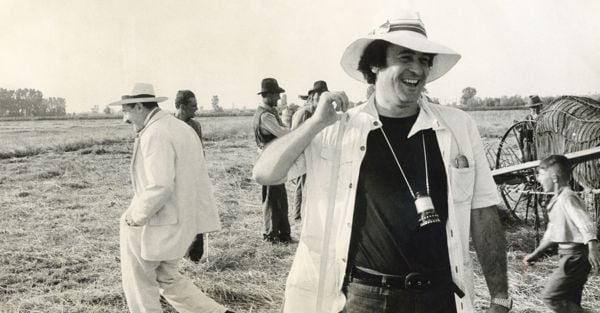
Bernardo Bertolucci sul set di «Novecento» (Foto di Angelo Novi, courtesy Fondazione Bernardo Bertolucci)

But Bertolucci's Novecento is 'infinite' above all because it still speaks to us: it speaks of workers' rights in a country where those who oppose 'caporalato' (forced labour) are burnt alive; of the advent of the mechanical rake in an era when artificial intelligence threatens to wipe out millions of jobs; of the autocratic shortcut that Capital has been attempting for over a hundred years. In short: anniversary or not, there is more than one reason to return to Novecento. Starting with watching the film: the two acts are available in streaming on Prime Video in the pay section "Once upon a time... Channel'.

The current exhibition in Parma

In Parma then, in the Palazzo del Governatore, until 26 July it is possible to visit "Bernardo Bertolucci. The Twentieth Century", a very rich exhibition curated by Gabriele Pedullà that focuses on the making of the film, widening the discourse to History (with a capital letter) and to the stories (with a lower case) that it tells. The peasant struggles of the early twentieth century are brought to life first and foremost through The Fourth Estate by Pellizza da Volpedo (the iconic marching proletarian masses that Bertolucci wanted in the titles) reproposed in Taner Ceylan's contemporary copy. But there is also an authentic Pellizza (The Old Woman in the Stable, 1904-05), as there are the covers of Domenica del Corriere on the repression of the first agrarian strikes.
«Novecento» di Bernardo Bertolucci, le immagini della mostra di Parma

Photogallery20 foto

There is, of course, so much of the set of Novecento: from Angelo Novi's marvellous black and white photos to the original script, to ABCinema, the documentary in which Giuseppe Bertolucci, Bernardo's brother and co-writer, turned the behind-the-scenes of the work into a reflection on the Seventh Art. And there is also so much of the historical and social context in which Novecento was made: Mario Schifano's Pop-Maoist Cohort and Franco Angeli's Ross Partisan Cemetery, the enthusiastic review with which Rolling Stone greeted the American release, the contemporary posters of films high and low in our cinematography, and the images of the legendary football match between the cast of Novecento and that of the 'twin' film Salò o le 120 giornate di Sodoma (1975) by Pier Paolo Pasolini, released a few weeks after the tragic death of the author, and great friend of the Bertolucci family. For the record: the cast of Novecento won, but Bernando 'cheated' by hiring some promise from the Parma youth team. Including a certain Carletto Ancelotti.

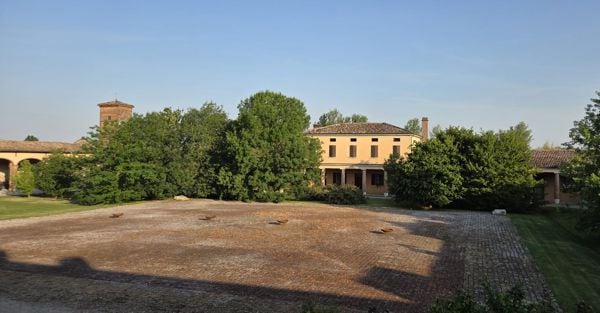
Il colpo d’occhio sul cortile della Corte degli Angeli, principale set di «Novecento»

The class struggle farm

The great thing about the set of the Novecento is that it is still 'watchable'. Starting with the farm where the class struggle between the bourgeois Berlinghieri and the proletarian Dalcò takes place. It is located in Roncole di Busseto (Parma), just a few kilometres from the birthplace of Giuseppe Verdi, and was built in the early 19th century by Prince Giovanni Vidoni de' Soresina to a design by Luigi Voghera, an architect from Cremona. A farm that was created to produce the noblest food in the area, Parmigiano Reggiano, according to an innovative vision: the wellbeing of humans and animals at the centre of the production process. Today, two-thirds of that structure has been taken over by Alessandro Lusardi and his wife Milly Freddi and transformed into the Corte degli Angeli agriturismo.

L’interno del podere di «Novecento» come appare in una foto dal set di Angelo Novi (courtesy Fondazione Bernardo Bertolucci)

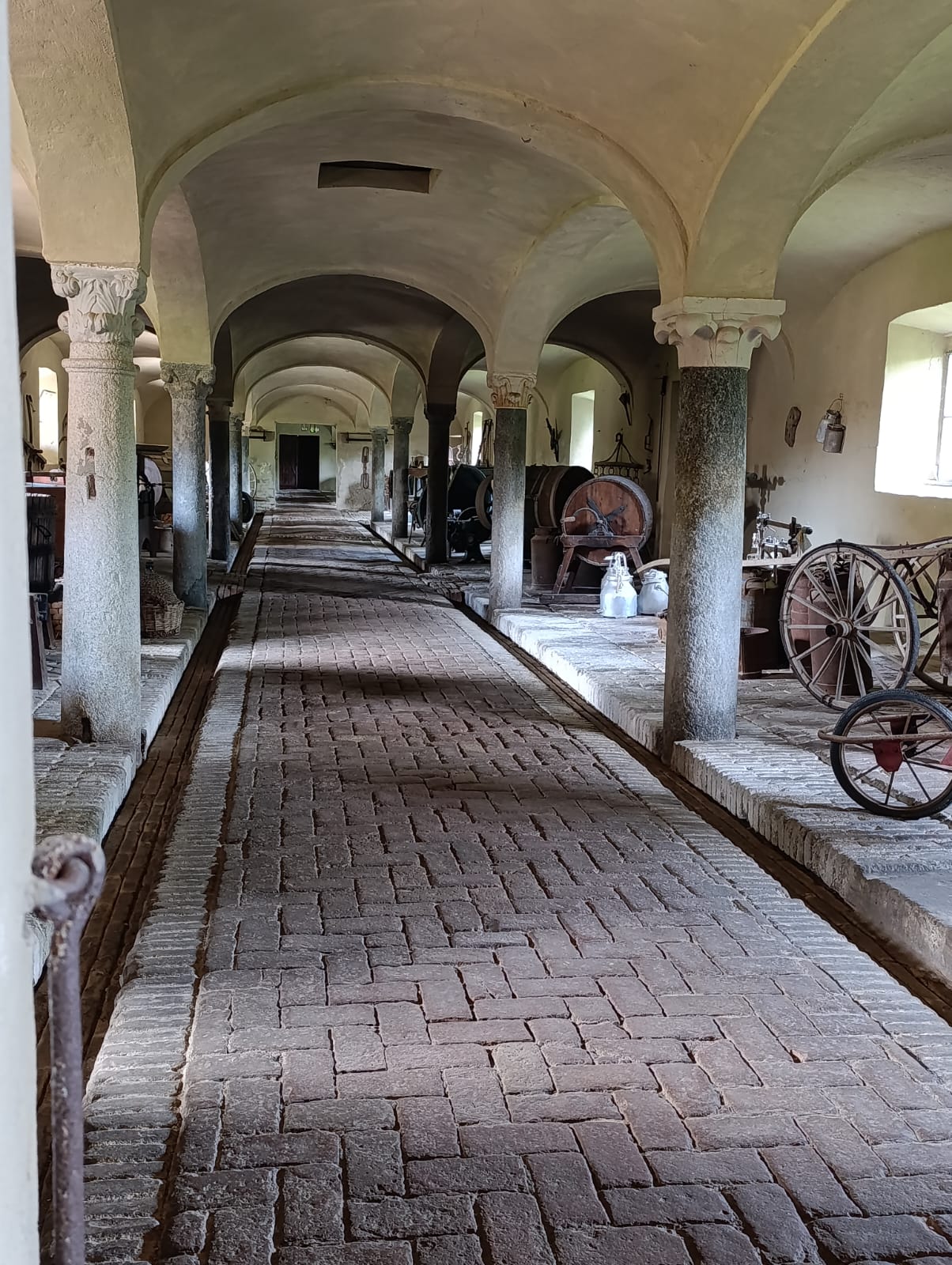
The guided tour is a blow to the heart for all fans of the film: in the monumental barn there is still the hook from which Alfredo/Lancaster hangs himself. Here, in order to distinguish the turn-of-the-century settings from those of 1945, Bertolucci insisted on filming cows of different breeds, consistent with Italy's agro-industrial history. A few metres away was the immense track on which the Maestro moved the dolly. And you could walk through the gate that welcomed the procession of red flags in the long march of socialists. The immense court hosted the trial of the Maestro/De Niro and the speech of Olmo/Depardieu breaking down the fourth wall. From the stairs where Depardieu meets Sandrelli for the first time, there is access to the attic where little Olmo bred silkworms. There is the Dalcò family's dining room and it is possible to stay in their rooms. In short: everything here speaks of the Novecento. Starting with Lusardi, who grew up on the farm: his family was working on the farm when Bertolucci's cast arrived. And he, a child of fifty, was chosen by the Maestro to play the part of the 'spidocchiato'.

Le stalle della Corte degli Angeli, set di alcune delle sequenze più celebri di «Novecento»

Between Guastalla and Lombardy

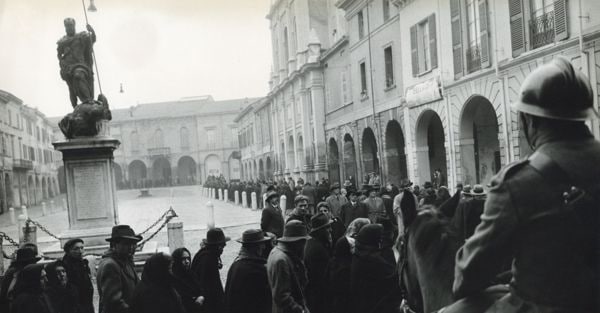
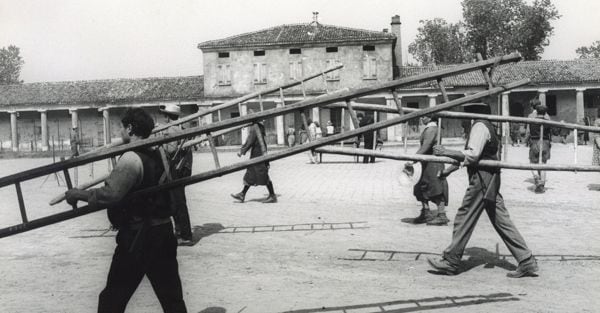
But the set of Novecento does not stop at the court of Roncole di Busseto. A stroll through the historic centre of Guastalla (Reggio Emilia), for example, reveals scenes of the town's setting, between Anita's Casa del Popolo and the raids of the early fascists. If you move from Emilia to Lombardy, then you can find more details of the Berlinghieri house. At the Badia farmstead in Voltido (Cremona) the Dalcò will be partying, while there is little to celebrate at the Santuario della Beata Vergine Maria delle Grazie in Curtatone (Mantua), where Attila/Sutherland collects funds from the businesses of the Bassa (the lowlands) that will be used to set up the local branch of the National Fascist Party, to stifle any proletarian claims. Complete with ecclesiastical blessing.

Le riprese di «Novecento» in piazza a Guastalla (courtesy Fondazione Bernardo Bertolucci)

Beyond the film's locations, it is the view of the countryside of the Bassa that gives us back the atmosphere of the Novecento: sheaves of hay piled up in the fields, ditches populated by frogs, architecture a few centuries old built for work but nevertheless according to the principle of beauty. Everything makes up the marvellous fresco that Bertolucci wanted as a backdrop for his very particular epos of class struggle. Because, as Oliver Stone will say, "Bernardo loved Jean-Luc Godard. But he was crazy about Walk with the Wind'.

Copyright reserved ©
Loading...

Brand connect

Loading...

Newsletter

Notizie e approfondimenti sugli avvenimenti politici, economici e finanziari.

Iscriviti