In Milan

Judicial review for the American company building the US consulate

Alabama-based Caddell is under indictment: for the prosecution it exploited almost 400 workers. It will be assisted by an Italia commissioner. Risk of international tensions

by Sara Monaci

3' min read

Translated by AI
Versione italiana

3' min read

Translated by AI
Versione italiana

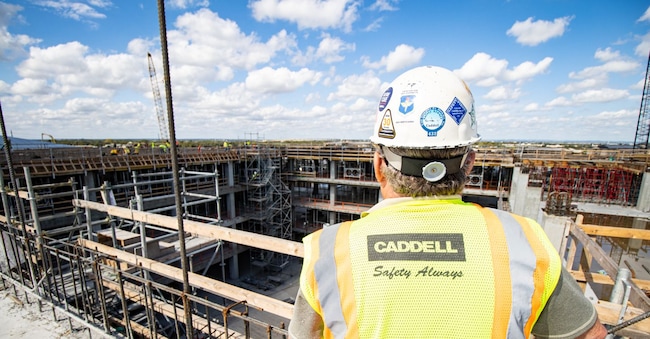
Judicial control (with an emergency decree) also arrived in the world of construction this morning in Milan. But this time it is not such a straightforward affair: the company accused of exploiting labour in Italia is American, its name is Caddell, it has its headquarters in Montgomery (in Alabama) and it is building the American consulate in the Portello district of Milan. A project that began in 2022, in the former shooting range area, and was greeted with enthusiasm by the institutions. It will cover an area of 40,000 square metres (and an initial budget of 351 million), delayed according to an initial timetable but already at an advanced stage.

The company and its legal representative Ulas Demir, of Turkish origin and resident in Pogliano Milanese, under investigation

Loading...

The American consulate construction project is being coordinated by the US State Department's Bureau of overseas buildings operations and entrusted to the American company Caddell. But now the Milan Public Prosecutor's Office is imposing commissioners on the latter, who will work alongside the company's top management, with the aim of cleaning up the supply chain from the phenomena of caporalato. The episodes reconstructed by the investigators, the Public Prosecutor's Office and the Carabinieri of the Milan Labour Protection Unit, leave little doubt as to what happened on the construction site.

Here the checks, including by the trade unions, were made with difficulty, as the contracting station and the contractor were non-Italian and non-European. The reconstruction work was long.

The company will now have to regularise its workers, control its workplaces and equip itself with organisational tools to prevent the serious exploitation it is accused of from happening again.

It is stated in the Prosecutor's Statement that Caddell Construction 'employed between 311 and 394 workers for the year 2025, of whom 388 were employed in December, of whom 316 were ethnic Indians. As of February 2026, the number of workers reported by Caddell's branch office for the construction of the new consulate is 261. Hence two considerations: the number of exploited workers is massive and the situation of heavy labour exploitation has been going on for a long time'.

From the many testimonies, we come to understand that there has existed for years, close to the centre of Milan, a place where recruitment is managed from abroad: workers are hooked up in their country of origin, India, by unscrupulous intermediaries. Prosecutor Paolo Storari writes that 'these intermediaries promise decent salaries by exploiting their state of need. The initial payment: in order to be able to leave, all the workers were asked to pay a fee of about 5000 euro (500 thousand rupees) in order to obtain the relative work visa and the guarantee of work itself and, often, in order to pay this 'protection money' the same workers and their families get into heavy debt. The debt bond: Once they arrive in Italy, the workers discover that the promises were false and the debt contracted becomes a chain as the 'site corporal' withholds a large part of the (already paltry) salary with the excuse of accommodation and food and with the threat of dismissal.

Many workers remain in a state of clandestinity. This leads to a more organised exploitation on site, inside the construction site, where the workers 'are forced to work with massacring shifts, without security and under the constant threat of dismissal and then return to their country of origin, if they do not submit to degrading and underpaid working conditions, not even being able to rebel because they are blackmailed and controlled. In this situation of para-slavery, it is difficult to deny that the prerequisites set forth in Article 603 bis of the criminal code (and the related liability ex L.D. 231/2001 against the company) exist'. Hence the emergency measure: the carabinieri raided the offices and presented the card for immediate commissioner.

Copyright reserved ©
Loading...

Brand connect

Loading...

Newsletter

Notizie e approfondimenti sugli avvenimenti politici, economici e finanziari.

Iscriviti