
How much is enough: the formula for not going over or under
Like dosage in pharmaceuticals, the right quantity also applies in cosmetics. This is why ergonomic spatulas and dispensers are designed to guarantee precise units of measurement.

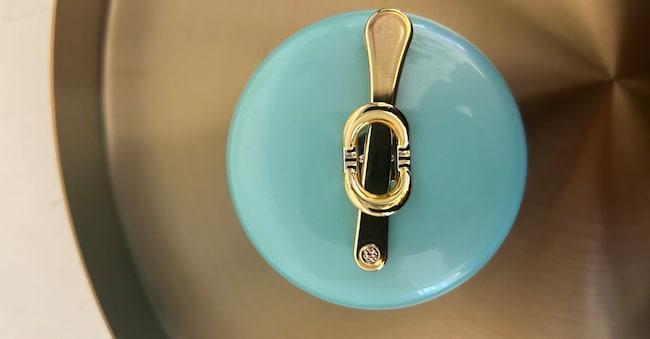
There is a term that chefs have always used: just enough. The right measure, neither over nor under. It is a concept that the world of cosmetics in recent years seemed to have lost, overwhelmed by an expansive logic of more products and more promises. Today, sophisticated brands seek a profound relationship between beauty, effectiveness and awareness. The idea of QB in beauty was born, first and foremost, as a reaction to a model that has transformed routines into layering, the effect of social media with influencers recommending up to 21 active ingredients, as analysed in a recent study by Molly Hales, a dermatologist and researcher at the University of Chicago. A number that no doctor would ever prescribe, explains Milan dermatologist Chiara Bonatti: 'Just as there is a dosage for drugs, there is also a dosage for creams. Since the active ingredients can react with each other and potentiate each other, you have to be careful first of all about overlapping. Never mix retinol, glycolic acid and salicylic acid. The result can be red, irritated skin. There are so many pathologies - rosacea, acne and atopic dermatitis, for example - linked to alterations in the skin's microbiota, i.e. the collection of microorganisms living on the skin. The answer is not to add layers of products, but to choose the right ones: probiotics and topical prebiotics, and to avoid aggressive and inflammatory ingredients'.
But it is the question of dosage that is now at the heart of product formulation and packaging. Some brands have turned the correct measure into an almost pedagogical gesture. Among them, Drunk Elephant, founded in 2012 and now part of the Shiseido group, has built part of its success on airless bottles with calibrated dispensers. Each pressure releases a standardised dose, designed to avoid excesses in highly concentrated serums.
The very communication of the brand, which has gone viral among the very young (and for this reason at the centre of some controversy), insists on the idea of one pump as a unit of measurement. On the Reddit forums dedicated to skincare, users discuss it with the precision of those who know how to value every single pump.
Alongside this approach, the brand Tatcha, founded by Asian-born American entrepreneur Vicky Tsai, also acts on the gesture. Distributed by Sephora, it is built on the opposite idea of automatic consumption. The philosophy is Japanese in method and ethos: the skin is connected to the nervous, immune and mental systems and should be treated with a conscious approach. 'The big difference is intentionality,' Tsai explains. "Skincare is a ritual in which every step is a conscious choice." And the details prove it. The creams are accompanied by a 24-carat gold spatula, antibacterial and calibrated to take the necessary amount, while the new fluid The Essence, based on the Hadasei-3™ complex -, a double fermentation of rice, green tea and algae from specific regions of Japan - is contained in a bottle with a dispenser that, even when tilted, always releases the ideal dose. Precision, in this case, becomes a value statement. Which goes well with the discourse on clean beauty and environmental protection. "Some ingredients in creams and serums such as silicones and acrylic polymers, when washed out of the skin, end up in drains and are dispersed in ecosystems in the form of nanoplastics. Using less of them means helping to reduce pollution'.
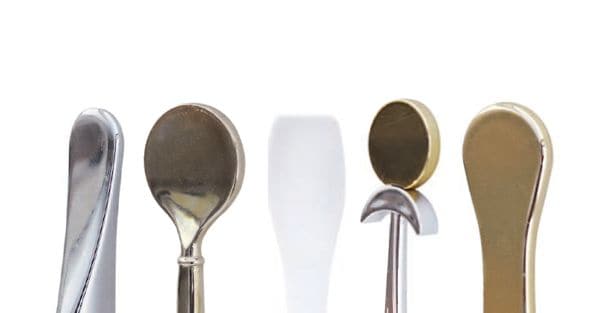
From measurement to formula concentration. Advanced laboratory research applies highly concentrated formulas requiring minimal quantities to skin care. Neur|Aé draws in particular on the principles of neurocosmetics, with products designed to act in synergy with the skin's biological mechanisms. Since its beginnings, La Mer has consistently embodied the philosophy of the right dose. La Crème de La Mer, born from the research of physicist Max Huber in 1965, has taught the market a paradox: the product that is worth the most is the one that is used the least. Very high concentrations and a price that dictates measured use: the dose is about effectiveness itself. An excessive amount in the eye contour, for example, can compromise the hold of make-up. An awareness that, in the Atelier La Mer master classes (where it is mainly men who question quantity), is more widespread than one might think. The approach translates into concrete practice. The Eye Sculpting Tool, the applicator of The Rejuvenating Eye Cream, for example, inspired by the logic of Gua Sha, doses the product, guides the movement and transforms the gesture into micro-treatment.

