Mind the Economy/Justice 124

Justice beyond species boundaries


by Vittorio Pelligra *

(Adobe Stock)

7' min read

Translated by AI
Versione italiana

7' min read

Translated by AI
Versione italiana

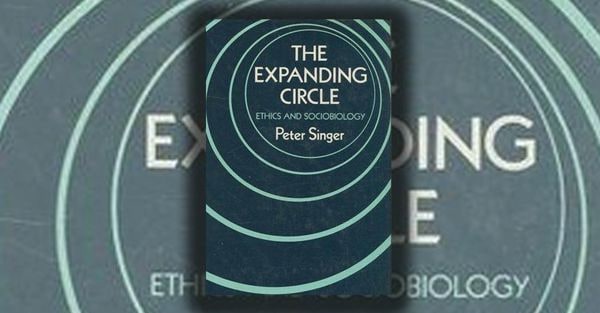
The image that opens The Expanding Circle (1981) by Peter Singer is powerful and evocative. Morality, he writes, is like a gradually widening circle: 'At one time, affective bonds embraced only the family; then the circle, expanding, began to include first a class, then a nation, then a coalition of nations, then all mankind, and finally, today, these bonds also influence man's relations with the animal world' (p. 5).

Ethics thus undergoes an evolutionary process that results in the progressive expansion of the object of care and the consequent enlargement of the space of empathic relationships. From a restricted self to the group, then to the nation, finally to the whole of humanity and, if we are to be consistent to the end, the other species beyond humanity itself.
Loading...

The Expanding Circle (1981) di Peter Singer

Singer argues that ethics is not an invention of culture, but the result of an evolutionary process that begins with the biological altruism manifested in other social species and then, thanks to reason, this altruistic drive is emancipated, allowing us to recognise the arbitrariness of moral boundaries. 'Ethical reasoning,' Singer writes, 'once begun, presses against our initially limited ethical horizons, always leading us towards a more universal point of view' (p. 119).

Reason, for Singer, is the lever that breaks the circle of tribe and species, orienting justice towards impartiality. If two beings - human or non-human - share the capacity to suffer, then their interest in not suffering deserves equal consideration.

“È arbitrario — scrive — restringere il principio di uguale considerazione degli interessi alla nostra specie, così come sarebbe arbitrario limitarlo alla nostra razza – e continua – l’unico punto in cui è giustificabile fermare l’espansione dell’altruismo è quello in cui tutti coloro il cui benessere può essere influenzato dalle nostre azioni sono inclusi nel cerchio dell’altruismo. Ciò significa che tutti gli esseri dotati della capacità di provare piacere o dolore dovrebbero essere inclusi; possiamo migliorare il loro benessere aumentando i loro piaceri e riducendo le loro sofferenze. L’espansione del cerchio morale dovrebbe quindi essere estesa fino a includere la maggior parte degli animali (…) Da un punto di vista imparziale, i piaceri e le sofferenze degli animali non umani non sono meno significativi solo perché gli animali non sono membri della specie Homo sapiens. Ciò non significa che un essere umano e un topo debbano essere sempre trattati allo stesso modo, o che le

From biology to ethics

Singer's argument starts from afar, from the analysis of animal behaviour. He shows how co-operation and altruism - from birds that raise cries of alarm to dolphins that hold up the wounded so that they can breathe, to wolves that refrain from striking a rival in a submissive position - have an evolutionary basis. Ethics, in this sense, does not originate with philosophy but from social life, representing the adaptation of a species that needs mutual trust and co-operation to survive.

Ma Singer è molto attento a non ridurre la complessità morale alla pura biologia. Sono gli anni dell’acceso dibatto suscitato da Sociobiologia di Edward O. Wilson rifiuta e Singer è il primo filosofo a prendere sul serio la sua prospettiva e a discuterla in maniera critica evitando il rischio di riduzionismo perché la scienza può spiegare l’origine dei comportamenti morali, ma non può sostituire il giudizio morale. “Wilson – scrive Singer nella prefazione all’edizione del 2011 - ha dato un contributo significativo alla nostra comprensione della natura umana, ma scrivendo di etica ha commesso un errore comune tra gli scienziati che rivolgono la loro attenzione a questo campo. L’errata interpretazione da parte di Wilson dell’importanza del proprio lavoro per l’etica mi ha spinto a scrivere questo libro, sia per spiegare l’errore che stava commettendo, sia per dimostrare che, nonostante ciò, l’approccio di Wilson ci aiuta a comprendere le origini dell’etica” (p. vii).

Reason can 'take the helm' of our evolution and steer it towards the good of all, not just one's fellow human beings. It is this shift, from biology to argumentation, that distinguishes ethics from instinct and makes it capable of overcoming it.

Animal liberation as a logical consequence

Impartiality, for Singer, is the very grammar of justice. It is what prompts us, once ethical reasoning has begun, to recognise as contradictory any privilege that we grant merely because of belonging. In his lexicon, 'equal consideration of interests' does not mean that everyone should receive equal treatment, but that similar interests should carry equal weight, regardless of who owns them.

“Quando confrontiamo interessi simili — l’abbiamo visto — il principio della pari considerazione degli interessi ci impone di dare uguale peso agli interessi dell’essere umano e del topo” (p. 121). L’argomento non è emotivo, ma logico: se l’etica è un tentativo di universalizzare la ragione, non posso accettare che il mio dolore valga più del tuo solo perché io sono umano e tu no. Singer smonta in questo modo la struttura del particolarismo morale, la tendenza a restringere la cerchia della cura ai più vicini — i familiari, la comunità, la nazione. È una tendenza “naturale”, dice, ma non “giustificabile”. La stessa coerenza che ci fa condannare il razzismo o il sessismo ci obbliga, per analogia, a respingere anche lo specismo: la discriminazione morale basata sulla specie. “Dal punto di vista imparziale — scrive — i piaceri e i dolori degli animali non umani non sono meno significativi solo perché non appartengono alla specie Homo sapiens” (p. 121).

This is where Animal Liberation of 1975 took shape, which did not start out as a compassionate manifesto but as a logical deduction of the initial premises. The criterion is not similarity to humans, but 'sentience': the ability to experience pleasure and pain. 'The question is not whether they can reason or can speak. The real question is whether they can suffer' is Jeremy Bentham's phrase that represented a true epiphany for the young Singer.

"If a being suffers," he writes in The New Animal Liberation, "there can be no moral justification for refusing to take that suffering into account" (p. 22). Excluding a sentient being from the field of justice because it belongs to another species is, for Singer, a logical error before even an ethical one. It is a prejudice of belonging, not unlike those that for centuries justified slavery or the subordination of women. His pages on intensive livestock farming or animal experimentation are designed to push the reader over the threshold of abstraction. Imagine a mouse or a pig immobilised in a laboratory, experiencing intense pain with no hope of relief. If suffering is what matters, species cannot be an excuse.

“Purtroppo — scrive Singer — gli esseri umani riescono a causare sofferenze terribili agli animali d’allevamento senza mettere a rischio la loro sopravvivenza o la capacità di riprodursi. La radice del problema è che gli animali domestici hanno ereditato dai loro antenati selvatici diversi bisogni fisici, emotivi e sociali, che negli allevamenti sono considerati superflui. Gli allevatori normalmente ignorano questi bisogni senza pagare alcun prezzo dal punto di vista economico. Chiudono gli animali in gabbie minuscole, amputano loro le corna e la coda, separano i cuccioli dalle madri e incrociano le razze selezionando mostruosità. Gli animali soffrono enormemente, ma sopravvivono e si riproducono” (p. 9). Davanti a questi trattamenti Singer non chiede un’uguaglianza di diritti formali, ma un’uguaglianza di considerazione, non pretende che i topi votino, ma che il loro dolore non venga ignorato. La “liberazione” non è quindi una retorica emancipativa, ma una ricalibratura del principio di

"It takes twenty-one pounds of protein supplied to a calf to obtain a single pound of animal protein for human consumption. We recover less than five per cent of what we put in. In an era of persistent world hunger, this is a staggering waste" (The Expanding Circle, p. 120). Carnivorous feeding, then, is not just a private matter but a global ethical paradox, a system that produces animal suffering and human waste together.

From reason to political action

That of animal liberation seems an unequal struggle that clashes with biology and a culture that still pushes towards tribal preferences and deep-rooted habits. But precisely because reason can 'rebel against its creators', ethical evolution also becomes institutional design. Just as technology has separated sexual desire from reproduction, so we can separate human welfare from animal suffering through food policies, incentives for protein innovation, and strict regulations on experimentation and breeding.

Individual heroism is not enough; what is needed is a collective rationality that translates impartiality into rules and institutions. Justice, here, is not a feeling but a cognitive architecture that corrects the evolutionary limits of empathy.

Alla fine di The Expanding Circle, Singer scrive: “l’unico punto in cui è giustificabile fermare l’espansione dell’altruismo è quello in cui tutti coloro il cui benessere può essere influenzato dalle nostre azioni sono inclusi nel cerchio dell’altruismo.” (p. 120). È una richiesta di coerenza più che di compassione. Se prendiamo sul serio la giustizia, non possiamo fermarci alla frontiera della specie. L’espansione del cerchio è il segno del progresso morale: dai clan ai popoli, dagli esseri umani a tutti gli esseri senzienti. In un mondo segnato da crisi ecologiche, sfruttamento animale e disuguaglianze estreme, la domanda di Singer torna urgente: “Quanto grande vogliamo che sia il nostro cerchio morale?”. La risposta — suggerisce — non dipende dall’emozione ma dal pensiero, dal coraggio di una ragione che si riconosce parte di una rete di vita più ampia. E forse la giustizia, oggi, comincia proprio da qui — dal riconoscere che il dolore di un altro essere senziente no

* Vittorio Pelligra Professor of Economics C-BASS, Center for Behavioral and Statistical Sciences, Director Department of Economics and Business University of Cagliari - pelligra@unica.it - http://people.unica.it/vittoriopelligra/

Copyright reserved ©
Loading...

Brand connect

Loading...

Newsletter

Notizie e approfondimenti sugli avvenimenti politici, economici e finanziari.

Iscriviti