
Mattarella: judges' decisions to be free of bias and influence
The President of the Republic meets trainee magistrates at the Hill

Key points
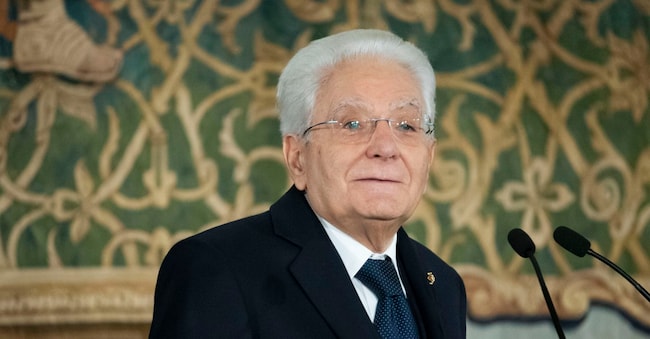
"The guarantees of autonomy and independence of the magistracy are unquestionable, precisely because they are functional to ensure that decisions are taken according to law and not on the basis of external reasons due to conditioning, prejudice, influence or for fear of retaliation or criticism. To make this independence effective, the Constitution has chosen the model of the autonomous government of the judiciary'. So says the President of the Republic, Sergio Mattarella, meeting ordinary magistrates in training at the Quirinale. The Italian judiciary, according to the Head of State, 'has contributed to the implementation of constitutional principles'. At the same time, "it has experienced a broad evolution in the performance of the tasks that the constitutional architecture has attributed to it. The path taken to date is useful for understanding the role of the judiciary and the areas within which it must perform the function assigned to it by the Constitution, in the exercise of jurisdiction through the respectful and impartial interpretation and application of the law'.
Constitution is based on separation of powers
Our Fundamental Charter "like the other European constitutions born in the second half of the 20th century, in the aftermath of devastating world wars and dramatic experiences of dictatorships, is founded on the principles of liberal democracy based on the separation of powers. Indeed, it pursues the dual objective of balancing the powers of the state and guaranteeing the inviolable rights and fundamental freedoms of each individual'. The concept is made explicit in clear letters by Mattarella. "In this constitutional framework, the judiciary is entrusted with a crucial task: applying the law and protecting the rights of the individual. It is a complex activity that requires maturity, a profound knowledge of legal sources and absolute impartiality in interpretation".
Apply law not mere automatism
"The interpretation and application of the law entails a demanding task, since the judge must refer to the entire legal system, respect for the Constitution and international sources, also taking into account previous case law". For the President of the Republic, 'the application of the law does not allow for mere automatism but represents the outcome of a dutiful activity of pondering and evaluation that the magistrate, both judging and investigating, must take on'.
Judicial decisions subject to scrutiny like any institution
Moreover, adds the Head of State, 'the judicial decision, once taken, in our rule of law is not an absolute truth but is subject to checks and controls - as required by the Constitution for any institutional activity - so as to ensure its conformity with the order'.


