
Justice of the Peace, no nullity for out-of-court judgements
The Joint Sections intervene to resolve the conflict between pronouncements. Simple breach of the allocation criteria recognised instead
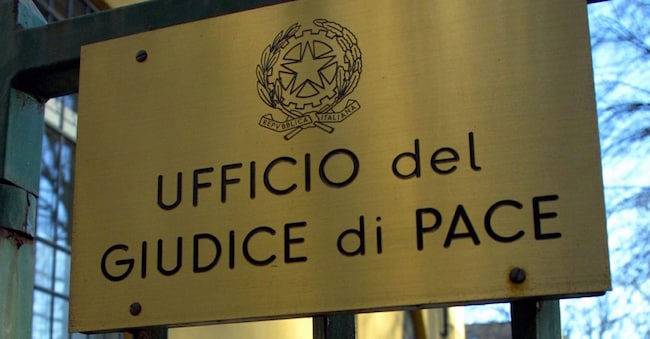
The violation of the rules according to which, for the criminal sector, honorary judges cannot be assigned the handling of proceedings other than those provided for in Article 550 of the Code of Procedure does not constitute absolute nullity, but a non-compliance, not sanctioned by nullity, with the provisions on the assignment of proceedings that do not pertainto the capacity of the judge. This conclusion was reached by the Criminal Unites Sections of the Supreme Court in a pronouncement anticipated by a provisional information.
The case dealt with
In the case brought before the United Sections, the defence had argued, the proceedings had been handled and decided by an honorary judge despite the fact that the crime of slander was also being prosecuted, which is sanctioned with a maximum penalty of six years' imprisonment and is not among those envisaged by the Code as falling within the jurisdiction of justices of the peace (direct summons offences, penalty limit set at four years). Moreover, the honorary judge, in the present case, did not judge in the absence of the professional judge, but as direct assignee of the file.
Absolute ban
The order of referral to the Joint Sections, pending the grounds, allows us to understand the different opposing theses. With the first, the most restrictive but also the most recent, the current discipline provides for "a prohibition placed by law that results in 'incompetence' to perform the act. An assignment and an activity that results, it is argued, not "only" from an erroneous assignment measure, in that it does not comply with the criteria for the distribution of affairs, but that is carried out outside the guarantees provided by the law and that leads to a ruling issued by a person who does not have "competence" and legitimacy". A violation of such significance that it leads to a conclusion of absolute nullity of the ruling.
The capacity node
The other position, evidently taken up by the Joint Sections, is anchored on the consideration of the violation as a mere transgression of thecriteria for the allocation of trials not sanctionable by nullity. For this view, in fact, it is only the absence in the judge of 'generic' capacity, which concerns appointment and admission to the judicial function, that must be affected by nullity, whereas the lack of 'specific' capacity, which refers instead to the regular constitution of the judge in a given trial, would not be as serious.
The Judiciary
In this perspective, then, it is Article 43 of the Judicial Order that assumes relevance, which, while it is true that it excludes the entrusting to honorary judges of the handling of proceedings not provided for in Article 55 of the Code of Procedure, nevertheless excludes the absolute nullity orthe non-existence of acts performed in violation of the prohibition.


