
Keisha Lance Bottoms wins Georgia: who is the first African-American female governor in US history?
She was elected in Georgia, a Southern state that has been a swing state in presidential elections in recent years. But at state level, a Democrat had not won here since 1998

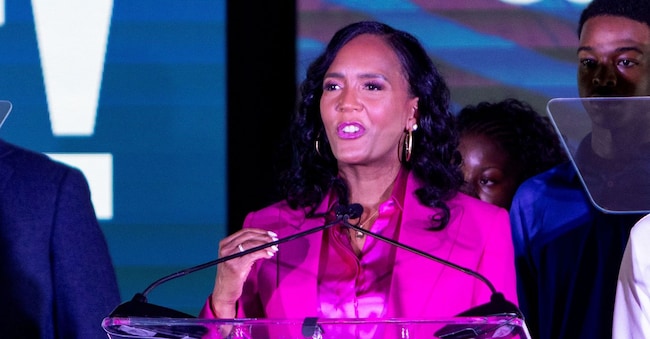
America is the land of firsts, of records being broken, of underdogs who make it. It has always been this way, and it is even more so following this mid-term protest vote, in which the country has decided to change direction compared with recent years. And amongst the new faces – the first Muslim senator, the first openly gay senator, and the likely first African-American Speaker of the House – the first woman and the first African-American to be elected Governor of Georgia also stand out. The gubernatorial elections – in no fewer than 36 out of 50 states – have received less attention than the races for the House and the Senate, but they are just as important because the powers of the office are such that they shape individual states and, ultimately, the direction the country will take in the short to medium term.
Keisha Lance Bottoms, aged 56, who was elected Governor of Georgia, has thus taken centre stage just a few hours after the vote because she is the first African-American female governor in the United States. She has broken a taboo that may seem unremarkable given that the United States has already had an African-American president, the Democrat Barack Obama. Her achievement is significant, however, because the issue of race remains ever-present in the United States (and has been exacerbated by the policies of the Trump administration) and because Lance Bottoms won in a Southern state marked by slavery, segregation and the civil rights struggle, in a race that seemed insurmountable: her opponent, the Republican billionaire Rick Jackson, poured far more money into the campaign than she did (100 million dollars from his personal fortune alone). Moreover, no Democrat had won in this state for more than 25 years, and no woman had ever been elected governor, but Lance Bottoms laid the groundwork well, drawing on her experience as mayor of Atlanta and as an official in the Biden administration.
Like many Democrats across the country, Bottoms has firmly focused on a message centred on economic issues and the ability of everyone to cope with the ever-rising cost of living. Bottoms played the high-inflation card, for which voters blame the president: from rising fuel prices to the difficulties of accessing affordable healthcare, to the unpopular war with Iran. In the final stages of the campaign, she also publicly criticised Jackson for some of his past statements in favour of building data centres, and linked her opponent to President Trump, who has a very low approval rating in Georgia. The construction of data centres is one of the most contentious issues in the United States at the moment, not only because of the environmental impact but also because of the costs borne by the public. Furthermore, in Georgia, the question of who won the 2020 presidential election remains a subject of debate, with Trump having never recognised the results and the now-defeated Republican candidate having aligned himself with the president.
Bottoms has also capitalised on the momentum generated by her rising party colleague Jon Ossoff, who has now been elected as the state’s first Jewish senator but whom some are tipping as a possible candidate for the 2028 presidential election. Ossoff took part in several rallies for the “United for Georgia” campaign alongside Bottoms, and his election committee transferred millions of dollars to the Democratic Party’s campaign to support it.
The victory of this 50-year-old lawyer marks a historic moment for Georgia’s Democrats. Although the state has emerged in recent years as a crucial battleground in federal elections, at state level it has continued to lean Republican: indeed, prior to Tuesday, Georgia’s voters had not elected a Democratic governor since 1998.


