
Kenneth MacMillan rewriting the rules of narrative ballet
Requiem was the concluding work in the celebration that London's Royal Ballet wished to reserve for one of the leading figures of English dance
by Angelo Curtolo
 Aggiungi Il Sole 24 Ore
ai preferiti su Google
2' min read
2' min read
When the celebrated choreographer John Cranko passed away at the age of only 45, his colleague, rival and friend MacMillan dedicated a creation to him, Requiem, one of his best, moving works, which was the concluding work in the celebration that the London Royal Ballet wished to reserve for one of the leading figures of English dance in the second half of the 20th century.
Director of the Company from 1970 to 1977 and Principal Choreographer from 1977 to 1992 MacMillan forged its collective identity, creating works that reflect real-life emotions, passions and human frailties. The narrative ballets that make up his legacy include Romeo and Juliet, Mayerling and Manon, considered masterpieces of 20th century ballet.
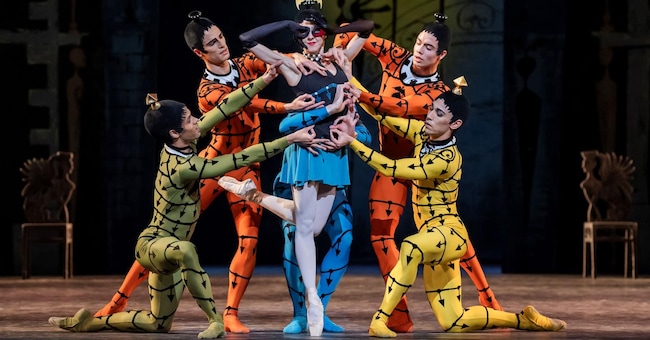
Danses Concertantes, Different Drummer, Requiem
.The three choreographies presented in this extensive and varied homage, Danses Concertantes, Different Drummer, Requiem, demonstrate the breadth of the choreographer's vision in the various periods of his activity.
Danses Concertantes, to music by Stravinsky, was the 26-year-old MacMillan's first work for the Sadler's Wells Theatre Ballet, in 1955, commissioned by Ninette de Valois, and marked the beginning of his acknowledged collaboration with set and costume designer Nicholas Georgiadis. The critical success reported, the first indication of the richness of future creations, prompted MacMillan to leave his work as a dancer to devote himself to choreography. Different Drummer, from 1984, was inspired by Büchner's play Woyzeck; the music was Webern's Passacaglia and Schönberg's Notte Trasfigurata; sets by the choreographer himself and costumes by Yolanda Sonnabend. An example of MacMillan's desire to rewrite the rules of narrative ballet, expanding the spectrum of subjects and challenging the conventions of storytelling. We recall the intensity of the interpretation of Marcelino Sambé, Francesca Hayward, Francisco Serrano, in the main characters. The concluding Requiem, from 1976, with music from Fauré's work of the same name, sets and costumes by Yolanda Sonnabend, immediately became a classic.
MacMillan Celebrated, Royal Ballet, London

