
Kenya: an executive programme in ‘Coffee Innovation and Business’ to strengthen the supply chain
The E4Impact initiative and the Catholic University, as part of the UNIDO, Mattei Plan and Global Gateway frameworks, aim to consolidate a key industry in the country

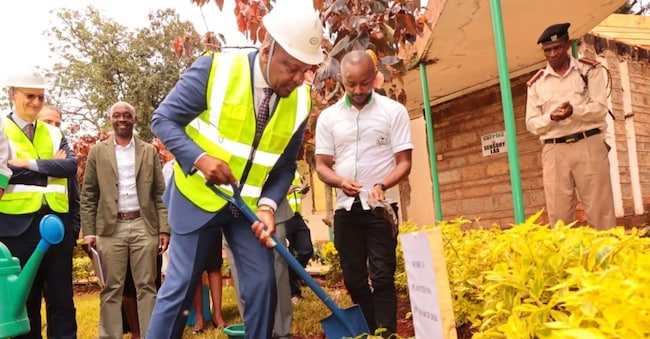
The first module of the Executive Programme in Coffee Innovation and Business concluded last week in Nairobi: a programme involving 25 Kenyan companies at the Coffee Research Institute (CRI) headquarters in Ruiru, in Kenya, with the aim of strengthening managerial and entrepreneurial skills throughout the supply chain, promoting local innovation and transformation, increasing the ‘climate resilience of businesses and cooperatives’ and ‘facilitating market access and attracting sustainable investment’.
The initiative was developed as part of the ACT Coffee Programme (Advancing Climate-Resilience and Transformation in African Coffee) of the United Nations Industrial Development Organisation (UNIDO), and forms part of both the Mattei Plan and the Global Gateway: the EU’s response to China’s Belt and Road Initiative, with a package of 150 of its 300 billion euros earmarked for infrastructure development in Africa. The lead partner is the E4Impact Foundation, in collaboration with the Università Cattolica del Sacro Cuore, illycaffè and the Ernesto Illy ETS Foundation, alumni of the Master’s in Coffee Economics and Science – Ernesto Illy, Lavazza, Slow Food, the Coffee Research Institute and Dedan Kimathi University of Technology.
The aim of a ‘structural transformation of the coffee sector’
Coffee is a vital industry in Kenya’s economy, with a supply chain comprising 800,000 farmers and exports of Arabica coffee to at least 50 global markets. According to a press release issued by the organisers, the aim is to bring together ‘public institutions, development partners and the private sector within a single coordinated framework to promote structural transformation of the African coffee supply chain’.
The initial countries identified are Ethiopia, Kenya, Uganda, Tanzania and Malawi, but the aim is to ‘extend across the entire continent’, strengthening ‘climate resilience’, encouraging ‘sustainable industrial development’ and promoting ‘greater local value creation from production to export’. The programme will consist of 236 hours and three modules. The first module was dedicated to ‘innovations in coffee production and processing’. The second will focus on ‘innovations in distribution, branding and marketing’, whilst the third will centre on ‘the development of an individual project or business plan with dedicated mentoring and a final presentation to a panel comprising representatives of the partners’.

