Beer Brewing

Kidda, a beer made with barley malt grown on the island, has been launched in Sicily

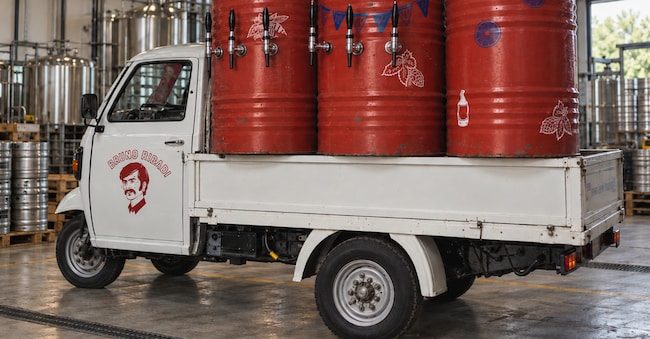
The first batch was brewed in Terrasini at the Bruno Ribadi brewery. The project was launched in collaboration with Coldiretti, the Italian Beer Consortium and the Italian Agricultural Supply Chain, and aims to establish a Sicilian beer supply chain, from the fields to production

3' min read

Translated by AI
Versione italiana

3' min read

Translated by AI
Versione italiana

The name is in itself a statement of identity. ‘Kidda’, in Sicilian, means ‘that one’: a word which, in the dialect, is also used to refer to something specific, recognisable and one of a kind. And it is the name chosen for a beer that seeks to forge a closer link between brewing and Sicilian agriculture.

The first brew is scheduled for today, Wednesday 16 September, at the Bruno Ribadi brewery in Terrasini. The main innovation lies in the raw materials: Kidda will be produced using malt made from barley grown entirely in Sicily, as part of a supply chain that uses Italian raw materials.

Loading...

It is not merely a corporate initiative. The project stems from a collaboration between Coldiretti, the Italian Beer Consortium and the Italian Agricultural Supply Chain, under the ‘Signed by Italian Farmers’ brand, and aims to bring together cereal growers, hop producers and breweries. The aim is to create a supply chain capable of retaining a greater share of the value generated by beer production within the local area. “We aim to establish a virtuous model – an example to be replicated – capable of fostering effective interaction between the agricultural sector and the world of industrial processing, a relationship that does not always arise naturally,” explains Francesco Ferreri, president of Coldiretti Sicilia.

The figures help to illustrate the scale of the challenge. According to an analysis by Coldiretti and the Italian Beer Consortium, there were 60 breweries operating in Sicily in 2025, nine of which were farm-based, accounting for 15 per cent of the total. In 2024, there were five farm-based breweries out of 64, and in 2023, seven out of 65. In just one year, therefore, their number rose from five to nine. The figures for 2026 will be available in November.

The demand for malt also gives an indication of the potential market. The list of Sicilian breweries attached to the project includes 16 companies, with total malt requirements amounting to 1,000 quintals. The largest share is held by Bruno Ribadi, with 430 quintals, followed by Rock Brewery with 200, whilst 24 Baroni and Birra Epica are listed as having 100 quintals each.

The document also provides an overview of a production network spanning several provinces across the island: the breweries listed include, in addition to Bruno Ribadi, Birra Epica, Rock Brewery, Birrificio dell’Etna, Compagnia del Fermento, Terre a Sud Est, Paul Bricius, Birra Pasi, Birra dei Vespri, Birra Chinaschi, Hippana, Kinisia, Officina Brassicola Siciliana, Alveria and Baroni Birra.

It is this demand that regional agricultural production is seeking to meet. According to Istat, around 130,000 quintals of barley are produced in Sicily, grown on just under 5,000 hectares. The hop sector, by contrast, is much smaller: according to CREA, there are just two farms operating on the island, covering a total area of 0.11 hectares.

“Our ambition, which is now beginning to take shape, is to build a genuine Sicilian beer supply chain, from the cultivation of raw materials right through to production. It is a project that is taking shape and which, we are convinced, has significant potential for growth,” says Giuseppe “Peppe” Biundo, owner and co-founder of the Bruno Ribadi brewery, established in 2016. Biundo is also a member of the board of directors of the Consorzio Birra Italiana.

Sicily is, after all, part of a national trend. In Italia, the total number of breweries fell from 1,182 in 2023 to 1,167 in 2025, whilst the number of farm-based breweries rose from 273 to 306 over the same period. The share of farm-based breweries is therefore increasing, whilst the total number of breweries has seen a slight decline.

The consumer market is also substantial. Almost one in two Sicilians – 47 per cent – drink beer, according to an analysis by Coldiretti based on Istat data. Four per cent say they drink it every day, 28 per cent less frequently, and a further 15 per cent only seasonally.

Loading...

However, the project must also take into account the availability of raw materials, processing costs and climate change. During the meeting in Terrasini, the research activities carried out in collaboration with the University of Udine as part of the FILO project will be presented. These focus on reducing water and energy consumption in the malting process and on the production of malts with specific characteristics using Italian two-row barley and resilient cereals.

Kidda thus becomes the first test case for a wider project: to incorporate a greater proportion of Sicilian agriculture into Sicilian beer, starting the supply chain from the barley fields rather than just from the brewery. The first brew will help determine whether this integration can evolve from an experiment into a sustainable production model.

Copyright reserved ©
Loading...

Brand connect

Loading...

Newsletter

Notizie e approfondimenti sugli avvenimenti politici, economici e finanziari.

Iscriviti