
Kiev under siege: Moscow steps up attacks on bridges and power stations ahead of winter
According to a document cited by the New York Times, the aim is to bring about the collapse of Kyiv’s energy system. Meanwhile, Zelenskyy has claimed that Putin has ordered his generals to no longer obey any rules of war

Key points
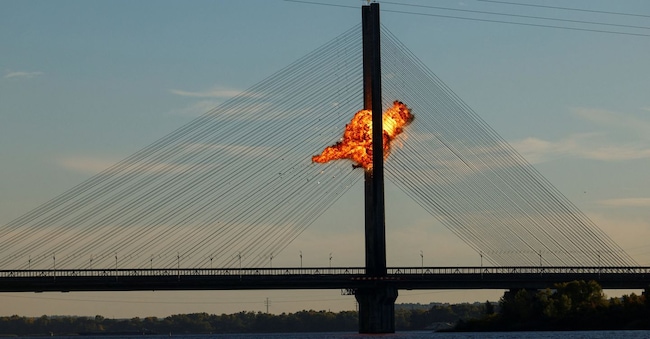
The paralysis of traffic in Kyiv is yet another ordeal imposed on the Ukrainian capital by Russian attacks, which in recent days have crossed yet another red line by targeting the Pivdennyi, the South Bridge, in the southern part of the city: a crucial piece of infrastructure for road links between the two banks of the Dnipro and for the metro, which was forced to close in both directions after Friday night’s bombardments compounded the damage recorded on Thursday, when the bridge – used by tens of thousands of commuters – was repeatedly struck in broad daylight. The traffic restrictions imposed on the other two nearby bridges, Paton and Metro, have helped to split the city in two: structures of this kind had generally been spared until now.
Putin’s war without rules
But by now, for Vladimir Putin, all the rules have gone out the window, said Volodymyr Zelensky yesterday, speaking to the Financial Times from the shelter of a school that had been struck by a Russian drone the previous day: citing information received from Ukrainian intelligence, including through wiretaps of senior Kremlin officials, Zelensky explained that in September the Russian president had ordered his generals to no longer obey any rules of war. The aim is to intensify whatever is necessary to isolate and break the population’s resistance, aided by the onset of winter. Schools, hospitals, data centres, telecommunications, power stations, and now railways and bridges.
The alarm has also been raised by an intercepted document that the Ukrainian Energy Minister, Denys Shmyhal, shared with his European counterparts in recent days: the New York Times reports on this, having obtained a copy. It details a Russian plan aimed at causing the collapse of the national energy system through the use of a thousand missiles, drones and bombs targeting power stations – including hydroelectric and thermal plants – as well as pumping stations and water treatment plants. The greatest concern, however, centres on the substations that supply electricity to the nuclear power stations (less than one kilometre from the reactors), with the aim of disconnecting them from the grid and forcing Ukraine to shut down its three remaining operational plants. The document sets out the figures: the aim is to deprive Kyiv, Kharkiv and Odessa of 90 per cent of their electricity and heating supplies, and to destroy the sewerage system.
The chaos the Kremlin wants
Speaking to the Spanish newspaper El País, Zelensky said that, as well as damaging civilian infrastructure, Putin aims to force the capital’s inhabitants to flee, fuelling new waves of refugees and creating further sources of friction with neighbouring European countries.
During a Defence Council meeting broadcast on the Telegram channel, the Mayor of Kyiv Vitaly Klitschko yesterday denounced the ‘extremely dire situation’ facing the capital: ‘We can no longer pretend that we can live as if we were in peacetime!’ he said. ‘The enemy is ravaging Kyiv. Critical infrastructure, logistics, housing, social services. The aggressor has also resumed destroying the energy sector.’ The mayor has asked the various municipal departments to coordinate their efforts and to ‘speak honestly’ to residents about the situation, because unity between the people and the authorities will be the only way to withstand the attacks and enable Kyiv to get back on its feet.


