Formula 1

Kimi Antonelli in Miami makes it three in a row (with dedication to Alex Zanardi)

Third pole and third consecutive victory for the Mercedes driver from Bologna. A domination that came about thanks to a race far from lacking in surprises

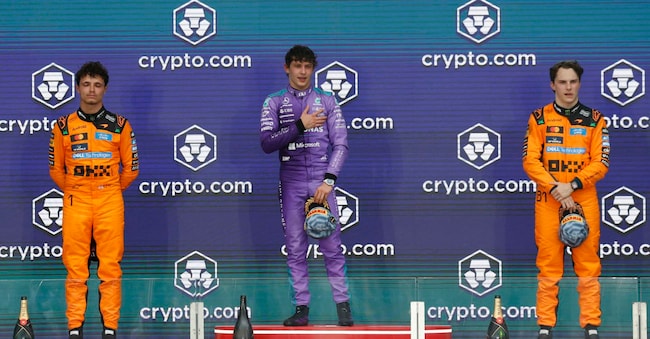
by Alex D'Agosta

Andrea Kimi Antonelli vince il terzo Gran premio di Formula 1 consecutivo e guida il Mondiale con Mercedes REUTERS

6' min read

Translated by AI
Versione italiana

6' min read

Translated by AI
Versione italiana

"This pole is for Alex". Kimi Antonelli had said it on Saturday evening, in that moment of grace in which the stopwatch sanctioned for the third time in a row his overall record. Alex Zanardi, Bolognese like himself, mentor, family friend, died on 1 May 2026, two days before the race. And the first of May, in this sport, is a date one does not forget: thirty-two years earlier, in 1994, Ayrton Senna had lost his life at Imola. Two names, two dates that coincide, two men that Formula 1 brings with it. And now a nineteen-year-old boy from Bologna wins at Miami with that dedication still on him.

Third victory in this world championship, third start from pole. A parallelism that has no recent precedent: to find a comparison you have to go back to the beginnings of Senna himself and Michael Schumacher, the only two drivers to have opened their season with three consecutive poles before Antonelli. The boy to whom, at the age of eleven, insiders already attributed an instinctive control of the car in the wet, something reminiscent of the absolute great champions, quickly turned that promise into certainty.

Loading...

The route is well known, but it is worth retracing it: Formula 2 skipping Formula 3, then the three-pointed star's dated single-seaters to understand the medium, the simulators, Toto Wolff's patience in building a programme without rushing the stages. One year of apprenticeship and then this. Three wins, three poles, the lead in the world championship.

Saturday: McLaren dominates Sprint, Antonelli responds in qualifying

Saturday had already told two different stories. In the Sprint, Norris had led from start to finish. Nineteen laps in, McLaren first and second with Piastri, Leclerc third. Antonelli, who started from the front row, had again lost positions at the start due to a lack of rear grip, then was penalised five seconds for track limits and finished sixth. Mercedes had lost for the first time this season. McLaren had brought a significant upgrade package to Miami, and it showed.

In afternoon qualifying, however, Mercedes had responded. Antonelli had put in a lap of 1'27"798 that no one was able to approach: Verstappen second at 0"166, Leclerc third, Norris fourth. Russell fifth, Hamilton sixth, Piastri seventh. Hadjar, who had set a Q3 time, was then excluded for technical non-compliance (a bottom protruding 2 millimetres beyond the permitted volume) and had to start from the pit lane on hard tyres.

Sunday: three hours ahead and a start to decipher

The race had started at 1pm local time, three hours earlier than planned. The threat of thunderstorms over Florida (including the risk of lightning), with Fia suspension procedures already in place, had forced a forced choice. It was the right context to keep in mind that it was still the first year of the new hybrid single-seaters: semi-urban circuit, close barriers, asphalt with poor grip, cars with a power delivery that changes in a way that is not always predictable. Best to avoid water.

The start immediately shuffled the cards. Leclerc took the lead on the inside, Verstappen lost control while fighting for position and sank to 16th. Antonelli found himself second, not without difficulty, and for a few laps saw the Monegasque in front. The fight between the Italian Ferrari and the Italian driver in the Mercedes: one of the narrative threads that intertwined throughout the first part of the race. One lap time and Norris overtook Antonelli, then Leclerc ceded his position to the McLaren driver as well. But Leclerc does not give up and gets back in front: for a few more laps the lead is in the balance between three cars.

On lap five, Isack Hadjar's accident at the hairpin brought the Safety Car onto the track. Almost at the same time, Pierre Gasly was involved in a collision with Lawson that overturned his Alpine: the Frenchman exited the car without any physical consequences reported. Two separate incidents that brought an already moving situation to a halt.

The regulatory node: yoyo racing still open

One cannot read this race without framing it in the technical regulatory context that preceded the long wait before flying to Miami. Formula One had been at a standstill for five weeks: the cancellation of the Grand Prix in Bahrain and Saudi Arabia, caused by the instability linked to the war in Iran, had imposed a forced pause that the Fia had used to work on corrections to the new regulations. The energy recovery limit in qualifying had dropped from 8 to 7 megajoules; the maximum power in superclipping had risen from 250 to 350 kilowatts. Measures designed to reduce power drop moments in the straights, so-called superclipping, which had already caused discussion in the first three races. It was hoped for a return to a more natural driving style.

The effects have been there, but partial. The discussion on what further changes to introduce is still open. Verstappen, who has been the most outspoken on the issue for weeks and who has spoken publicly about considering his future in Formula 1, summed it up precisely: 'It's a small adjustment. It's still not what's needed. Part of the paddock agrees. The less experienced fans enjoyed themselves anyway: the race produced frequent overtaking and position changes. But most insiders still register that the drivers are forced into technical compromises that make it difficult to read the race even from the inside. Hamilton, who started sixth, actually remained sixth in the early stages of the race, despite a Ferrari considered capable of more on that track.

The race is decided in the pits

Norris takes the lead on lap 13 and builds a margin over Antonelli. The pit stop window turns everything upside down: when the cars reposition themselves, Antonelli is in front and Verstappen - who had pitted on lap seven to recover after his spin - finds himself with worn hard tyres and gives ground to both. In the second half Antonelli doesn't administer: he reports gearbox problems and rear end degradation, Norris drops back to within a second. But the margin gradually reopens to two seconds, and the rain announced several times over the radio never arrives decisively. Verstappen pays for his early stop to the end: Leclerc and Piastri both pass him with ten laps to go. On the last lap, with the podium already drawn, Leclerc loses control at Turn 3, hits the wall and, with damaged steering, cuts more chicane: Russell and Verstappen pass him before the finish line. Piastri inherits third place. Antonelli, Norris, Piastri. In the post-race period the Fia inflicted twenty seconds on Leclerc, with a drive-through converted for repeated track limits, relegating him to eighth place: Hamilton climbs to sixth, Colapinto seventh to a career best. Verstappen was given five seconds for exiting the pits beyond the white line, but the gap on Hamilton was enough: fifth confirmed.

Three races, three victories, a boy from Bologna

Antonelli leads the world championship more and more steadily. After four rounds he has won three times from pole, lost a Sprint to track limits, and is leading with a manageable but solid advantage over Russell, his team-mate who had already declared in 2025 that he was not comfortable on certain tracks, and who confirmed the trend in Miami! In fact, Antonelli seems more effective on tracks less driven by fast corners with high aerodynamic load: a fact to follow in the next stages.

There is something in his story that has to do with the territory in which he grew up. Bologna is in the middle of Motor Valley: Ferrari, Lamborghini, Ducati built within an hour's drive. A little further on, the legendary and indispensable Dallara. His father Marco raced professionally; he started in karts at the age of three. The land of motors has been producing drivers for generations, but you don't often see them at this level.

Zanardi was from Castel Maggiore, in the province of Bologna. Racer, Paralympic champion, family friend of the Antonellis. Kimi recounted that they used to go karting together 'on the track near home where I started'. On Saturday night, Antonelli had dedicated his pole to Zanardi. On Sunday, he won.

Copyright reserved ©
Loading...

Brand connect

Loading...

Newsletter

Notizie e approfondimenti sugli avvenimenti politici, economici e finanziari.

Iscriviti

Tutto mercato WEB