
'Kiritsis is the first hero of a financial reality thriller. I fear debts and pay them off immediately'
The independent filmmaker talks about his latest film, 'Dead Man's wire', about a real kidnapping that took place in the 1970s in the US, with the negotiations taking place on live TV

6' min read
6' min read
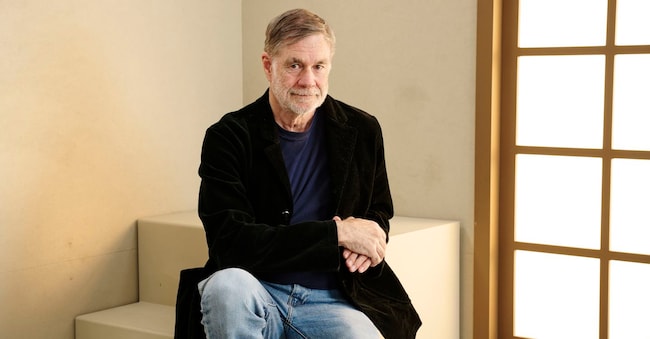
Sighing, trying to hold in the air so as not to be rude, Gus Van Sant occasionally turns his impatient eyes to the sky. The proverbial shyness and reluctance of the former rebel boy of American cinema, born in Louisville in 1952, is not a pose. His hair, now grey, always parted as a good boy, his black short-sleeved shirt with faint oriental reliefs, Van Sant waits, drumming his fingers on the back of his hands, for the scaffold he must undergo to publicise his latest remarkable film, Dead man's wire, which might translate as The Dead Man's Wire, in cinemas next year.
Screened out of competition at the Venice Film Festival, it could very well have been in the race, because, based on a true story, it is a taut psychological, action and thriller film, with which Van Sant returns to his old laurels after the cinematic ups and downs of recent years.
Dead man's wire recounts the first case of the television spectacularisation of a news event. It is 1977, in Indianapolis, and former real estate agent Tony Kiritsis, believing he has been swindled by his bank, arms himself with a sawed-off shotgun and kidnaps the son of the owner of the credit institution, the Meridian Mortgage Company. He keeps him hooked with a wire tightened around his neck like a noose and attached to the trigger, so as to prevent him from making any false moves. Kiritsis loves being filmed and talking to the media, unwittingly becoming the first star of a reality show. The negotiations, broadcast live on TV, kept Americans in suspense for 63 hours.
Kiritsis has become a hero for better or worse. There is a very famous photo of the 'odd couple' (found on the Internet) who won
to freelancer John H. Blair the Pulitzer for the best news shot.


