
Kivu, the border 'catastrophe' and EU agreements with Rwanda
Commissioner Lahbib denounces conditions on DR Congo's eastern border, but there are those who dispute mining agreements with one of the two parties
from our correspondent Alberto Magnani
 Aggiungi Il Sole 24 Ore
ai preferiti su Google
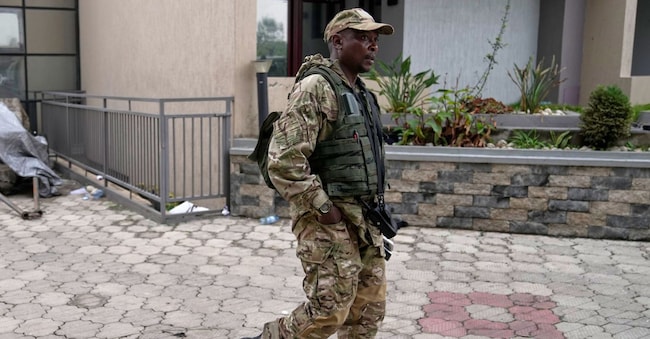
Nairobi - No EU delegation had entered Goma, on the eastern borders of the Democratic Republic of Congo, since the beginning of the M23 advance in January 2025: the offensive by pro-Rwandan militiamen in conflict with the regular army in Kinshasa. After a visit to some facilities in the city, Commissioner Hadja Lahbib summed it up with one adjective. The most immediate: the situation is 'catastrophic', she said, highlighting 'increasing and flagrant violations of international humanitarian law'.
Lahbib, travelling between Rwanda, the Democratic Republic of Congo and Burundi, announced the mobilisation of more than EUR 81 million 'in the Great Lakes region' and declared his pressure on the opening of 'humanitarian channels' for the inflow of aid into the region. The commitment 'must be fully respected', said Lahbib, even if the premises of the crisis hang in the balance and there are those who point out an original short-circuit: the mining agreements signed by Brussels with Rwanda, one of the two de facto factions in the conflict, in the crosshairs of international observers for its support to the M23 militias and the illicit trafficking of minerals extracted on the eastern borders of the Democratic Republic of Congo. The Democratic Republic of Congo itself has accused Brussels of a 'double standard' between criticising Kigali and maintaining trade agreements.
Something has moved since then. The EU High Commissioner for Foreign Policy, Kaja Kallas announced the start of a 'review' of the agreements and the EU itself sanctioned some figures linked to the M23. Still not enough, according to the criticism of those who accuse Brussels of a too 'passive' approach compared to the scope of the crisis and the negotiating power implicit in the agreements.
The conflict in DR Congo and the role of the EU
The conflict in Kivu, a province on the eastern borders of the Democratic Republic of Congo, is being waged between the Congolese regular army and allies against the M23 militiamen, an acronym of the 23 March Movement, a faction of Tutsi rebels operating in the area and believed to be financed by Rwanda (Kigali has always denied this).
Hostilities have erupted intermittently in recent years, accelerating in early 2025 with the advance of the M23 across the border, the conquest of Goma and aims of expansion on the rest of the eastern border. The exact accounting of the crisis fluctuates between different estimates, although EU data itself registers at least 8.2 million Congolese displaced persons and 28 million citizens reduced to acute hunger. Theoretically, DR Congo and Rwanda were supposed to have reached a truce brokered by the US and Qatar in December, the so-called 'Washington accords', along a double track of mining agreements and a ceasefire from hostilities. The former seems to have been set in motion, the latter faltered from the outset and recorded several violations after and during the very signing of the agreements. The temperature of the clash may rise again after a drone attack killed M23 spokesman Willy Ngoma.


