We learn from our mistakes

Knowing and deciding in the age of artificial intelligence

The role of artificial intelligence as a co-pilot in decision-making

(Adobe Stock)

4' min read

4' min read

We spent a long time believing thatartificial intelligence was a threat and for years, before it became a sort of commodity, we approached it with the mistrust and fear that often accompanies major technological transformations.

Now that on the home page of our phone the icon of ChatGPT has, in many cases, replaced that of Chrome or Safari, we realise that perhaps the fear at the time was a little too amplified. This does not detract from the fact, however, that the use of AI can raise a number of concerns, especially in the way it is used when we make decisions.

Loading...

One of the main questions we asked ourselves in writing this article is precisely this: is AI a support or a substitute for knowledge?

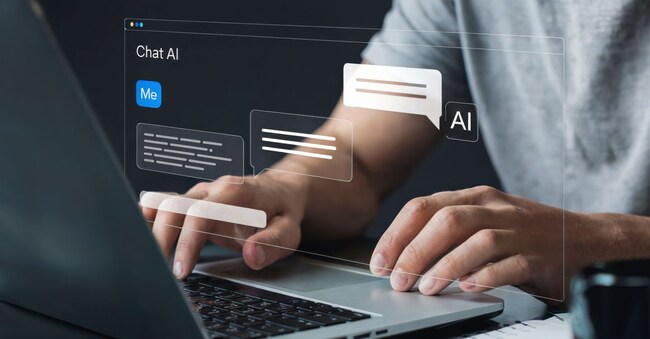
From our point of view, Generative Artificial Intelligence is not a substitute for us, but a co-pilot, a collaborator that amplifies our reasoning capacity.

Simply copying and pasting would not be much different from starting a search engine query and stopping to read what is returned as the first result.

With artificial intelligence, on the other hand, it is necessary to establish a kind of dialogue, to ask the right questions, to change them, to question, and to open one's mind to new scenarios that had not previously appeared to us.

We have often spoken in this column about cognitive redundancy. When we explore our relationship with generative AI (and thus talk about platforms that can provide answers to our questions) we need to think about what is called harmonic redundancy. This is a kind of bouncing and questioning capacity that we can activate with AI and that allows us not to stop at the first answer, as we often do with many of the questions we face on a daily basis, or as, at least, we should!

Establishing a relationship of harmonic redundancy with AI means not focusing only on the first impression and enriching the end result thanks to the continuous exchange and a 'thought' fuse that AI can ignite: that of our curiosity.

When we get to this point, the evolution from a simple web search is clear because we open up our experience not only to the possibility of collecting results, but of performing what is called 'collation of sources'. This definition, which between analogue and digital seems to combine the smell of glue and the power of data accumulation, is a term that refers to the ability of AI systems to collect, compare and integrate information from multiple sources, thus ensuring a more precise, contextualised and reliable response. Collation is not just a process of data collection. It is a more sophisticated operation that involves comparing, verifying and harmonising information to build a coherent overall view. In essence, AI engages in a synthesis activity that can greatly improve the quality of the decisions we make.

It becomes essential, however, when we make a decision, to start with the right questions in order to understand whether we have all the elements to decide, to understand how we can go deeper and continue to broaden our perspective. Perhaps not everyone knows that, in fact, even in scientific questions where AI proves to be a valuable ally, the very ancient technique of the 'Socratic dialogue' is used, the method based on questions and answers between Socrates and the interlocutor on duty who, proceeding by refutation, i.e. by successive elimination of contradictory or unfounded hypotheses, proceeds towards the final result of knowledge. Obviously, the knowledge and skills of the person asking the questions are a necessary condition for starting this decision-making process.

In continuous training, it is obvious that AI can be a stimulus to reasoning and making decisions that are off our usual radar, thanks to the practices we have listed above.

Deciding, in any case, is difficult.

Problem solving and decision making in business and human contexts are not 'neutral' activities, pure application of specific technicalities. So how do we exploit it when we make an important decision, perhaps in an uncertain domain? What impact does this have on decision making? The decisive point is that deciding means taking responsibility for the choice. Were it not so, decisions would only be the result of a logical calculation. In reality, all judgement activities do not only derive from logic, but also have to do with value, political, strategic, contextual and emotional aspects.

We consider the decision-making process as divided into 6 different phases:

1) Identify the decision to be made

2) Gathering relevant information

3) Identifying alternative solutions

4) Evaluating solutions

5) Choosing between alternatives

6) Acting

At which of these stages can artificial intelligence help us?

Making decisions no longer depends only on the ability to guide a process in an ever-changing environment, but also on the ability to manage and integrate a huge amount of data and information.

This makes the decision-making process undoubtedly more complex, requiring more effort and much more processing time for people to understand what and how much data needs to be considered in order to arrive at an optimal choice.

If we imagine AI as a piano, anyone can press the keys, but being able to play (without necessarily being Beethoven!) is something else entirely.

So, what matters is not the technology we use, but how we use it or how we ask someone to use it to get the results we need. It is a question of attitude, mindset and skills. This will be the real competitive advantage of each person.

*Partner of Newton Spa

Copyright reserved ©
Loading...

Brand connect

Loading...

Newsletter

Notizie e approfondimenti sugli avvenimenti politici, economici e finanziari.

Iscriviti