
Knowledge under control and a 'passion for the reverse side of things'
Daniele Maria Pegorari recounts the technocratic drift of today's world through Calvino, Pasolini and Volponi
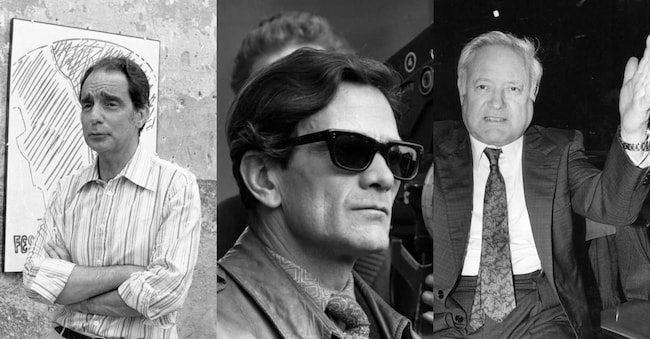
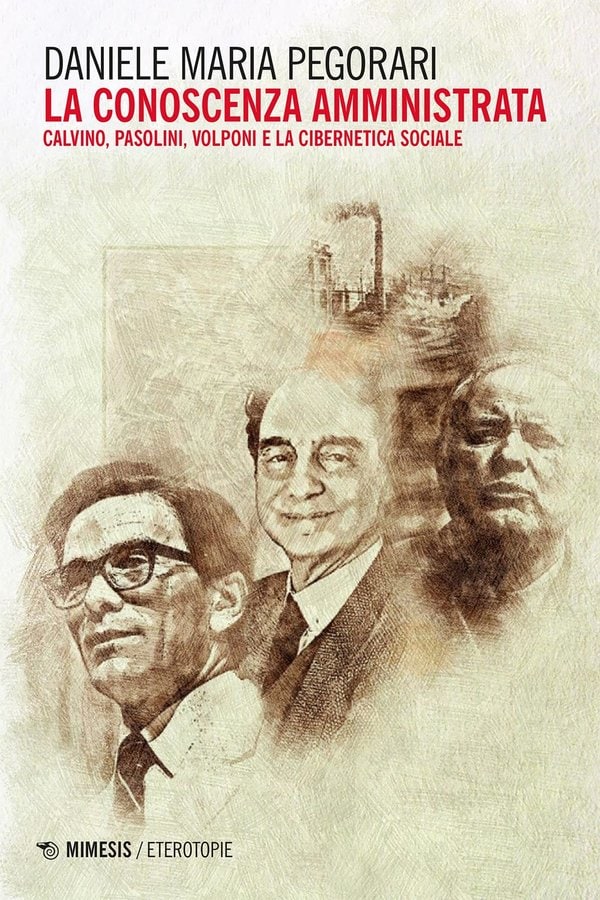
In his essay Administered Knowledge. Calvino, Pasolini, Volponi e la cibernetica sociale (Mimesis), Daniele Maria Pegorari takes his cue from the idea of 'administered society' formulated by Max Horkheimer to reflect on the technocratic drift of the present. If for the philosopher from Frankfurt the risk was that of a world entirely regulated by procedures and devoid of freedom, Pegorari updates that gloomy thrill to the time of finance-capitalism, emphasising how knowledge itself - organised in knowledge, school, university and cultural industry - becomes an instrument of control and consensus rather than emancipation. The book, divided into five sections, opens with a dense introduction dedicated to the 'narratives of the administered society', in which the author identifies in Italo Calvino, Pier Paolo Pasolini and Paolo Volponi three figures capable of intuiting 'at birth the definition of a technical, managerial, engineering model of global society': in short, 'their imagination questioned the effects of this transformation well in advance'.
Calvino and the web
The chapter devoted to Calvino - which includes analyses of The Raven Comes (1949) and The Invisible Cities (1972) - shows how the San Remo writer de facto anticipated the post-modern condition: a subject immersed in a dense network of signs, unable to orient itself and distinguish reality and representation. The teeming universe of Invisible Cities thus becomes a metaphor for the web, a continuous and enclosed space from which it is impossible to escape or escape.
Pasolini and the decline of the intellectual
In Pasolini, also, Pegorari captures a flaming prophetic force: the denunciation - already in the early 1970s - of the emergence of a 'social cybernetics', traversed by technology and bureaucracy that rigidly programme individuals and behaviour. In The Poetry of Tradition (Trasumanar e organizzar, 1971), Pasolini grasps the loss of the past and the decline of the intellectual, replaced by docile figures, functional to the consumer system: themes that foreshadow, with surprising topicality, the logic of the cancell culture.
Volponi and the crisis of Olivetti's hopes
The section on Volponi completes the triptych, revisiting La macchina mondiale (1965) and Il pianeta irritabile (1978) as parables of the disintegration of the subject and the crisis of the humanistic industrial model embodied by Olivetti. In these novels, the hope for a 'natural production' alternative to capitalism survives as a utopian residue and, at the same time, an act of resistance.
The last part of the book, The non-existent reader, returns to a sociological level to question the role of reading in the age of hyperconnection. Pegorari describes an increasingly absent reader, distant from texts and deprived of the possibility of recognising himself in them, while literature itself loses material consistency and the ability to generate empathy. Rich in precise references, La conoscenza amministrata denounces the distortions of modernity and invites us to rethink the humanities as a space of critical freedom. According to Pegorari, only by recovering the 'passion for the reverse of things' and care for the human will it be possible to escape the impersonal machine of power and restore political meaning to knowledge.

