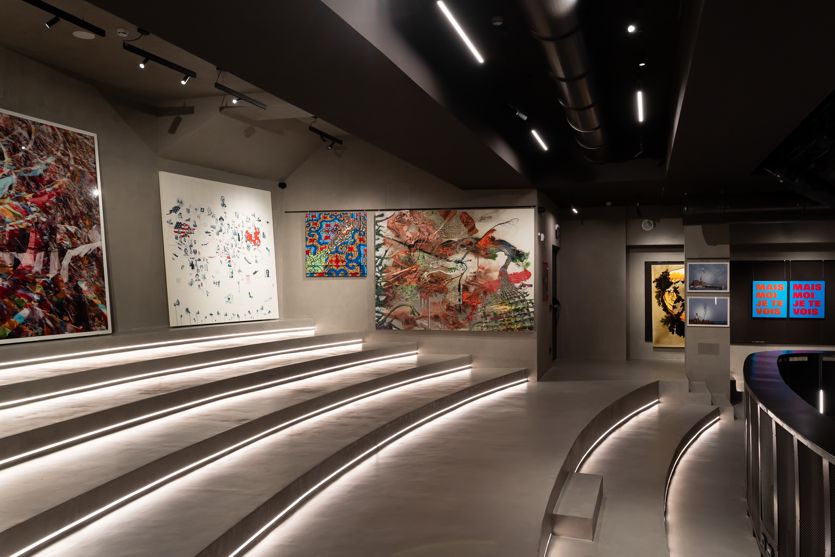
Kruso Art in the former Cinema De Amicis and advance lending on auction lots
The subsidiary of Banca Sistema is aiming at the main listing on the stock exchange and offering a pledge of 35 per cent on the appraised value

Key points
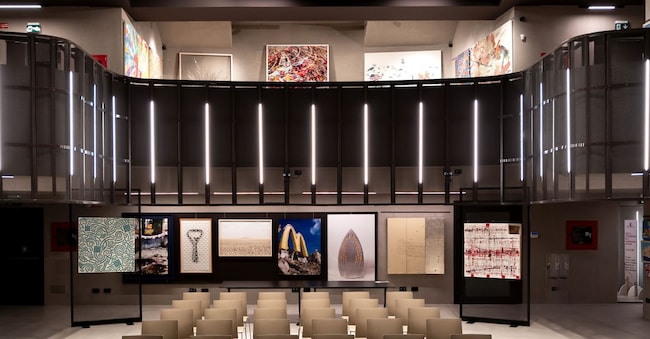
The auction house Kruso Art inaugurates its new Milan location in the former Cinema De Amicis, a place dear to the Milanese that, after having been a screening room from 1960 to 2002, has long been an occupied space. With the acquisition by Banca Sistema, it now reopens after a nearly six million euro redevelopment that sought to retain some signs of the place's history and post-industrial charm.
A uniquely sourced collection
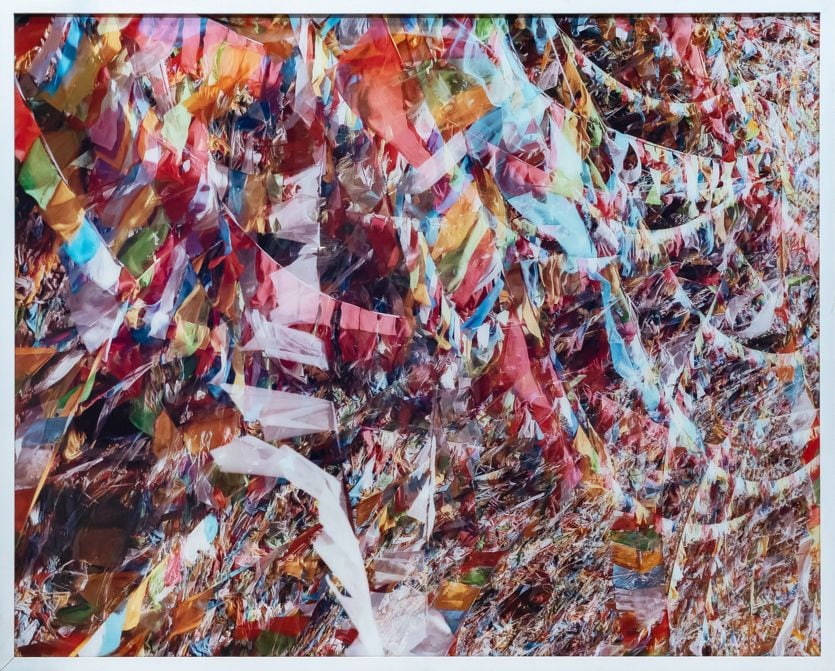
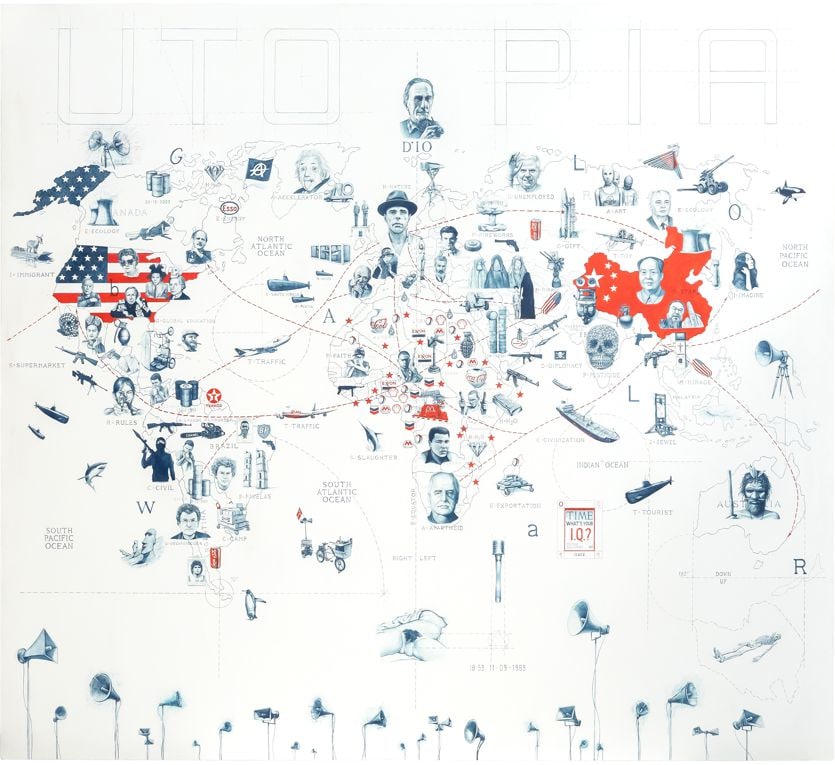
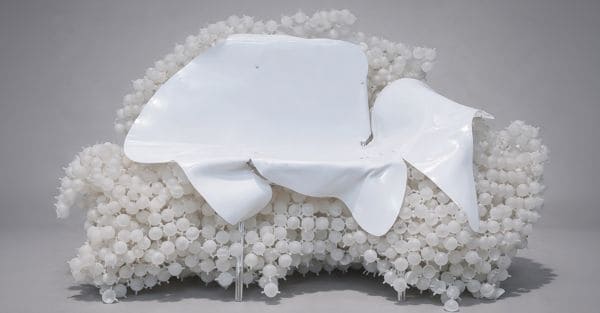
In the multifunctional space, which is intended to be a place open to the public, the first auction will be held on 15 April, during the Milano Art Week, with the dispersal of a unique collection. It consists of 57 works of contemporary art by Italian and international artists belonging to a collector on whose name confidentiality is maintained and who, according to the auction house, is selling in order to acquire other works. Among the highlights are a diptych by Swiss artist Rémy Zaugg at €25-30,000 on the perception of art, a typical bic pen work by Giuseppe Stampone, estimated at €8-10,000, a print by Darren Almond on Nepal at €8-12,000, a "chair" by Loris Cecchini at €6-8,000.
The listing on the Milan Stock Exchange
The opening of the new location anticipates news, above all, in the financial sphere. The Kruso Art auction house, in fact, was born in 2022 with the acquisition of another auction house, Art-Rite, itself born in 2018, by Kruso Kapital, a financial operator of Banca Sistema. A listing on the main list of the Milan Stock Exchange is announced for June, with an upgrade from the current Euronext Growth Milan (Egm) and the exit from Banca Sistema's perimeter.

The advance loan on the lots offered
The fact of having a financial operator behind it allows Kruso Art to offer services such as an advance loan - a pledge credit agreement with a bearer policy - of 35% of the estimated value on the lots offered, something that an auction house cannot do, as they are not supervised entities and have other business models. Collectors are given the possibility of requesting an advance on the sale of modern, contemporary, antique and numismatic works of art, of material other than gold (the Art-Kredit product cannot be used in the case of precious objects in gold, investment gold such as coins and ingots, watches or silver), up to a maximum value that can be granted under the regulations equal to 2/3 of the estimated value (there are no minimum values for the loan). The Annual Percentage Rate (APR) is 9.21% and Tan is 9%, the duration is six months. If the work, which is valued through inclusion in the catalogue and exhibition, should later go unsold at auction, in agreement with the consignor, it can be offered again at a subsequent auction. Auction fees are 25% of the hammer price. Let's take an example: if the loan is for 3,000 euros on an estimated value of 10,000, with a fixed rate of 9% and a duration of 6 months, an APR including interest of 133.15 euros applies.
The new way of working of auction houses
Kruso Art aspires to be a contemporary auction house, where technology plays a key role in facilitating the sale of lower value objects. The number of auctions planned for 2026 is 40, but the aim is to reach around fifty each year (on average, operators in Italia hold 30-35 per year). Every Tuesday there will be evaluation days open to those interested. Gianluca Garbi, president of Kruso Kapital, and Andrea Orsini Scataglini, ceo of Kruso Art, note how the way of doing auctions has changed: today, one no longer thinks in watertight compartments, so there is more and more cross-fertilisation between departments (an example is so-called 'table art', which includes silverware, porcelain, glassware, textiles) and the way payments work has also changed, so that it is not uncommon to ask for instalments. Moreover, young collectors are white flies, as young people today are less and less attached to the concept of ownership.