Art is relational and shared practice between cultures and indigenous knowledge
From Kunbi's painting to Heráclito's rituals, from Maiae's plots to Flores' kéne

Key points
The absence of indigenous art on the international scene is only partly filled in the 61st Biennale, where not all countries take the opportunity to propose new ways of making art. This is the case for Peru, which places at the centre of its pavilion - curated by Issela Ccoyllo and Matteo Norzi - an indigenous artist: Sara Flores (White Cube), one of the 35,000 members of the 176 Shipibo-conibo communities, a people who have lived in the Peruvian Amazon along the Rio Ucayali since 900 AD. Among them is also Celia Vásquez Yui (Mindy Solomon Gallery), present at the Biennale with her sculptures in the central exhibition 'In Minor Keys'.
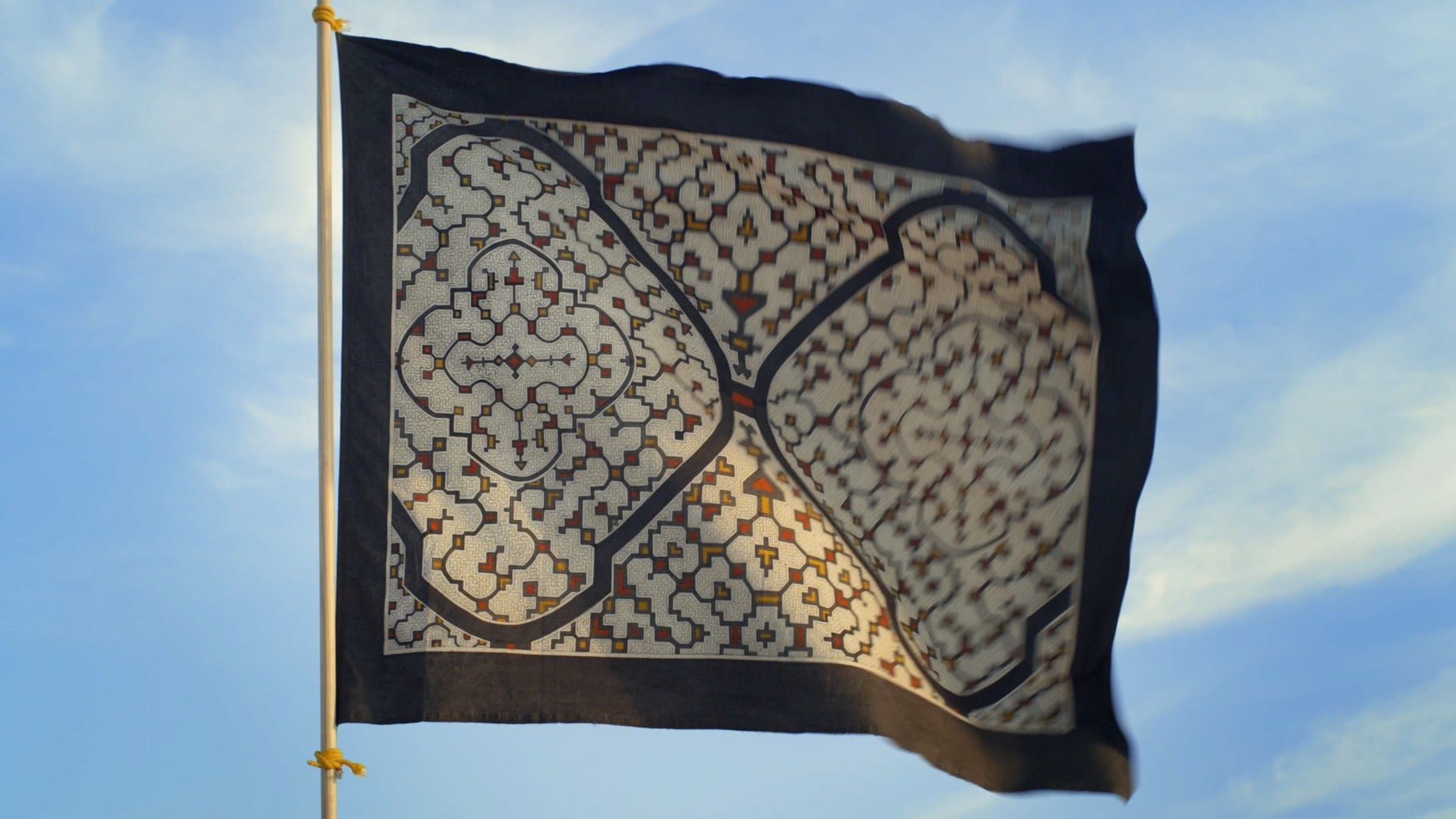
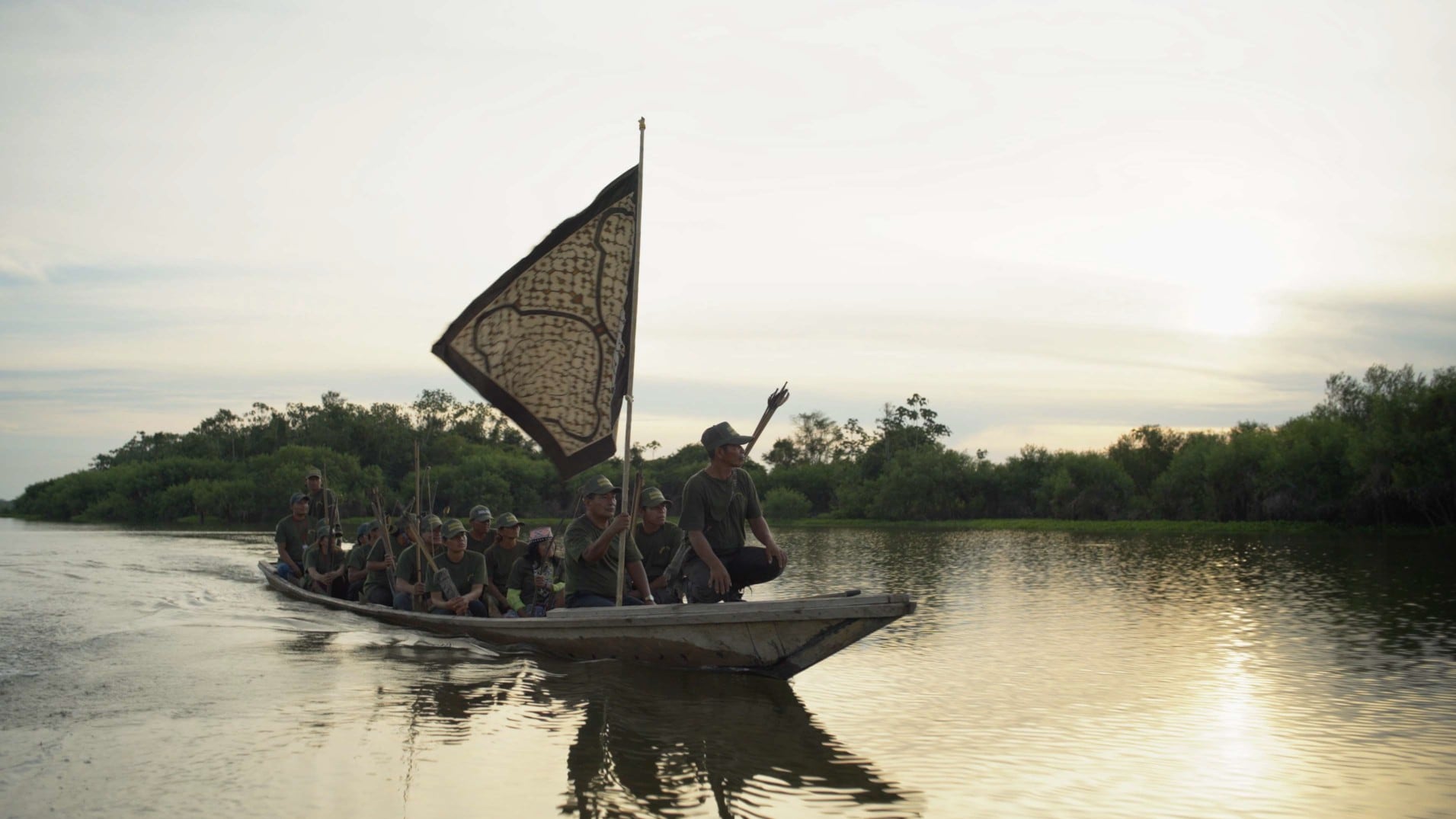
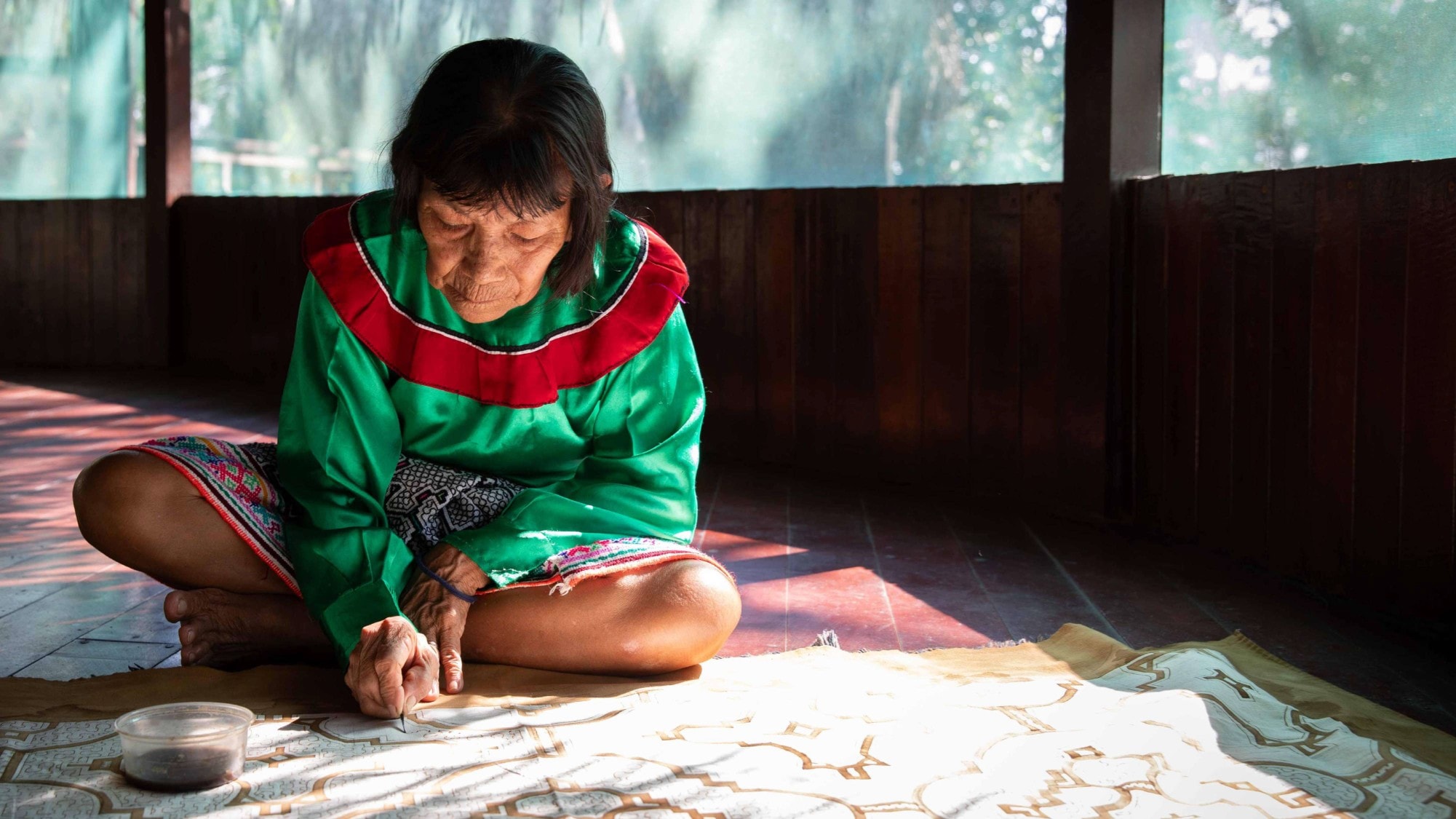
The political in Flores' art is very powerful and, at the Arsenale, she will bring the video of the process of creating the flag, designed to unite her people symbolically and legally. The video shows Flores procuring roots, plants and mud that she will use for painting, but which she also uses for cooking, cosmetics or as medicine. In Flores' community, every aspect of life is shared and even the decoration of the cotton canvases, hand-painted according to ancient Kené art, is carried out by the artist with the help of her daughters and granddaughters. Flores' manner recalls cosmic order within a 'family' order. Thus the walls of the Peruvian pavilion will become the walls of the Shipibo-conibo house, covered with works that tell of an ancient knowledge, handed down from mother to daughter. In the centre of the room, two mosquito nets will be placed, like those used in the jungle to protect against insects, and recalling the one under which Flores, as a child, used to imagine Kené motifs when she woke up, for which she has now become world-famous.
Veronica Pereira Maia, a leading figure on the East Timorese conceptual art scene, whose practice is rooted in tais weaving, will also be present in her national pavilion. Her works tell of exile and the thread that binds to tradition.
The radicality of Flores and Pereira Maia emerges in the context of a Biennale in which many artists question the object, working with processes, relationships and rituals. The work moves away from the traditional commodity form, but continues to inscribe itself in the language and institutions of contemporary art, even as it puts its assumptions into tension.
In this scenario, the practices of Tegene Kunbi, Ayrson Heráclito and Carolina Caycedo are inserted in different ways. In the Biennale Kunbi represents Ethiopia, working on painting as an unstable surface, traversed by cultural memories, textures and stratifications that elude a purely formal reading: the image is constructed as a process, maintaining a constant ambiguity between material and sign. In Italia, the artist has been working for about five years with the Prima Marella gallery (Milan, Lugano) and his works, which range from very small to monumental formats, oscillate between 7,000 and 80,000 euros. In the main exhibition we find Ayrson Heráclito, born in 1968 (prices from 7 thousand dollars for photographs from Simões de Assis, Curitiba, Brazil) who acts on the level of the body and ritual, activating materials and gestures linked to Afro-Brazilian religions and transforming them into performative and installation devices. Also in the main exhibition, Carolina Caycedo moves on this terrain, developing projects that interweave research, activism and collaboration with local communities, in which the work takes shape as a relational device linked to territories, rivers and their transformations. In all these cases, what emerges is a progressive move away from the work as an autonomous object, in favour of forms that exist in time, space and the relationships they activate.