
Age is not a competitive disadvantage. Living a long life is a social achievement
In a knowledge-based economy, experience is a resource that AI can enhance, but not replace. So says Sarah Harper, one of the leading experts on ‘population ageing’.

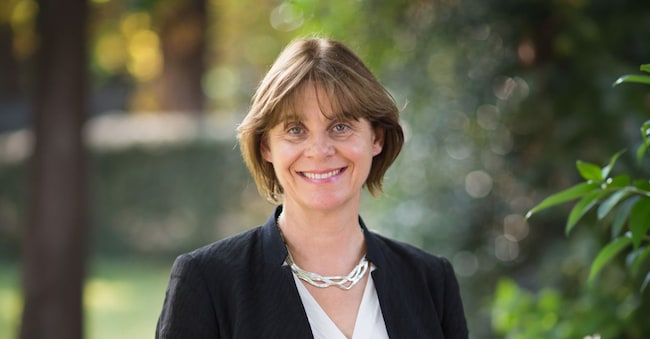
At what point are we no longer young? At seventy? Eighty? Or when we stop imagining the future? Sarah Harper turns the question on its head. For over thirty years, she has been studying how societies change as life expectancy increases, and her answer is surprising: the problem isn’t that people are getting older, but that the world continues to treat them as if we were still in the twentieth century.
An anthropologist, demographer and director of the Oxford Institute of Population Ageing, and a former BBC journalist – hence her passion for popularising science – Harper belongs to that rare category of scholars who do not describe ageing as a crisis, but as an achievement. This is the central theme of her best-known book, *i* *How Population Change Will Transform Our World* , in which she explains how the real change of the 21st century is not population growth, but its transformation – namely, fewer births, longer lives, and new family, economic and social dynamics. An achievement that, however, forces us to rethink almost everything: work, cities, tourism, the family and technology. He will be in Italia at the end of the month for the Leadership Forum at the Teatro Arcimboldi in Milan, alongside figures such as Fabiola Gianotti and Yuval Noah Harari, and he gives us a preview of some of the topics he will be discussing.
Many longevity experts focus primarily on health, genetics or medicine. Or on how to erase the signs of ageing. Harper, on the other hand, examines it through the lens of anthropology. From this perspective, Italia is almost like a laboratory: ‘By the end of the century, over half the population will be aged between fifty and one hundred; figures similar to those in other European countries. Yet we work, travel, consume, and look after our children and parents according to rules established when life expectancy was much shorter.’ Moreover, we live in urban environments ill-suited to our society. “If you were told that our cities were designed for people who no longer exist, you’d probably think it was an urban planning paradox. Instead, it’s reality,” she explains. Harper took part in a redesign project focused on British railway stations: ‘The debate centred on the needs of older people, but we realised that those needs are universal. Benches to rest on, pedestrian crossings that allow a few extra seconds, clear routes and understandable announcements, pavements where you don’t have to rush. When we design with the most vulnerable in mind, we improve everyone’s quality of life: a city suited to an 80-year-old is also better for a 30-year-old.”
It is from this seemingly trivial insight that the director of the Oxford Institute of Population Ageing urges us to reinterpret our era. Not as the century of ageing, but as the century of adaptation. If we are to live longer, how will the way we live change? Harper envisages a gradual rise in intergenerational co-housing, pointing out that today millions of people in their fifties and sixties find themselves both working and caring for very elderly parents at the same time. Here too, she observes, the problem is not longevity, but buildings and social models designed for families that no longer exist. Just as a certain type of work no longer exists: ‘We continue to imagine life divided into three very distinct phases: education, work and retirement. But this is a model that originated when people lived much shorter lives. Today we’ll probably work for longer, so we need to spread the workload over a different lifespan, alternating between further learning, breaks and new careers’. Perhaps it is no coincidence that, despite her many professional commitments and business trips, the gerontologist always tries to carve out time for a walk in nature with her dogs, a morning run or a dip in the icy waters of the British Sea – as she confesses she will do straight after the interview. Speaking of travel, her view is still that we should move away from age-based categories: ‘For years, the tourism industry has structured its offerings by dividing the market into holidays for young people, families and the elderly. You only have to flick through an old photo album: a sixty-year-old woman looks nothing like her grandmother did at the same age, which is why, when I talk about people over sixty today, I certainly don’t picture frail, dependent individuals, but healthy, financially secure people who finally have time for themselves. They’re probably not looking for anything very different from a childless couple in their thirties: comfort, new experiences, a touch of adventure, the pleasure of discovering different places. Their pace of life may change; their desires certainly do not.”

After more than thirty years spent studying longevity, Harper does not talk about extreme diets, supplements or techniques for slowing down time. Instead, he emphasises the importance of the ability to cope with the unexpected, the quality of relationships – ‘loneliness is terrible, at any age’ – daily exercise, a healthy diet and a dose of optimism. He also cites studies on pairs of twins which show that, on average, the twin with the more positive attitude tends to live longer. ‘Life almost never follows the path we imagined when we were young. It is the unexpected events that shape it. The difference lies in the ability to adapt,’ he says. But if he had to give just one piece of advice to a forty-year-old today, he has no hesitation: ‘Improve your diet! That’s probably unnecessary advice for you Italians,’ he laughs, ‘but it’s essential over here and, from what I can see, in the United States too. A healthier diet could add many years of healthy life. I’ll add an unpopular suggestion – one that’s difficult even for me, as I have no vices apart from a glass of wine – which is to limit alcohol’. The idea of longevity as a triumph of science is undoubtedly fascinating. Equally real, however, are the negative consequences it entails, such as ageism, which forces many still-active older people out of companies, and the speed with which artificial intelligence threatens to wipe out jobs. ‘We need to make a distinction: many changes brought about by technology are positive. AI is improving our understanding of cellular ageing. For the first time, we can observe at a biological level how diet, physical activity, stress or social isolation affect our bodies. This opens up enormous possibilities in the fight against chronic diseases,’ she explains. Furthermore, according to the researcher, the unique characteristics of a brain shaped and enriched by experience make it less replaceable by digital counterparts: ‘As young people, we possess what psychologists call fluid intelligence: we process information rapidly, make quick decisions and learn new patterns. Similarly, AI excels at speed and processing large amounts of data; it is far less adept at making sense of it. As we grow older, however, crystallised intelligence develops.’ This is the capital built up through experience: the ability to link information, interpret context, use language and reason by analogy. ‘We have always assumed that age was a competitive disadvantage. Perhaps, however, the opposite will prove to be true: in a knowledge-based economy, experience could become an increasingly valuable resource, and AI a tool capable of extending – rather than replacing – the contribution of more mature individuals.’ She backs up this belief with an example from her own life: she became a grandmother two years ago, and a second grandchild is on the way. “The thing that amazes me and gives me pause for thought is my daughter who, unlike me when I became a mum, has access to an endless stream of information, yet she still asks me for advice about her children.”

