
The time of the Bloquons Tout in France, but they are not the new Gilets Gialli. Italy armours itself: 'We are stable'.
So many similarities, but the macro picture is different. There are growing fears of economic and social contagion in the rest of Europe. Melonian Proccaccini (Ecr) calls for elections in Paris

5' min read
Key points
- The new Yellow Vests?
- Sympathisers in Italy, from M5S to Lega
- Disillusionment after violence
- The genesis of protests is economic, today as yesterday
- The aggravating factors: upside-down public accounts and instability
- Fears of economic and social contagion
- Suspected anti-EU and pro-Russian flankers
- Melonian Procaccini (Ecr): elections in France as soon as possible
- From the majority in Italy praise of stability
5' min read
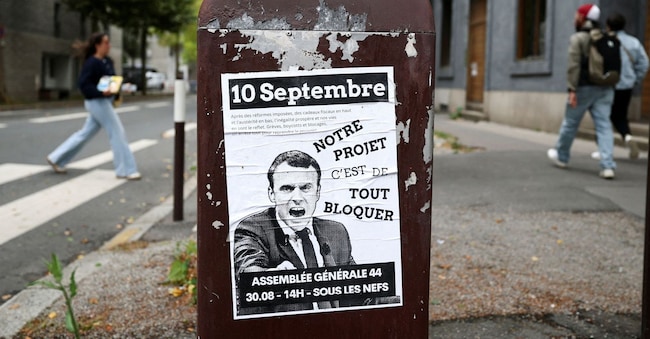
Transport, schools, retail. In the politically paralysed France after the historic vote of confidence in the prime minister François Bayrou forcing President Emmanuel Macron into a complicated search for a new premier, resulting in the nomination of Sébastien Lecornu, and a new majority, comes, ironically, the Bloquons Tout movement to try to paralyse it even in services. The protests of 10 September, in what promises to be the preamble to a very hot autumn, led the resigning Minister of the Interior, Bruno Retailleau, to deploy 80,000 agents, to alert all prefects and to warn of an entire month 'with a high risk of unrest'.
The new Yellow Vests?
.Many observers have already compared the Bloquons Tout to the Gilets Gialli who from November 2018 to the spring of 2019 had put Macron's France to the sword to protest against rising fuel prices and the high cost of living, mobilising in defence of workers and the middle class and calling for the reintroduction of the solidarity tax on wealth and an increase in minimum wages. Many demonstrations, born of the deep malaise in rural France, had degenerated into urban guerrilla warfare leading to tens of thousands of arrests. The most radical wing had distinguished itself by roadblocks, devastation of private property and public assets, even violent clashes with the police, acts of vandalism and sabotage.
Sympathisers in Italy, from M5S to Lega
.In the rest of Europe, the Yellow Gilets had met swarms of sympathisers, even within the institutions. In Italy it had been the case with the Five Star Movement and the League, both supporters of the first yellow-green government led by Giuseppe Conte. In particular made noise the meeting on 5 February 2019 in the hinterland of Paris between the Pentastelite vice-premier Luigi Di Maio, accompanied by Alessandro Di Battista, and one of the movement's spokesmen, Cristophe Chalençon (considered right-wing and 'famous' for having ventilated the intervention of 'paramilitaries' against Macron) and some of the candidates of that year's European elections of the Ric list (Référendum d'initiative citoyenne), along with the leader and former spokesperson of the yellow waistcoat Ingrid Levavasseur. But from the Carroccio, Matteo Salvini had also opened in an anti-Macron vein, albeit in more cautious tones: "Support for decent citizens protesting against a president who governs against his people, but absolute, firm and total condemnation of every episode of violence that serves no one".
Disillusionment after violence
.After the derisory results at the European elections (0.58% support for three lists), the movement had imploded. Le Monde had spoken of the arrival of the 'heure du découragement', the time of disillusionment, of discouragement for a mobilisation that had begun without guerrilla warfare, with a platform centred against the excessive French tax burden, and had ended up becoming 'obtuse, without precise objectives, against Macron and everything he represents'. Not that the French have given up protesting. In 2023 against the pension reform for the raising of the retirement age from 62 to 64, a new mobilisation had brought the country to a standstill.
The genesis of the protests is economic, today as yesterday
.The similarities with the Bloquons Tout are many and obvious, starting with the genesis of the movement. But if yesterday the spark was the petrol price increase, today the root is broader and concerns the whole Macronian economic model. Because Bayrou's rejection by the Assemblée nationale is a rejection of the government's response to the explosion of public debt over 114% of GDP (with a cost that for the first time in eurozone history exceeded that of Italy), and of the 5.8% deficit, i.e. the 44 billion package of cuts and tax increases to reduce the deficit to 4.6% by 2026 and 2.8% by 2029. The 'symbolic' measure that is the subject of discontent this time is the elimination of two national holidays.


