
The Orcolat tamed by the voice of Bruno Pizzul
Federico Savonitto's documentary recounts the earthquake, which struck Friuli 50 years ago, with audiovisuals of the time and testimonies of the protagonists
Key points
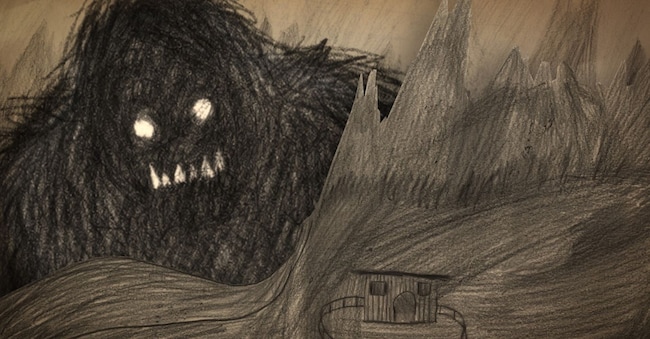
The Orcolat is an ogre that lives in the caves of Mount San Simeone in Carnia: it normally sleeps, but when it wakes up and moves, houses crash to the ground. The Orcolat did a big one fifty years ago, when on 6 May 1976 it slid two towns, Venzone and Gemona, resting on the moraine hills north of Udine, crumbling houses in a hundred other municipalities and causing 990 casualties. In that restless year, the 11 and 15 September were felt again. Whether one wants to think of it this way, or as a movement of plates, Adriatic and European, the three tremors had a magnitude of 6.4, 5.9 and 6 on the Richter scale, respectively, equal to the tenth and ninth degree of the Mercalli scale.
Interviews and documentary material
Orcolat, the documentary film written and directed by Federico Savonitto, reconstructs the facts and consequences of the 1976 earthquake with audiovisuals of the time and testimonies of artists and protagonists of the reconstruction, going beyond the rhetoric of rolling up one's sleeves without wasting time and of the few tears shed in favour of constant work (things, by the way, that are true). The writer retains the first memory of his life when he was three and a half years old in Cividale del Friuli: the mad dash down the stairs to get to the piazza, the grappa offered to everyone by the bartender, the night in a tent city in Manzano, the six months spent on the Adriatic Riviera.
The calm and warm voice of Bruno Pizzul
Hearing the documentary stitch together facts and testimonies from the warm and calm voice of Bruno Pizzul, whose death on 5 March marked one year, is a caress. For years, Pizzul was one of the few known faces of Friuli, a land so marginal that even Pope Paul VI, on the day after the first terrible tremor, addressed a thought to Frìuli at the Angelus, with the accent on the i and not the u, as the pronunciation of those who live there dictates.
First the sportsmen then the artists
The sports commentator represented, together with the equally beloved Dino Zoff and Fabio Capello - guests of the documentary - those qualities with which the Friulian loves to identify: rigour, seriousness, modesty, industriousness (of course, in the Friulian there are also many flaws, including an initial wall of harshness, suspicion and anti-historical separatist pride). Only Enzo Bearzot, who passed away in 201o, is missing. For a long time, the Friulian only came out as a sportsman: one of the voices in the film is the Olympic cross-country runner Manuela Di Centa. Today, biathlete Lisa Vittozzi should be added. Over time - in addition to Pasolini, who was born, however, in Bologna - artistic voices have also sprung up that Savonitto makes speak, such as writers Paolo Rumiz and Tullio Avoledo, and Davide Toffolo, author of the drawings (together with Elia Risato, also the film's editor) and the music for the documentary with the Tre allegri ragazzi morti and Lorenzo Commisso. Elisa then donated her poignant Luce (Tramonti a Nord-Est).
The rebellious streak
These personalities - together with technicians, seismologists and architects - have revealed in the Friulians a capacity for teamwork and a vein of rebelliousness that contradicts the legend that they are a people of sotàns, underlings, who never raise their heads against the sorestànts, those above them, categories also contemplated by Ippolito Nievo. An attitude learned by dint of domination: Lombards, Celts, Romans, Franks, Austrians, Napoleons... But thanks to the documentary, it comes back to mind that, apart from the widespread and courageous Resistance that was little celebrated at national level, there were the Risorgimento uprisings led by Francesco Dall'Ongaro, who directed the 'Favilla' on which the verist Caterina Percoto also wrote. Pasolini described in Il sogno di una cosa (Garzanti) the peasants' struggles to enforce the De Gasperi Lodo for a fairer distribution of land.


