
The Bank of Japan has raised interest rates to 1.25 per cent, the highest level in 31 years
The 25-basis-point rise had been expected, but the dissent of two of the nine board members further weakened the yen
from our correspondent Marco Masciaga
 Aggiungi Il Sole 24 Ore
ai preferiti su Google
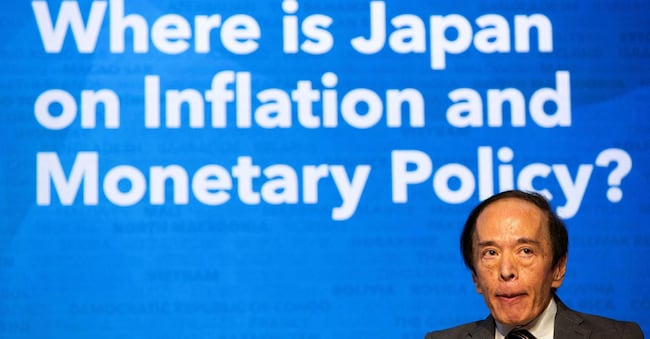
NEW DELHI – In a move widely anticipated by the markets, on Friday morning the Bank of Japan (BoJ) announced a 25 basis point rise in interest rates to 1.25 per cent, the highest level since 1995. The decision was taken by a majority vote, with two members of the board voting to keep rates unchanged at 1 per cent. “Wholesale inflation remains high and has begun to feed through to consumer prices,” the BoJ statement read.
For the Bank of Japan, this is the first rate rise in three months and follows those decided in recent days by the European Central Bank and the Federal Reserve. Apart from the need to curb inflation and prevent a further widening of the yield spread with the United States, the BoJ’s move was widely anticipated due to the weakness of the yen, which, in a country heavily dependent on energy imports, is making gas and oil purchases even more costly than they already are as a result of the war in the Middle East.
On Thursday, Prime Minister Sanae Takaichi, during her first cabinet reshuffle, retained all her economic ministers, including the reflationist Minoru Kiuchi at the Ministry of Economy, thereby signalling that there will be no substantial changes to the government’s expansionary fiscal policy, which is putting pressure on government bonds and the Japanese currency.
The fact that the Bank of Japan’s decision had already been ‘priced in’ by the financial markets meant that it did not provide any immediate benefit to the yen, which continued to lose ground against the dollar this morning. “The fact that two members of the BoJ’s board, appointed by Takaichi, voted against a rate rise suggests that the government remains opposed to further tightening by the central bank,” explains Carol Kong, currency strategist at the Commonwealth Bank of Australia.
The renewed phase of yen weakness is also significant because it comes after the US and Japan coordinated massive purchases of the Japanese currency at the end of July in an attempt to prop it up. According to data from the Ministry of Finance, in the period ending 26 August, Japan spent a record 15,400 billion yen (approximately 98.3 billion dollars) on foreign exchange market interventions. In recent days, the US Treasury Secretary Scott Bessent had informed the Governor of the Bank of Japan, Kazuo Ueda, that he was in favour of ‘resolute’ action on monetary policy.


