
Bank of Japan leaves rates unchanged, halves growth estimates and splits on inflation risk
The cost of money remains at 0.75 per cent. One third of the board supported an increase of 25 basis points. Yen strengthens
from our correspondent Marco Masciaga
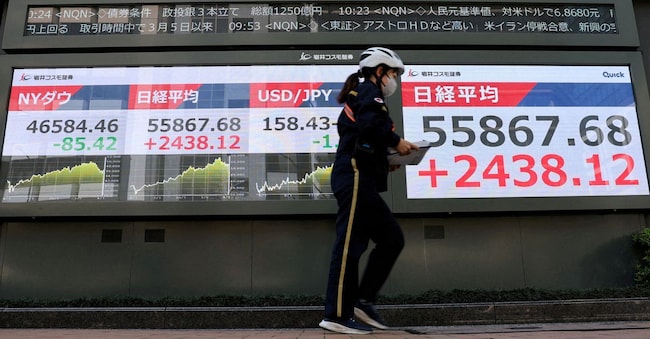
NEW DELHI - At the end of two days of confrontation, the Bank of Japan (BoJ) announced that it was leaving interest rates unchanged, but - confirming concerns about inflation trends caused by the war in the Middle East - three of the nine members of the policy board, including a well-known dove, sided with a 25 basis point increase in the cost of money.
This is the sharpest split since the current governor, Kazuo Ueda, has been at the helm of the BoJ. Last March there was only one dissenting voice over the decision not to raise the cost of money. To find a more divided board (5 versus 4) one has to go back to 2016, when the BoJ ventured into negative rate territory.
Behind the divisions is the conflict in the Middle East. The Israeli-American aggression against Iran has greatly complicated the work of central bankers in Tokyo, who are grappling with the fallout of the global energy crisis on growth and prices in a country with a weak currency and which is largely dependent on oil imports from the Persian Gulf.
"Given the high uncertainty surrounding the conflict in the Middle East," Ueda told a press conference, "the likelihood of seeing our forecasts confirmed has diminished. For FY2026, there are both significant downside risks to growth and upside risks to inflation. It is currently difficult to assess the duration and impact on the economy and prices. The Bank of Japan wants to take some more time to carefully analyse how the conflict in the Middle East affects the economy and prices, and whether the risks to growth and inflation are likely to change."
In its Outlook for Economic Activity and Prices, a quarterly report on the country's economic outlook, the Bank of Japan also sharply revised upwards its core inflation forecasts (adjusted for fresh food prices, but not energy prices) for the fiscal years ending March 2027 and March 2028, while reducing its growth estimates for both years.


