
Europeans' anger at Trump's new tariff break
Car manufacturers in revolt. The EU Commission: we will protect our interests
from our correspondent Beda Romano
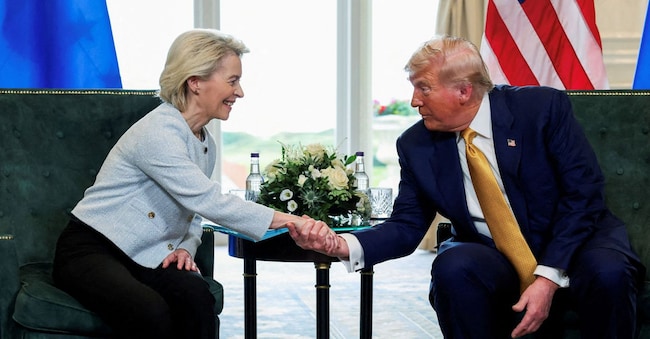
Brussels_ In the aftermath of President Donald Trump's announcement ofnew tariffs to be applied to the import of European cars, the German car manufacturers' association Vda urged the US and the EU to ease tensions. The new tug-of-war between Washington and Brussels comes at a very sensitive economic moment. The energy shock caused by the war against Iran raises fears of a sharp slowdown in the world economy.
"The trade agreement between the US and the EU must be respected by both sides," said Hildegard Müller, president of Vda. "This also means that the EU must finally ratify its part of the agreement agreed last summer (...) The costs of additional tariffs would be enormous for the German and European car industry at an already very difficult time." According to the European manufacturers' association Acea, the US accounts for 25 per cent of European car exports.
Loading...
The reaction of the German business community came after the US president announced on Friday 1 May an increase from 15 to 25 per cent in tariffs on European cars and trucks imported into the US. In a comment on Truth Social, he explained that 'the European Union is not respecting the trade agreement' reached last summer. President Trump made it clear that the increase would take effect from next week, but legal details were still lacking last night.
Last year's agreement provides for US tariffs of 15 per cent in return for a reduction on the European side of many tariffs imposed so far on US industrial products. The implementation of the agreement resulted in two regulations, which are currently being negotiated between Parliament and the Council. Strasbourg slowed down their approval process, particularly after the American threats against Greenland.
Parliament and Council have different negotiating positions. The text proposed by Strasbourg includes many safeguard clauses, unlike the position of the Twenty-Seven. In this context, it cannot be excluded that the American announcement is an attempt to put pressure on the two European institutions. Instead, the risk is that it will induce them to further entrench their respective positions. A new round of negotiations between Parliament and the Council is scheduled for Wednesday.


Brand connect
Loading...
