Justice

Home detention for drug addicts is now law, says Nordio: 10,000 out of prison

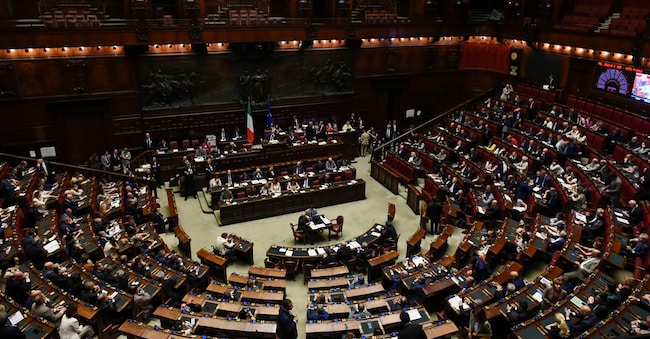
The Chamber of Deputies has given its final approval to the bill, with 153 votes in favour, 42 against and 82 abstentions. Prime Minister Giorgia Meloni expressed her satisfaction.

 7146

4' min read

Translated by AI
Versione italiana

4' min read

Translated by AI
Versione italiana

House arrest for drug and alcohol addicts is now law. The Chamber of Deputies, with 153 votes in favour, 42 against and 82 abstentions, has given final approval to the bill which allows drug-addicted prisoners to be placed under house arrest, providing for a differentiated approach to the enforcement of sentences, in order to better meet the treatment needs of those addicted to substances.

The eight-year maximum sentence

The law introduces ‘house arrest in specific cases’ into the Consolidated Act on Drug Legislation (Presidential Decree 309/1990). A prerequisite for eligibility is participation in a residential or semi-residential therapeutic and social rehabilitation programme. This option is available to all persons sentenced to a term of imprisonment, including any remaining portion of a sentence and where this is combined with a fine, not exceeding eight years.

Loading...

The majority voted in favour, whilst the opposition parties abstained, agreeing in principle with the bill’s underlying principle but highlighting a number of concerns, with the exception of the Five Star Movement, which voted against it alongside Vannacci’s Futuro Nazionale.

Reactions

The Minister of Justice, Carlo Nordio, highlights the deflationary effect of the measure. “A landmark measure because it allows for alternative detention for at least 10,000 people, drug addicts who have committed offences and whom we have always regarded primarily as patients in need of treatment rather than criminals to be punished, even whilst they were serving their sentences”. Responding to Question Time in the Chamber of Deputies, the Minister of Justice addressed the issue of the prison plan: “The plan is proceeding according to the established schedule: in recent days we have inaugurated a model wing for the 41 bis regime in the Cagliari area, and the Commissioner for Prison Construction is pressing ahead with the construction of facilities for 10,000 prisoners. This, together with the other measure, will help to reduce the prison population.”

Prime Minister Giorgia Meloni herself has expressed her satisfaction. “The final approval of the law that strengthens the real possibility, for those convicted of offences committed under the influence of drug addiction, to undertake a rehabilitation programme under community-based house arrest —as stated in a note from Palazzo Chigi—rather than remaining in prison, when the sentence does not exceed eight years’ imprisonment’ is ‘a victory on several fronts: for those who will benefit from this opportunity, which is, on the one hand, more extensive and, on the other, more rigorous than the legislation previously in force; for the safety of everyone, because verified rehabilitation removes the driving force that pushes a section of the population to reoffend; for the prison population, which will be relieved of the burden of those who choose the community-based programme’.

Along the same lines is the video by Deputy Prime Minister Antonio Tajani and leader of Forza Italia: ‘It is a measure that will help to reduce the number of prisoners in prisons but, above all, it will help young drug addicts regain their freedom and dignity, giving them the chance to be reintegrated into society. ‘That is what Fi wanted; it is a promise we have kept.’

During his statement on the draft bill, Antonio D’Alessio, MP for Azione and a member of the Justice Committee of the Chamber of Deputies, emphasised the lack of resources . ‘Although we agree with the aims of the bill, we believe that without adequate resources it remains an empty shell and will be unable to achieve its stated objectives. For this reason, the Azione group will abstain.’

In the Chamber, the M5S has opted for the hard line. “To whom will this new measure apply? To individuals who have a remaining sentence of up to 8 years to serve,” asked Valentina D’Orso of the M5S, “including those who have committed a single, very serious offence. Potentially very dangerous people who will be released from prison and sent to facilities without any supervision or monitoring”. “Even a Black Bloc member who, in Val di Susa, smashed a policeman’s head in could go to a rehabilitation centre, if they manage to prove in court that they are a drug addict and were under the influence during the demonstration.” On this basis, D’Orso therefore announced that he would vote against the measure – unlike the other opposition parties, who abstained – “a measure which, in some respects, is a purely cosmetic exercise and, in others, undermines the principle of certainty of punishment and the credibility of the state”.

The amendment in support of Roggero is inadmissible

With an amendment deemed inadmissible, Futuro Nazionale took the opportunity to try to lend a helping hand to the jeweller Mario Roggero, who was definitively sentenced by the Court of Cassation to 14 years and 9 months for killing two robbers and wounding a third. “It’s a world turned upside down. They say that a drug addict or an alcoholic who commits a robbery – argued Gianangelo Bof of Futuro Nazionale – may be entitled to house arrest, but someone who goes out and defends themselves cannot benefit from it.” The Vannacciano MP explained that an amendment, which aimed to extend the benefits of the law to those who defend themselves, had been declared inadmissible: “Then we have the processions organised by Mario Roggero... We’re trying to help him in the Chamber, and today they’ve come up with a procedural loophole within this measure,” Bof pointed out.

The amendment tabled by Futuro Nazionale was intended to ensure that ‘house arrest’ could also be granted by way of derogation from the objective and subjective limits and restrictions, in the case of an offence committed as a result of emotional states, provided that these were caused by a sudden impulse arising in a state of provocation, or in reaction to repeated abusive or oppressive behaviour, and provided that they were not motivated by base or trivial reasons and the offence was not committed with premeditation’.

Copyright reserved ©

Brand connect

Loading...

Newsletter

Notizie e approfondimenti sugli avvenimenti politici, economici e finanziari.

Iscriviti