
The Fondation Cartier in the heart of the Palais-Royal
Jean Nouvel rethinks the site. With 'Exposition Générale', forty years of creation are re-read in the light of an institution in transformation

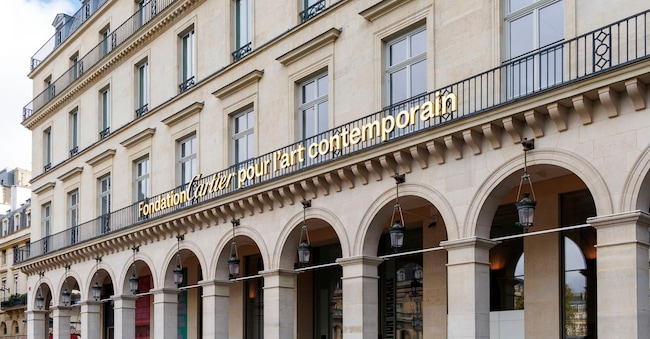
Paris changes without fanfare, often with the discretion of those who know that the city is best observed when it does not announce itself. In the heart of the Palais-Royal, the Fondation Cartier pour l'art contemporain has inaugurated its new headquarters in the former 'Louvre des Antiquaires', a Haussmannian building that once housed antique dealers, curiosities and a certain bourgeois idea of the rare. Today, in their place comes the contemporary. Jean Nouvel, architect of the original premises on boulevard Raspail, returns to the scene of the crime thirty years later: not to correct himself, but to reformulate a question. The intervention does not seek the iconic effect: it works on nuances, transparencies, reflections. The neighbourhood may be dense, but Nouvel decides that space is not: he lets it breathe, gives it light and depth, as if to remind us that architecture can still be a gesture of trust every now and then.
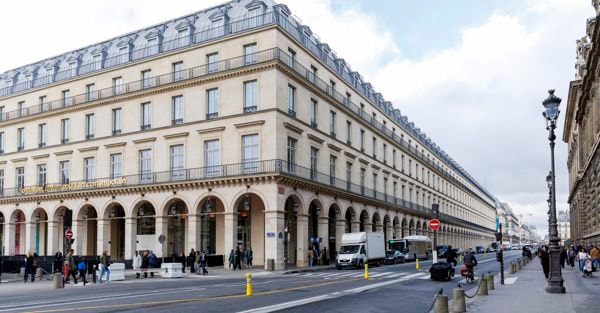
A path asking to be crossed
Accompanying the reopening is Exposition Générale, an exhibition that brings together more than six hundred works from a body of over four thousand five hundred. Hervé Chandès, Grazia Quaroni and Leanne Sacramone avoid the rhetoric of the anthology and prefer an atlas, a system of coordinates rather than a timeline: painting, photography, video and installations coexist out of elective affinities rather than curatorial obedience. From Latin American surrealism to African aesthetics, from ecological research to scientific drifts, the whole constructs a map of the contemporary that seems to say: yes, the world is complex - but at least we can try to look at it without simplifying it.
The City as a Critical Habitat of the Foundation
The move to the Palais-Royal is not only logistical. The institution abandons the quietness of Montparnasse to enter the dense network of the first arrondissement, where the Louvre, Comédie-Française and the BnF's renovated Richelieu site define a cultural corridor that can be stimulating - or overwhelming. It depends on your point of view. The Fondation Cartier chooses to inhabit it without competing, as if its presence were a counterpoint, not a crescendo. But a question remains, almost a paradox: what margin of freedom remains for art in a city that multiplies institutions, spaces, programming, to the point of transforming the contemporary into an ecosystem as refined as it is regulated? Exposition Générale does not answer, of course. It prefers to suggest that freedom is not a content, but a way of looking: traversing images with a step that does not want to possess, but to understand. At a time when Paris is renovating museums, foundations and cultural poles as if it were a republican duty, the Fondation Cartier's new headquarters seems a lighter, almost ironic note: a place that does not claim to be the centre of the world, but offers itself as a space of possibilities. And in a capital accustomed to declaring much, this measure sounds like a form of intelligence. With a paradox, all Parisian: the city builds spaces for innovation, but innovation almost always comes from outside - creative people migrate to the Seine, managers never leave Paris.

