
The majority proposes (again) the reopening of the 2003 amnesty
New amendments by Fi and Lega to the delegated law on construction in the Chamber propose a new window for amnesties
by Flavia Landolfi and Giuseppe Latour
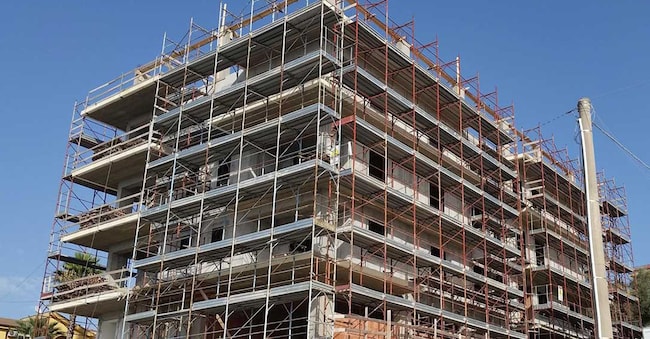
The building amnesty already rejected before Christmas is trying to get back into the game. On the new Testo unico dell'edilizia, the dossier with which the government aims to rewrite the rules and licences for bricks and mortar, part of the majority is once again pressing the most divisive button. And it does so by tabling two amendments (and others in cascade) in the debate in the Environment Committee of the Chamber of Deputies, where the delegated bill for the "rationalisation and reorganisation of the administrative building and town-planning regimes and related authorisation titles", already launched by the government, stamped by the Ragioneria and signed by the Head of State, is to be found. A text that, during the long preparatory process, had seen the very hypothesis of reopening games linked to building abuses, considered too sensitive on a political and legal level, disappear.
But now the majority is trying again: among the parliamentary amendments, rules reappear that reignite the discussion on amnesties. The first front is the one opened by Forza Italia. An amendment signed by MEPs Patrizia Marrocco Patriarca and Piergiorgio Cortelazzo proposes to intervene on the old applications of the 2003 amnesty, the one provided for in Article 32 of the Berlusconi government's decree-law 269.
The provision aims, first of all, to speed up the settlement of applications connected with the 2003 amnesty. It also envisages a posthumous amendment: the text would lead to the application of the amnesty, only for works completed "by 31 March 2003", also "to buildings constructed in areas subject to relative non-building restrictions". It must be remembered, in this regard, that the 2003 amnesty had extremely limited application in restricted areas.
Reference is then made to the fact that that amnesty was disapplied by the Campania Region (a decision examined by the Constitutional Court in 2004). To remedy this shortcoming, 'the possibility of reopening the terms for submitting new applications' is provided for. A reopening that, however, does not only concern Campania but the entire national territory.
A slippery slope, that of the amnesty, which has always divided politicians, local administrations and environmentalists. They know it well in the majority, where the issue was kept out of the original text precisely to avoid a head-on clash and to open cracks within the same government team. But the amendments by the Azzurri are not the only ones to reintroduce the issue. In the dossier of changes to the text there is also an amendment by the League, signed among others by Dario Giagoni, Eugenio Zinzi, Erik Pretto Benvenuto, Silvia Sardone Centenaro, Elisa Montemagni and Edoardo Pizzimenti, which addresses the issue of illegal allotments.


