

Russia is making two stopovers in Egypt, on the way into and out of Suez
Moscow has announced the start of work to develop its own free trade zone in the special canal area. This follows the bilateral agreement signed in 2025. The 49-year concession will facilitate exports to Africa and the Middle East, whilst also providing a firm foothold in one of the world’s most sensitive choke points

Key points
Russia has taken a step towards the Suez Canal with the concrete move of identifying an industrial operator capable of operating within the Suez Special Economic Zone, which was specifically designated for Moscow (Riz) under the framework agreement signed in 2025 with the Egyptian authorities. The Russian Ministry of Industry and Trade has in fact informed the Egyptian government that an industrial developer has been selected for the SCZone, marking a crucial step towards the launch of the project. For his part, the Egyptian Minister of Foreign Affairs, International Cooperation and Egyptians Abroad, Badr Abdelatty, has indicated that the first Russian investments in the area can now be finalised. With around 7 billion dollars earmarked for the project, 35,000 jobs are expected to be created in the automotive, pharmaceutical and, above all, petrochemical sectors. Minister Anton Alikhanov reiterated Russia’s commitment to pressing ahead with the project and strengthening bilateral cooperation in trade and investment, whilst confirming the timetable: the hub is due to be completed by 2030 and will have a concession period of 49 years.
The position
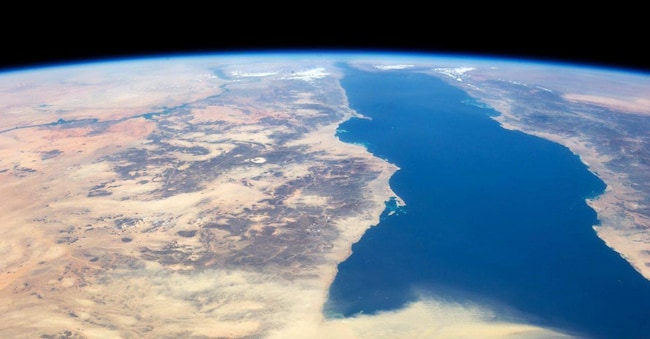
To understand the strategic importance of the operation, one needs to look at a map of Suez and see where the land under concession is located. The agreement covers two specific areas. The first, covering around 1 million square metres, is in East Port Said, right at the Mediterranean entrance to the canal. The second, a smaller area of 500,000 square metres, is in Ain Sokhna, on the Red Sea. It is a logistics and tourist hub situated 120 kilometres from Cairo and just 50 kilometres from the city of Suez, the other entrance to the canal. On the occasion of the framework agreement, Russian officials described the hub as a gateway to African and Middle Eastern markets, whilst the Egyptian authorities emphasised its impact on employment, technology transfer and investment. Cairo’s strategy extends beyond Moscow: China has channelled Belt and Road funds into SCZone sites, whilst investors from the United Arab Emirates and Saudi Arabia have expanded their presence in ports and logistics. Egypt, which has completed major infrastructure modernisation projects and is now focusing on attracting foreign investment, clearly regards Russia as a key political and economic partner. The site offers strategic logistical advantages, being situated at the junction of the Suez–Hurghada motorway and a railway network. According to reports, all infrastructure, including roads, utilities and communications, is already in place. Kamal El-Dessouky, a board member of the Federation of Egyptian Industries, told Al Arabiya that the relaunch of the project represents a highly strategic move in the context of current global geopolitical challenges, inflation and economic pressures.
Statements
For Russia, the industrial zone is of similar importance. The RIZ forms part of Russia’s national ‘International Cooperation and Export’ programme, which aims to build industrial infrastructure abroad, boost trade in advanced technologies with Egypt and provide a platform for re-exports to third-country markets. The zone offers Russian companies access to over 70 markets through Egypt’s network of free trade agreements. Russian pharmaceutical companies have already expressed interest, with potential contracts under discussion for the Egyptian market. Other sectors that could become involved include chemicals, mechanical engineering and construction materials, which are particularly relevant as Egypt accelerates the construction of new cities. Furthermore, over 30 Russian companies are already exploring opportunities in Egypt in the sectors of fertilisers, polymers, medical equipment and transport. The strategy forms part of a broader plan of agreements between the two countries. This extends not only to tourism but also to energy. There is a joint project to develop a civilian nuclear power station at El Dabaa, based on technology transfer and financial loans. There is a long history of military assistance and, more recently, cooperation on food security. Russia supplies durum wheat, and shipments have increased over the past year.
The strategy
The situation in Hormuz makes one thing clear: it is not only the Middle Eastern countries and the US that are taking steps to create alternative routes for trade flows, but also India and even Russia. When the project is completed in 2030, Vladimir Putin will have placed a key pawn in one of the world’s most sensitive chokepoints. Or rather, he will have placed two pawns. One in the Mediterranean and one in the Red Sea. It remains to be seen whether the area will also be able to accommodate sensitive infrastructure that will allow Moscow to monitor the region. But even if this were not the case, Russia will have managed to establish a foothold in the Suez Canal, gained further access to the Mediterranean Sea, and secured a more solid ally with which to manage its relations with the African Union.

