
Serbia turns out in droves to vote; turnout hits a record high
Voting continues today until 8 pm: it is a neck-and-neck contest between the Students’ List and Vucic’s party, which has been in power for 14 years
from our correspondent Micaela Cappellini
 Aggiungi Il Sole 24 Ore
ai preferiti su Google
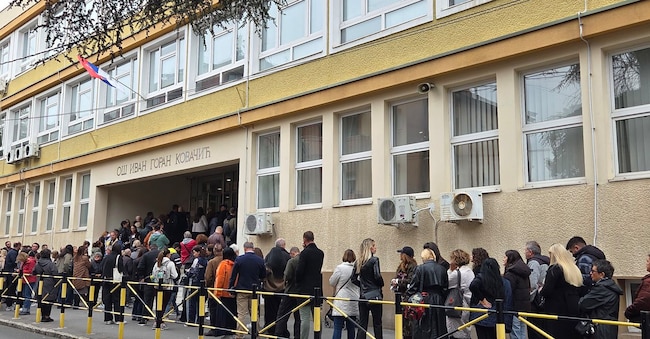
BELGRADE – At the Ivan Goran Kovacic School, not far from Belgrade’s historic centre, the queue of voters winds its way round the building. Young people, yes, but also elderly people and middle-aged citizens. By 10 o’clock in the morning, turnout is already very high, in this election in which the Students’ List and that of Aleksandar Vučić – Serbia’s strongman, who has been in power for 14 years now – are facing off in a final showdown. By 2 pm, the turnout – also certified by the government’s statistical offices – had already exceeded 46 per cent. This level of participation is unprecedented in the country’s electoral history over the last twenty years.
A dispute that began two years ago
University students began protesting against corruption within the institutions and against President Vucic two years ago, when, on 1 November 2024, the collapse of the newly built bus shelter at Novi Sad station resulted in 16 deaths. “Corruption kills”, they said at the time, referring to the way in which the contract for the construction of the structure had been awarded. Two years on, following months of university occupations and protests that also brought civil society onto the streets, the students have organised themselves, drawn up a list of 250 candidates – all professionals, not a single student – and are now challenging Vučić at the polls. “Students win” is the slogan now.
On the ballot paper, which is placed in a transparent ballot box, the lists are identified by a number and a name, but there are really only two that are in the running today: number 1 is that of the SNS, Vucic’s Progressive Party, whose face is prominently displayed on all the electronic billboards across the city of Belgrade. Number 3, on the other hand, is that of the students, who have campaigned mainly door-to-door or via social media, and who are deploying hundreds of observers at polling stations across the country to prevent electoral fraud. “Many voters come here with their own pens to vote, as the student movement advised them to do,” says Alessandro Alfieri, a PD senator among the OSCE observers who have arrived from Italia, such as Vincenzo Amendola and Emanuele Loperfido. Here and there, minor clashes are reported between supporters of the list formed by Serbian universities and that of the ruling party; some even leave the polling station with a photo of their ballot paper, but with such large numbers of voters, the chances of fraud actually altering the election results are becoming increasingly slim. For now, the atmosphere, at least in the city, remains calm. And despite all the pressure exerted by Vučić’s apparatus, those who do not support him are no longer afraid to go and vote against him.
The Wait
The Students’ List headquarters is located in New Belgrade, on the other side of the Danube, right in the heart of the office district where major multinationals are based. Some of the candidates have been there since this morning and will remain there until after half past nine, when the first exit poll results are expected from polling stations that close at eight in the evening. Every hour, a spokesperson for the students comes out and reads a statement. But the student executive committee is holed up on the upper floors of the building and is not letting anyone see them. Some say that if they lose by a narrow margin, the students will contest the result and take to the streets. But who will make that decision tonight? It’s impossible to imagine that all the faculty assemblies will meet and vote in such a short space of time. “We have a central electoral committee that will make this decision,” explains Tijana, from the Faculty of Sciences at the University of Novi Sad. Nothing more than a name, no age or role: just a spokesperson for the movement. Total secrecy to protect the movement from government attacks.
Tijana also assures us that the action plans were decided and approved days ago: Plan A if the students win by a large margin, Plan B if they win or lose by a narrow margin. The vote? “Sometimes it’s in assemblies, sometimes it’s online.” There’s an app created specifically by engineering students, but they also communicate via Signal and meet on Teams. In any case, nothing is leaking out from the movement at the moment. To find out the students’ position, ‘we’ll have to wait for the official results on Monday’.


