
*La Traviata* at the Arena Opera Festival
Giuseppe Verdi’s opera is running until 12 September

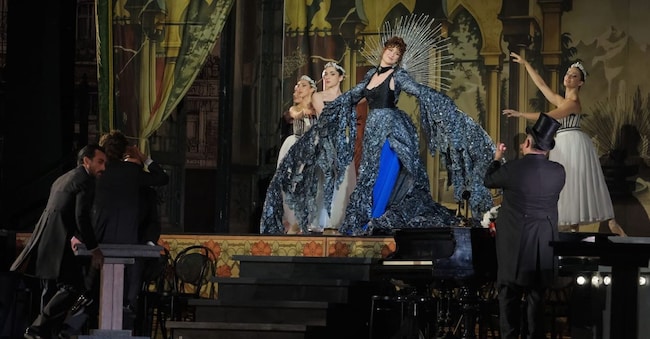
The Arena’s grand summer opera season opens with *La Traviata*, rather than the more popular *Aida* and *Nabucco*. An unconventional choice, marking a significant anniversary. For in Verona – a city that attracts 10,000 music tourists per performance – eighty years ago, in 1946, it was precisely this Verdi opera that marked the resumption of the popular open-air opera seasons following the war. It is worth remembering this. But it is exceptionally bold to dare to repeat the same work: the first two evenings of the 103rd edition of the Festival are, in fact, entirely dedicated to her, Violetta Valéry. Unprecedented.
Madness upon madness – or rather, challenge upon challenge – she is also a debutante and virtually unknown: Martina Russomanno. Twenty-eight years old, heroic. She has just finished singing Rossini’s serious opera *Tancredi* in Rome, and her voice still retains that elegant flavour, the refined colouring, the luminous tone. Her voice is small but projects well. Her diction is perfect, and her embodiment of the character is spontaneous and free from any trace of routine. She sings everything with dedication and tenacity, from the grand scenes to the whispers: from the highly bel canto and stylistically rediscovered first-act finale to the sorrowful letter in the third act, read quickly, with the immediacy of a young woman who knows by heart the banal, reassuring words of a deceitful Papa Germont. “It’s late!” How well Martina, the young soprano, brings this to life, towering above the entire cast—and not just because of her 1.80-metre supermodel height. Her technical and emotional portrayal of the role is deeply moving.
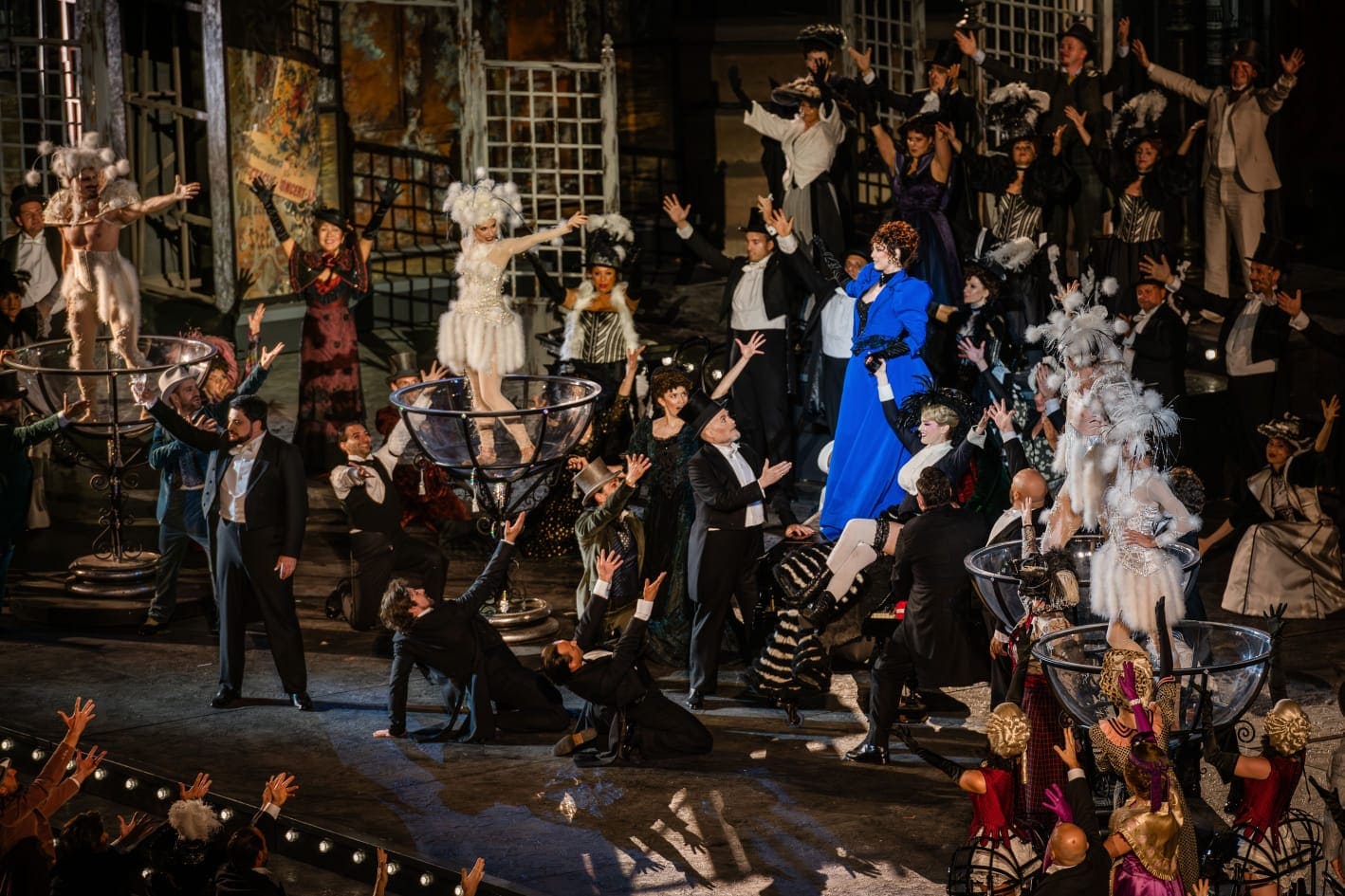
Alone and abandoned, yes. Because all around her, the rest of the cast are stuck in the Arena’s reassuring routine: it’s impossible to fall in love with the tenor, the way Yusif Eyvazov sings him – completely flat, paying no attention to the words, as if he’d only just arrived in Verona, his suitcases packed and ready to make a run for it. After all, there will be no fewer than seven Alfreds taking turns across the thirteen performances: ‘Hotel Traviata’ – you’re spoilt for choice. As for the baritone, Amartuvshin Enkhbat, he proves once again to be flawless, with a smooth tone and everything in order, but zero emotion. The director, Paul Curran – who is also making his debut at the Arena – possesses a Scottish sense of humour that he is unable to channel through his acting; he endows the character with the delightful quirk of the hat: a wide, shabby country-style hat, a far cry from the snobbish top hats worn by the patrons of the Moulin Rouge, where the opera is set. Here everyone is thinking of the display of bizarre and alternative outfits, between can-can dancers and lecherous bullfighters, in white heeled ankle boots, unsuitable for bullfights. Instead, he—Papa Germont—thinks only of his hat; woe betide anyone who steals it: at the end of the heart-wrenching duet with Violetta, he even dives onto the sofa, lest she take it away from him.
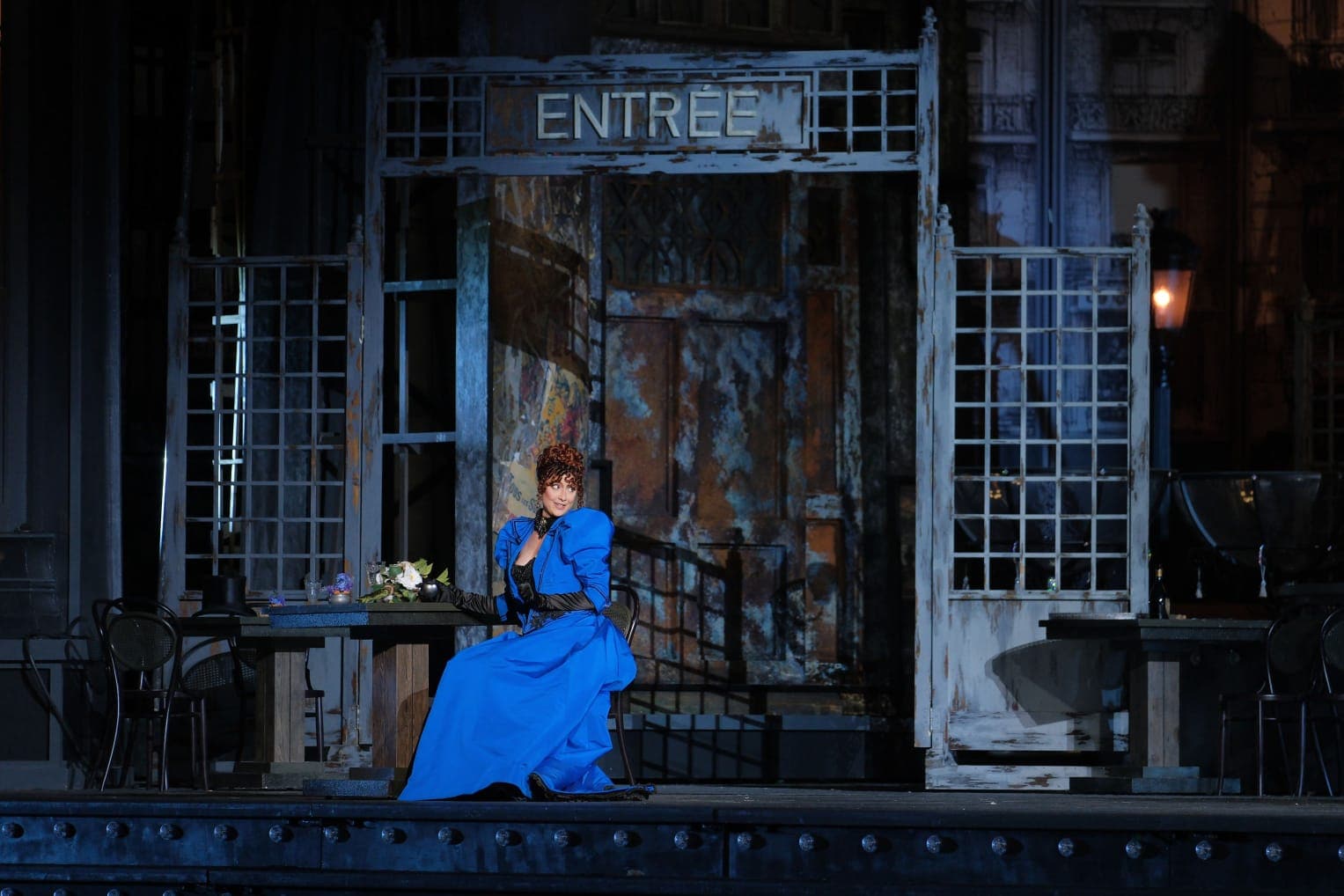
Juan Guillermo Nova
The dryness of the heart is evident in the details, with a director’s touch. As for the striking, visually unmissable elements in the Arena, the large elephant and the windmill with its symbolic Montmartre sails stand out in Juan Guillermo Nova’s set design. The animal is also used by Violetta as a balcony (ah, Juliet) from which to sing ‘Ah forse è lui’. Athletic, Martina Russomanno descends swiftly, then leaps onto the tail in the middle of the stage. Unavoidable. Liszt’s piano would not have approved. The elephant and the blades – symbolic objects marking the opening of Act One, revealed after a parade of 1920s advertising billboards – could have remained, evolving, throughout the entire opera. To create continuity and grandeur. Whereas ending with the usual bed and the usual piled-up furniture dampened the theatricality. She looked refined in her dresses, designed by Stefano Ciammitti and inspired by Monet.
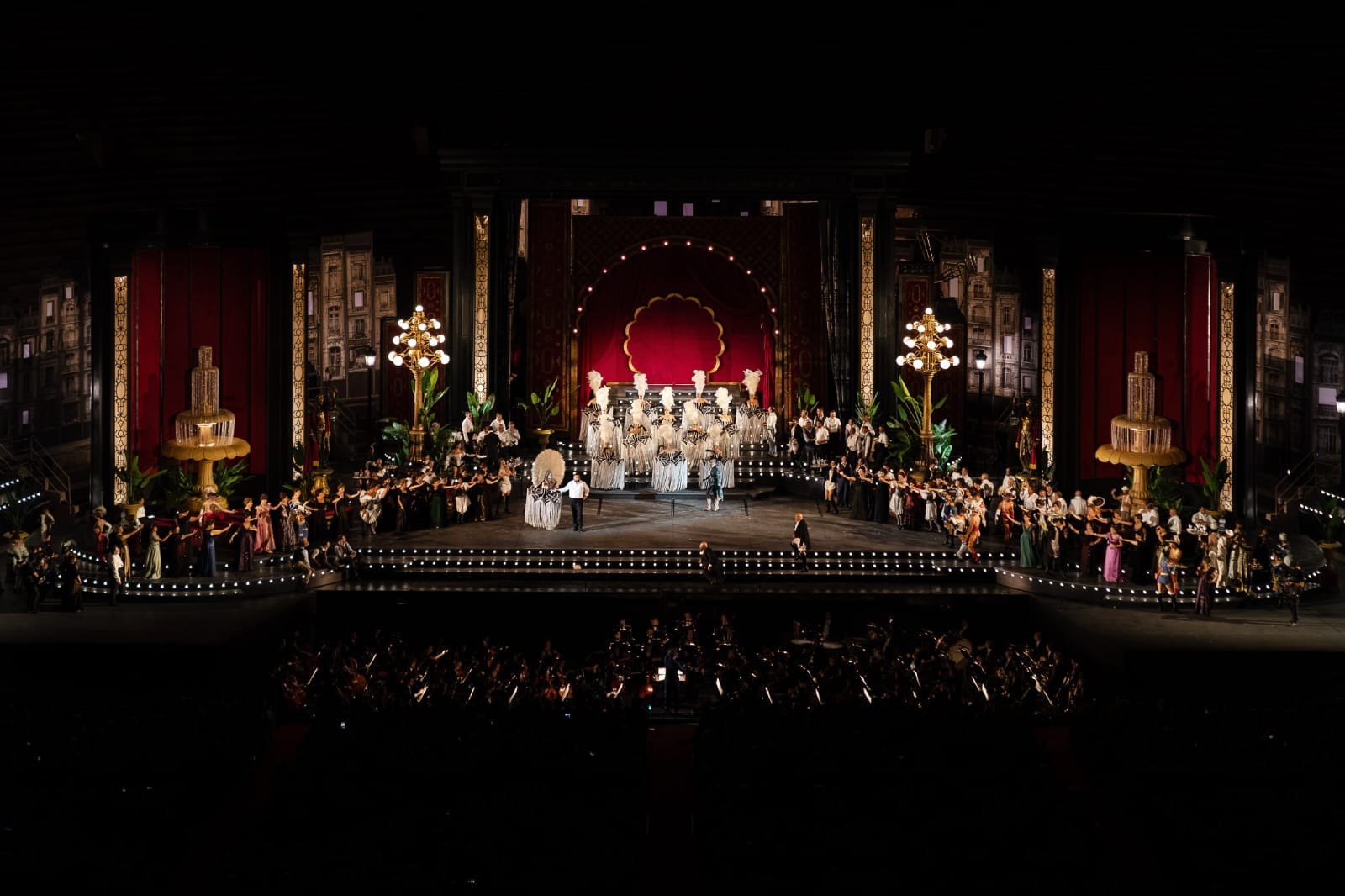
Last but not least, the conductor of this new *Traviata*—Michele Spotti—must be mentioned: the finest young conductor around. Thirty-three years old, brimming with musicality, authoritative and confident even in large venues. He was perfect in energetically leading Roberto Gabbiani’s chorus – always exquisitely articulated – and the orchestra with its beautiful blend of sounds. And he shared a special rapport with Martina Russomanno’s Violetta. It is a rare feat, in the Arena, to reinvent the heart of the score.

