
Effects of tariffs: Lagarde expects growth to slow in Q3

2' min read
2' min read
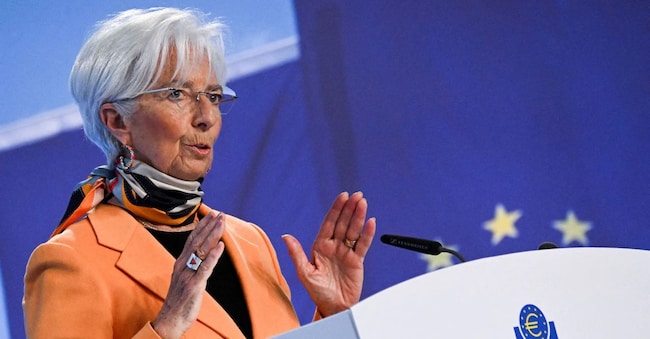
"Growth is expected to slow down in the third quarter as the frontloading", i.e. the rush to buy to beat the tariffs increase, comes to an end. This was said by the President of the ECB, Christine Lagarde, speaking in Geneva at the International Business Council of the World Economic Forum.
"The recent trade agreement between the EU and the US," he added, "imposes higher tariffs on eurozone goods than the pre-April US tariff regime. The trade agreement sets an estimated average effective tariffs of between 12% and 16% for US imports of eurozone goods. This average effective tariffs are slightly higher - but still close - to the assumptions used in our baseline projections last June'.
A difficult phase
."The global economy is in a difficult phase. But despite recent trade tensions and high uncertainty, global growth has remained broadly stable so far," Lagarde said in Geneva. 'This resilience,' she explained, 'has been fuelled mainly by tariffs-induced distortions to economic activity. In the first quarter of the year, for example, we saw a strong 'frontloading' globally, with importers increasing inventories in anticipation of higher tariffs. This led to stronger-than-expected growth. The International Monetary Fund notes that global growth in the first quarter of 2025 was 0.3 percentage points higher than projected in April - with international trade and investment driving activity." Recent trade agreements 'have mitigated, but certainly not eliminated, global uncertainty, which persists due to an unpredictable political environment'.
"Euro area demonstrated resilience"
.The euro area economy, Lagarde added, showed resilience at the beginning of this year in the face of a difficult global environment thanks in large part to two factors. "First, the export-oriented European economy benefited from the global frontloading, growing more than expected in the first quarter of the year. Sectors with a higher exposure to exports to the US - such as pharmaceuticals, which account for more than one-fifth of the eurozone's exports to the US - experienced strong output growth during this period. Of course, with the tariff increases taking effect, this effect is now being reversed and the expected slowdown in euro area growth was already evident in the second quarter of the year. The second factor supporting the economy was the strengthening of private consumption and investment, which contributed positively to growth. In addition, the labour market remained robust. The unemployment rate - at 6.2 per cent in June - changed little compared to the previous year, while the labour force continued to grow'.

