
Lagarde: 'Monetary policy does not solve debt problems: euro area pushes on growth'
According to Lagarde, "the main challenge is not that governments are largely failing to comply with fiscal rules", but "governments need to put more emphasis on spending that supports potential growth and key policy priorities, while consolidating their budgets"

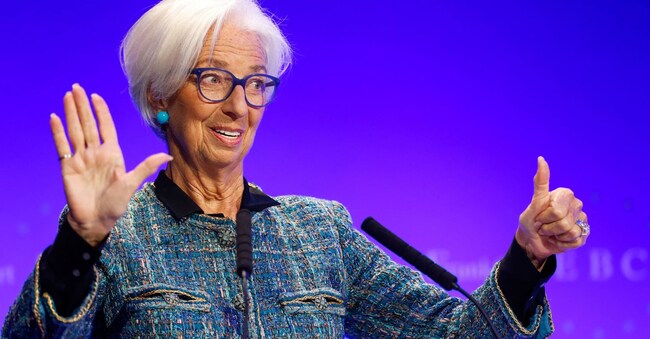
"There always remains the concern that a short-sighted government may be tempted to try to force the hand of a central bank to finance its debt, despite the lessons of history".
This is what ECB President Christine Lagarde warns in her speech to the Trilateral Commission. For Lagarde, "this concern tends to emerge when public debt is high, as is the case in many jurisdictions today". The ECB president recalled how "the more operationally independent a central bank became, the lower and less volatile its inflation performance. This relationship is well established in the empirical literature'.
Lagarde also emphasised that 'public debt levels in the euro area remain high and need to be reduced' but 'governments need to put more emphasis on spending that supports potential growth and key policy priorities, while consolidating their budgets'.
According to Lagarde, "the main challenge I see is not that governments are largely failing to comply with fiscal rules", but "governments need to put more emphasis on spending that supports potential growth and key policy priorities, while consolidating their budgets".
"For example, the EU's new fiscal rules offer countries the possibility of extending the fiscal adjustment period by up to seven years if they engage in public investment and structural reforms that enhance long-term productivity and growth. But only seven of the 20 euro area countries have chosen this path,' he noted. "This," he added, "can lead to a situation called fiscal stagnation, where measures taken to consolidate public finances weaken growth potential, generating even more consolidation needs, in a vicious circle.

