The interview

Laguardia: 'A mistake to scuttle project finance: it is the way to revive unrealised Pnrr projects'

The vice-president and director of Legacoop Produzione e Servizi speaks. Closing the national assembly in Calabria, the association of cooperatives calls for more action in Southern Italy
by Flavia Landolfi

4' min read

Translated by AI
Versione italiana

4' min read

Translated by AI
Versione italiana

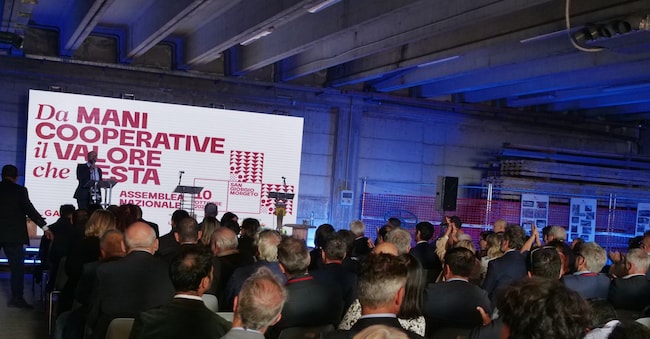
Project finance, price revision, industrial policies and the South: the vice-president of Legacoop Produzione e Servizi is just back from the national assembly that this year, not by chance, took place in Calabria, in that South that the cooperatives are clamouring to protect. Investing in the South - they claim - means investing in the country. For the vice-president and director Andrea Laguardia, this is a priority, as is the defence of project finance, which is currently the subject of a clash with the European Commission. But the dossier of the Legacoop cooperative world is longer.

Vice-President, let's start with the rules of the game. Brussels has opened an infringement procedure against Italy on the project finance discipline - in particular on the right of first refusal. How did you greet this news and what impact will it have on companies and consortia?

Loading...

As is often the case, Europe intervenes in a bureaucratic manner, without taking into account the needs of the member states and the needs of businesses. On the contrary, we believe that project finance should be encouraged as the main instrument of public-private collaboration. In recent months we have drawn up an analysis, showing that many public works projects that are not realised with the Pnrr can be revived through PPPs.

And what about the manoeuvre? What impression are you getting?
We are waiting to read the official documents to understand the actual impact on our cooperatives. Especially with regard to the tax exemption on contractual increases, at the moment they seem like bland interventions. We need more courage and more investment to relaunch the economy through structural and not temporary interventions.

Let's come to the price revision. Over the past year you have been arguing a lot about the need to have an update in line with other sectors of the economy. Are there any glimmers of a change in the current rules?

Our association was the promoter of the establishment of the Consulta dei Servizi, composed of all the associations representing the sector: an unprecedented event that is beginning to bear fruit. We are working together with the MIT on an administrative measure that will show contracting authorities how best to apply the optional price revision rule in the services sector. This is a bridging solution to the call for a structural change to the Procurement Code, which must provide clear and mandatory rules for contracting authorities. Many tenders are going nowhere: you cannot find companies willing to work under these conditions.

Let's move on to industrial policies. In your document you call for a move away from the logic of spot interventions. Which three levers should you focus on now and with which impact metrics will you measure employment and productivity?

One thing is certain: tariffs will slow down exports; we need to relaunch domestic demand, otherwise we risk perennial stagnation with stagnant wages and declining purchasing power. Three things are needed for our ecosystem: investing in services and public works to relaunch the economy because the idea that public procurement is an item on which to make savings is wrong; implementing industrial policies and medium and long-term investments in strategic sectors; lowering the costs that hinder economic initiative, starting with energy and labour. The GDP of recent years has been sustained thanks to the NRP, but it is over: structural interventions are needed.

Growth in the Mezzogiorno has been driven by Pnrr and single Zes. Which projects have really generated orders and investments for cooperatives and which ones would you not replicate? How do you avoid that, once the Pnrr drive is over, a vacuum opens up for labour-intensive enterprises?

We held our annual assembly in Calabria, tackling the main issues affecting businesses. We organised it in the South because we believe that the entire Italian economy should look to the South, where we are seeing important signs of growth. The GDP increased by a total of 8.6% between 2022 and 2024 in the South, compared to 5.6% in the Centre-North. The South is the third most attractive region among the 20 Mediterranean countries. The presence of manufacturing companies has increased: a vitality that was waiting for the right impulse, provided by the NRP.

And the projects?

In Sicily, with Pnrr funds, we apply artificial intelligence to sensor monitoring in service contracts, detecting flows, modulating cleaning services; in Apulia, thanks to the single Zes, a company was born, recovered from workers in carpentry: from a bankruptcy we tripled employment with the cooperative. Two examples to be replicated. Legacoop Produzione e Servizi is present in the South with regional offices and is a protagonist of this growth. To continue we need structural interventions such as the decontribution of the South, which is currently at a standstill due to a European rule that assimilates labour-intensive enterprises to large companies.

You propose an ad hoc fund to update service fees after contractual renewals. How much is needed in 2026, what indexation criteria do you envisage, and how do you avoid across-the-board cuts on schools, health and TPL if the budgets of the entities do not bear the adjustment?

In sixteen months, from February 2024 to June 2025, we have renewed seven national contracts also in the sectors that operate with public procurement. This is why we are asking for a fund to restore the contractual balance envisaged by the Procurement Code. Our measurements indicate that, to update the existing contracts in the services sector alone, about 400 million would be needed: not to restore profitability, but to bring budgets back into balance under the heading of labour costs. If the fund were to become structural, it would be possible to raise wages, leaving behind the logic of maximum reductions. We have identified a system to feed it through the delta between the budget of the contracting stations and the assigned. I appeal to the government: we are always there to build possible solutions together.

Copyright reserved ©
Loading...

Brand connect

Loading...

Newsletter

Notizie e approfondimenti sugli avvenimenti politici, economici e finanziari.

Iscriviti