
Ai and the 'entry level': less gavetta but there is a skills risk
Artificial intelligence is transforming the role of junior profiles, making them productive faster but compressing traditional learning phases
by Gianni Rusconi
 Aggiungi Il Sole 24 Ore
ai preferiti su Google
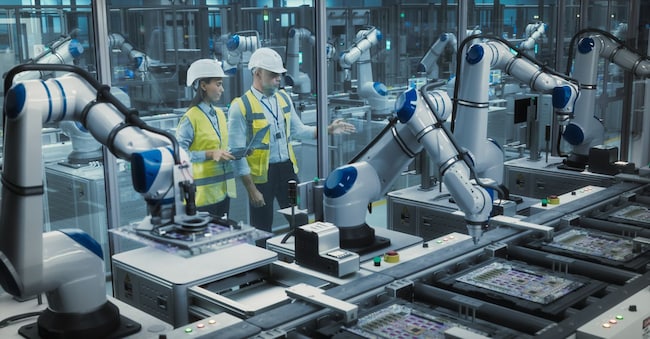
The debate on the effects of artificial intelligence on 'entry-level' roles seems to oscillate between two extremes: on the one hand, the narrative of the substitution of the human by the machine is still topical; on the other hand, the dialectic related to the opportunities inherent to the adoption of this technology is trying to consolidate. The picture, in general, is quite complex. If, on the one hand, there are signs of a contraction in the hiring of junior profiles, on the other, there is evidence that points to a transformation rather than a disappearance (or cancellation) of these figures. This is, in short, the indication that emerges from a research conducted by SAP in collaboration with Wakefield Research on a sample of 100 Chief HR Officers of large international organisations, research that suggests that AI is not making young talent irrelevant, but is drastically impacting on their time of entry into the full operation of an organisation. In fact, the most significant data is the following: for 88% of the CHROs involved in the survey, early-career profiles become productive more quickly, while 79% confirm that AI tools are provided to them already in their first month of employment and 87% expect new hires to be familiar with these technologies from day one or almost. Numbers that reflect an unprecedented acceleration of the initial phase of the job, which changes expectations (in the name of anticipated responsibilities and increased pressure on performance), compresses traditional gradual learning phases and profoundly redefines the very concept of 'entry level'.
The risk of a generational bottleneck
This dynamic is part of a context already marked by a contraction of junior hires observed in several sectors and is inextricably linked to a critical issue in the field of human resources management: if basic activities (historically the entry-level terrain for new graduates) are automated, the temptation for many companies, in the short term, may be to reduce entry-level staff. A choice that risks being short-sighted, however, opening up a structural problem. "Reducing the entry of young talent," explains Pietro Iurato, People & Culture Director of SAP Italia, "does not only mean creating unemployment, but interrupting the pipeline that feeds middle and senior roles in the coming years. It is a strategic risk, as well as a social one'. The crux of the matter, in short, revolves around the role played by the AI, a technology that by definition is capable of accelerating what already exists. The temptation to optimise and increase efficiency in the short term therefore runs the risk of turning into a generational bottleneck, with delayed effects on the quality of skills available in the medium to long term. "Artificial intelligence," reiterates Iurato, "should be an accelerator in a person's growth path, but in order to accelerate, you need a starting point. Without entry opportunities, AI becomes a wall rather than a lever'.
The "AI brain fry" and the compression of experience
If speed is the first element of discontinuity, the second concerns the quality of learning. Generative technology undoubtedly enables young people to produce more sophisticated output from the very first months, but this does not necessarily equate to real growth in their skills. "If we are not careful," this is the warning issued by the SAP manager, "the risk of creating a dangerous illusion exists: young professionals who seem to be at an intermediate level thanks to AI that boosts their productivity, but who in reality have not yet built the experiential base necessary to make performance sustainable and judgement reliable. In essence, rapid onboarding and positive initial results tell us what a person produces, not what they really understand'. It is precisely this, after all, where the 'AI brain fry' phenomenon emerges, i.e. both a cognitive fatigue linked to the need to manage accelerated, AI-driven workflows and to sustain the pace and complexity levels typical of more senior profiles. "When a young person of 23 is asked to perform like a professional of 33 without having accumulated experience, mistakes, relationships with clients and that ability to read the context that develops over time, we are not accelerating development but simulating it. And simulated competence sooner or later gives way under pressure'. The result is a problem that is not only individual but of the entire organisation, which runs the risk of confusing the output produced with the real understanding through very positive performance indicators in the short term (increased thanks to AI) that can however mask fragility in the medium term.
The end of the gavetta (and what replaces it)
Another structural effect of the intensive use of AI among entry-level workers concerns the disappearance, or at least the reduction, of the so-called 'gavetta'. The gradual absorption (by artificial intelligence) of all those repetitive and low-risk activities that traditionally constituted the initial learning ground for young recruits can create a training gap, precisely because the most important transversal skills have always been developed through direct experience, often even by making mistakes. 'When AI comes into play in basic activities,' Iurato points out in this regard, 'it eliminates precisely these learning opportunities, fuelling not only the creation of a skills gap but also the risk of professionals arriving at mid-career without ever having really tackled complexity'. This fear is well-founded, and reinforced by the percentage of Chief HR Officers (38% of the sample) who are concerned that, without adequate training programmes, young people cannot fully develop fundamental skills such as critical thinking, reading the context, and communication and judgement skills. In order to compensate for this gap, according to SAP's Director, professional development paths need to be redesigned, creating what is called 'productive friction', i.e. situations in which junior profiles have to think before relying on AI.
The underlying objective is to transform artificial intelligence from a 'shortcut' to a confrontational tool, keeping the human figure central in the decision-making process and managing an inevitable paradigm shift: no longer learning by accumulation of tasks, but through intentional experience design.

