
Lake Titicaca: a book of history, food and pre-Columbian cultures
On the islands of the Bolivian and Peruvian shores of the lake, people live according to the traditions of the Aymara, Quechua and Tiwanaku civilisations
4' min read
Key points
4' min read
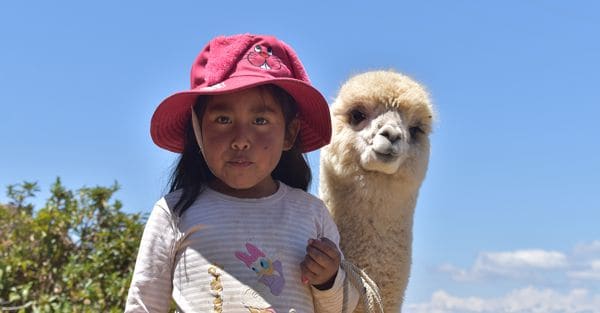
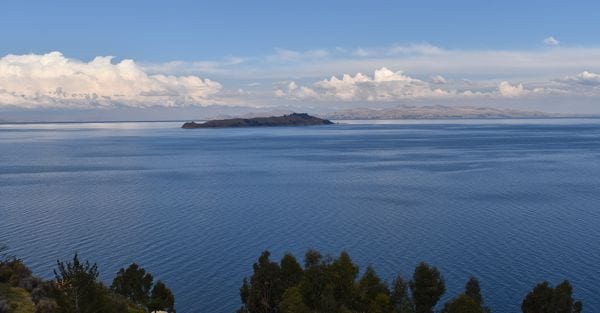
The Sun and Moon dwell up here where there is nothing but light. Even at night. At an altitude of 3,800 metres on Lake Titicaca, the light is almost material, it fills the space so intrusive and unknown. And the Isla del Sol, in the Bolivian part of the lake, is like our own lady of light. It takes about fifteen minutes to get there from the port of Copacabana ('the place to look at the water', in Aymara language) and it feels like being in the middle of the Mediterranean, because Titicaca, as big as Corsica, looks like a sea and embraces Isla del Sol with its eucalyptus trees, three small villages and terraces from the Inca era that are still visible today. To climb to the village of Yumani there are 2.5 kilometres to be tackled slowly: the altitude makes itself felt, Paola and Carla know something about this. Some children come home from school, the colourful women with their llamas head for the fields to sow potatoes (there are 3,000 types, they are grown between 200 and 4,200 metres above sea level and are almost as much an identity as language and traditions) or maize. The silence is total, the blue is comforting and the snow-white Andes are far away. But it is the sun that dominates, perhaps because, according to mythology, the 'stone cat' was born right here, on Titicaca, literally because Titi in the Aymara language means puma/big cat and Caca in Quechua is stone.
Bolivian tradition
.By now, beyond cultivation and weaving, tourism is taking hold: Yumani is a village that develops down towards the sea with small lodges and rented houses. At the entrance to the Posada dell'Inca, in a verdant courtyard decorated with colourful fabrics, Ana offers coca mate as refreshment and invites you to lunch, a delicious peanut soup, preceded by delicious bread flavoured with llajua, the spicy Bolivian sauce that they also eat for breakfast here.
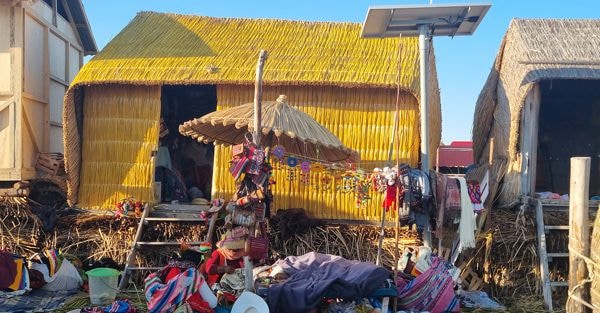
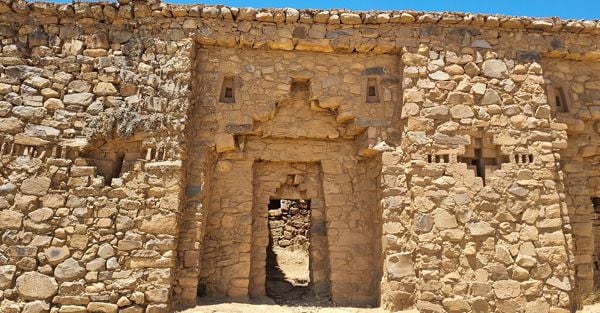
The campesinos work, carrying corn or potatoes on donkeys, the women open their homes to sell ponchos and alpaca scarves. There are also archaeological excavations of interest, but, explains Adamil, 30, a competent guide and a lover of his country, 'the mantra of the extreme left in government that preaches "Bolivia to Bolivians" means that it is the local people who have to take care of such fragile and important places, and who usually have no scientific skills to do so'. The paths that innervate the Isla del Sol are many, you just have to get lost, then, as evening falls, the sunset, seen from the Mirador Palla Khasa at 4,100 metres, is a bath of red, with the Andes closing this ancient circle. And the night that falls is still a wonder: it is cold and the moon shines like never before. From the Isla del Sol, you can also aim for an excursion to the Isla de la Luna. The Escalera del Inca, 200 metres of difference in height in one kilometre, and the lungs protest a little, leads to the small harbour from which to depart. In about twenty minutes by speedboat you arrive. It is the big blue all around. Everything is minimal, 27 families with a total of 200 inhabitants, a small dock, a great energy perhaps emanating from the Moon itself: according to legend, from this island, Viracocha, one of the main Inca divinities, ordered the Moon to rise into the sky. Among the paths, a few women selling their wool, llamas and alpacas free to graze on what little grass there is. The day's destination is the remains of Ajlla Wasi, the Temple of the Virgins, a place of prayer dedicated to the Virgins of the Sun and probably built by the pre-Columbian Tiwanaku civilisation. The building is imposing, with its rooms, stones bound by mud and dating from 1200-1300. Above all, the Chakana returns, the Andean cross with the circle of life in the centre, which was used as a calendar before the Incas adopted it as a representation of their world, made up of three levels: the world below, personified by the serpent, this world (puma) and the world above, that of the Sun, Moon and stars, represented by the condor.
Down Machu Picchu
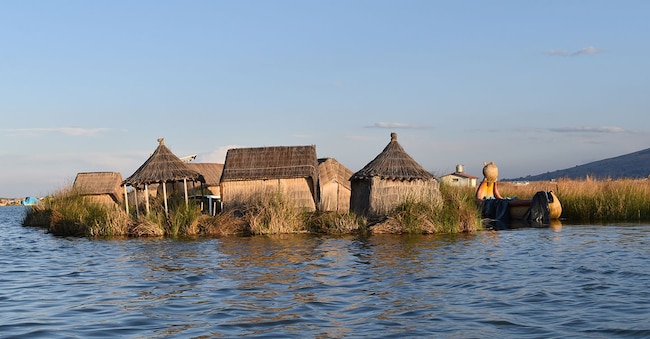
.The ancient peoples and their traditions are still here, the heritage of all. Think that the fields on the lake are worked with ploughs pulled by oxen. Also on Lake Titicaca, the Peruvian shore this time, the Uros Islands, now home to around 3,000 people, are a centuries-old legacy. Even today, the inhabitants, mostly Aymara, build everything with totòra, reeds that grow in the shallow waters of the lake. The islands are formed by the many layers of totòra, and it is an essential way of life: 'We eat the totòra and the trout from the lake,' says Sofia. 'Our children go to school every day in Puno on the totòra boats and, for a few years now, we also have wifi. It all sounds easy, but it isn't. Perhaps the lesson is to be content and adapt.
From Lake Titicaca, you can head north and explore the sacred valley of the Incas to get to Machu Picchu or, south, to Bolivia, to La Paz or, even better, to the Salar de Uyuni, the world's largest salt expanse. Everything is white, the sun is blinding, it feels like walking on water. One is lost in the light, without points of reference, except for the memory of Inca wisdom: 'Sumach camagna', they used to repeat, that is, living well, living together helping each other. Up here, everything is clearer.


