
Language games and everyday logic
What happens when the words we use do not conform to absolute logic, but rather to the flow of everyday life? My philosophical reflection revolves around the fine line between ‘chance and rule’ – one of the central themes of the forthcoming edition of the Festival dei Sensi

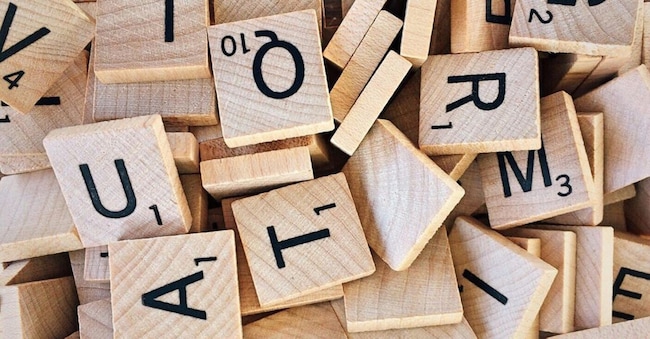
What happens when the words we use do not conform to absolute logic, but rather to the flow of everyday life? My philosophical reflection revolves around the fine line between ‘chance and rule’ – one of the guiding themes of the upcoming edition of the Festival dei Sensi. A journey that takes its cue from one of the greatest thinkers of the twentieth century: Ludwig Wittgenstein. In his *Philosophical Investigations* (published posthumously in 1953), the Austrian philosopher put forward a revolutionary ‘theory of meaning’, distancing himself from his own earlier theories set out in the *Tractatus* (1921). This theory centres on the idea that ‘meaning depends on use’. It is a phrase that is as frequently quoted as it is essentially obscure. Broadly speaking, it is intended to assert that there are no absolute meanings inherent within each of us, independent of the community to which we belong, and that, instead, meaning derives from the context in which we find ourselves and from the relationships we have with others. In essence, any expression only makes sense if it is successful within the relevant community. Precisely for this reason, Wittgenstein invites us to ‘follow a rule’. But he offers no suggestion as to which rule we should follow. At first glance, it might seem that we are only following the right rule once the ‘facts are on the table’. If that were the case, it would be circumstances alone that determined whether our words made sense or not, and Wittgenstein would be a sceptic through and through. But that is not how things stand. To realise this, we must go back to 1929, when the philosopher returned to Cambridge determined to resume his philosophical work. In his first book, the *Tractatus*, he had argued that there was a single language – that of logic – capable of reflecting reality. Over time, however, he came to realise that this view was a metaphysical illusion. Real life requires different tools: there is not just one language, but many different languages, each suited to specific needs and situations. At this point, the philosopher also dismantles the idea that understanding depends on special operations taking place in the mind: for him, this is an illusion, due to a ‘mystifying use of language’. This mystification stems from the belief that there is a correspondence between words, sounds, signs and objects on the one hand, and our way of thinking within mental processes on the other. Precisely for this reason, there cannot be a ‘private language’ that speaks solely of our inner experience. And words, sounds, signs and objects must play a specific role within a codified language. In essence, any utterance can be judged correct only if measured against a standard external to our mind: in the case of language, this standard is simply dictated by the usage (shared common sense) we employ in everyday life. In the absence of an absolute or metaphysical point of reference, the meaning of a sentence (but also of a gesture or a sound) arises from its connection with something else: the social context and the network of relationships that form a community. This is what Wittgenstein calls a ‘language game’, a practice embedded in a specific way of life. Perhaps it is worth reflecting on the fact that the shift between the early and late Wittgenstein consists in shifting the locus where an expression is appropriately applied. In the *Tractatus*, the context in question coincides with the ability to determine the truth-conditions of expressions. Over time, however, Wittgenstein became convinced that the rules of logic – on which these conditions depend – are not grounded in reality. The central idea of the *Tractatus*, namely that the world is the logical space of facts, thus falls away. In the *Philosophical Investigations*, this very context expands, so to speak, and we move from the primacy of logic in the *Tractatus* to the contribution that certain expressions can make from the perspective of life as a whole and of the community to which we belong. From this perspective, understanding and using language well resembles ‘following a rule’, that is, mastering a way of doing things or, if you like, a technique, in a manner here evidently similar to what Foucault would argue a generation later. A language game makes sense when its participants are able to master this kind of technique appropriately. In this way, the central thesis of the later Wittgenstein does not amount to mere relativism, because there must be a criterion by which we can determine whether or not we are participating correctly in a language game. Indeed, there has been talk in this regard of the ability to ‘follow a rule’, an expression which seems to carry a normative value. And it is precisely this value that prevents us from thinking of the Wittgenstein of the *Tractatus* as a sceptic or a pure relativist. Therefore, following a rule is different from relying on chance.
From 26 to 29 August 2026, the Festival dei Sensi returns – a series of events in the Itria Valley, spanning Martina Franca, Cisternino and Fasano. The theme chosen for this edition is ‘Play’, understood not merely as recreation, but as a valuable tool for learning, a reflection of real life and a training ground for rules, freedom and emotions. Over four days packed with talks, philosophers, economists, ethologists, architects and artists will explore the infinite and unimaginable facets that link the world of play to our everyday lives.
The debate will be enriched by a discussion on the tense relationship between order and chaos, featuring the philosopher Sebastiano Maffettone.

