
L'Aquila is the Italian Capital of Culture 2026
It was proclaimed by the Minister of Culture, Gennaro Sangiuliano

2' min read
2' min read
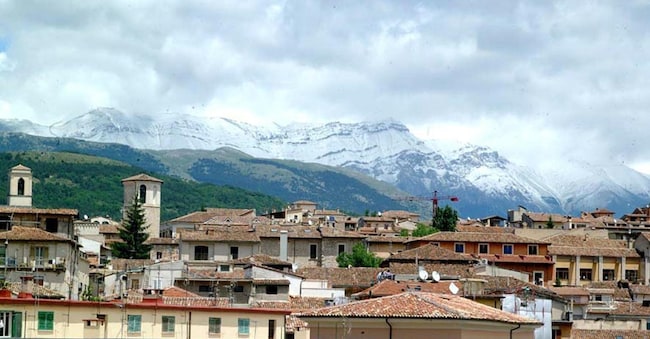
L'Aquila is the Italian Capital of Culture 2026. It was proclaimed by the Minister of Culture, Gennaro Sangiuliano, during the ceremony held in Rome, in the Ministry's Sala Spadolini, in the presence of the jury chaired by Davide Maria Desario and comprising Virginia Lozito, Luisa Piacentini, Andrea Prencipe, Andrea Rebaglio, Daniela Tisi, Isabella Valente, and representatives of all 10 finalist cities: Agnone (Isernia), Alba (Cuneo), Gaeta (Latina), L'Aquila, Latina, Lucera (Foggia), Maratea (Potenza), Rimini, Treviso, Unione dei Comuni Valdichiana Senese (Siena).
"I was almost physically sorry to have to award only one city, however L'Aquila is a city rich in history and identity and certainly deserves to be capital of culture. I would have liked to give this award to all the cities that were candidates, unfortunately this was not possible. We will now study a way to involve them at this time'. So says Culture Minister Gennaro Sangiuliano, speaking to journalists at the end of the proclamation. A decision taken unanimously by the commission that evaluated the projects presented by 10 finalist cities. "The characteristic of which our nation should be proud is that in Italy we do not have just one or two iconic cities but we have at least 80-90 cities, each of which tells a story and an identity," he added. A characteristic of Italy 'that we have a duty to preserve and present to the whole world'. L'Aquila 'has a great historical tradition, I believe that its project will then expand to the whole of Abruzzo, we are talking about the region that gave birth to Benedetto Croce, born in Pescasseroli, or the Spaventa brothers, born in Bomba (Chieti)'. L'Aquila 'is a city that has many cultural values to express and this is an opportunity to make them known'. Asked whether this is also an opportunity to heal the wounds of the earthquake, Sangiuliano replied: 'I do not know whether the commission, which is absolutely autonomous and independent of me, has made such a reasoning. It may be that, as in the case of the direct assignment to Bergamo and Brescia, which had suffered so much from the covid, the commission also considered the conclusion of those wounds, the need to look ahead'.

