Health

Large burns, state-of-the-art treatment in a few EU countries: others lag behind

While in Austria, Italy and Spain the major burns networks guarantee specialised care and low mortality rates, in many European countries patients continue to be transferred abroad for lack of adequate facilities and trained personnel

by Silvia Martelli

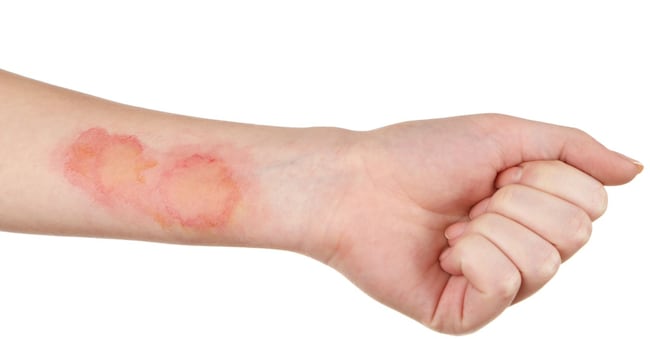
Horrible burns on female hand isolated on white

5' min read

Translated by AI
Versione italiana

5' min read

Translated by AI
Versione italiana

Ten years after the Colectiv club fire in Bucharest, which killed 65 people on 30 October 2015 and left an indelible mark on the country's collective memory, Romania still does not have a fully operational centre for the treatment of the severely burned. It is a delay that weighs not only in symbolic but also in practical terms: every year, around 10 thousand people present themselves in the country's emergency rooms with burns of varying severity, 4 thousand are hospitalised, and around 1,500 require complex and prolonged treatment.

The trauma of Colectiv and the trail of errors

On the night of 30 October 2015, 26 people died inside the Colectiv club, one during transport to hospital and 38 more in the following days and weeks. The authorities assured at the time that they had 'everything they needed' to treat the injured, but the reality of the hospital wards quickly belied the official statements. There was a lack of intensive care beds, equipment, expertise, and above all, adequate hygienic conditions.

Loading...

Of the 33 initial survivors who died in the following months, 23 were found to have multi-resistant nosocomial infections (infections acquired during hospital stay, caused by bacteria resistant to the most common antibiotics). It is a detail that, more than any other, sums up the distance between political rhetoric and the country's health reality.

Ten years later, little seems to have changed. In the summer of 2025, a young woman with burns over 70% of her body, hospitalised for 53 days in the only centre formally authorised to treat large burns - that of the Floreasca hospital in Bucharest - was transferred to Belgium. There, doctors at the Charleroi centre discovered that the patient was infected with Candida auris, a highly resistant hospital fungus, described by Belgian doctors as 'the plague'. The incident prompted the new Minister of Health, Alexandru Rogobete, to close the centre and order its restructuring, downgrading it to a unit for medium-severe burns.

Ten years of promises and construction sites

The construction of real large burn centres in Romania was announced back in 2014, a year before Colectiv. Four specialised hospitals were planned: two in Bucharest, one in Timișoara and one in Târgu Mureș. For almost seven years, nothing moved. It was only in 2022, thanks to a World Bank loan, that work started again. Today, three centres are under construction - in Timișoara, Târgu Mureș and Bucharest (the latter dedicated to children).

Minister Rogobete claims that, once completed, Romania will be able to 'reduce patient transfers abroad by 95 per cent'. But even here, experts remain cautious. Monica Althamer, former Undersecretary for Health and one of the most heard voices among the Colectiv survivors, said that 'Romania will never have enough beds for the number of burn victims it produces each year'. For Althamer, the problem is not just infrastructure: 'We need to invest in prevention, public education and training of doctors. Every year we have cases of teenagers being electrocuted on trains for a photo or video. It is a cultural failure, not just a health failure'.

A two-speed Europe

Looking beyond Romania's borders, the contrast is obvious. In Austria, the main centre for severe burns is located at the Vienna General Hospital (AKH), one of the most advanced facilities in Europe. Here, a six-bed intensive care unit is dedicated exclusively to serious burn patients, and the country also has a network of specialised wards in Graz and Innsbruck. There are no cases of Austrian patients being transferred abroad; on the contrary, Austria receives patients from other countries, as was the case after the fire in Skopje in March 2025, when six injured people were treated between Vienna and Graz.

In Croatia, the situation is similar. The most serious cases are treated in Zagreb, in the KBC Sestre milosrdnice hospital, where a tissue bank capable of cultivating human skin, a unique resource in the Balkans, is in operation. The experience stems from the 2007 Kornati tragedy, in which twelve firefighters died. Children with severe burns are also treated nationwide, in highly specialised paediatric wards.

Bulgaria, on the other hand, has a referral centre in Sofia, in the 'Pirogov' hospital complex, which treats over 3,000 patients a year. The department includes 30 beds for adults, 15 for children, dedicated operating theatres and a multidisciplinary team of 127 people. Again, the most serious burns remain in the country and are managed internally; indeed, Bulgaria has taken in several injured people from the fire in Kochani, North Macedonia. According to Professor Maya Argirova, head of the department, 'in burns involving more than 20-30% of the body, almost all patients develop bacterial infections, but the use of modern antiseptics and silver dressings reduces the risks and pain'.

In Italy, the network is among the most comprehensive in Europe: seventeen regional hospitals host dedicated units, with a total of 162 beds - 149 for adults and 13 for children. The facilities are evenly distributed from Turin to Palermo, and the mortality rate for serious burns stands at 5.3%. There are no reported scandals related to nosocomial infections and, in case of emergencies, Italian facilities have also taken in foreign patients, such as Ukrainians and Albanians. However, the Italian Burns Society (SIUST) has warned that, in the event of a mass casualty accident with 35 serious burns, only six intensive care places would be immediately available throughout Italy: the system works, but remains fragile in the face of large-scale catastrophes.

In Greece, the system is more uneven. There are four active units, but the best equipped are in Athens (G. Gennimatas Hospital) and Thessaloniki (G. Papanikolaou). The 2018 fire in Mati, which caused 104 deaths, 17 of them from burns, revealed the shortcomings of the system: not so much in the immediate clinical response, but in the lack of a national strategy for the management of large burns. From that tragedy, the SALVIA association was born, which promoted the creation of a National Burn Register and a Prevention Day. Despite the progress, the National Action Plan has not been formally adopted.

Spain, on the other hand, represents an established model. According to a report by the Fundación Mapfre, more than 1,300 hospitalisations for burns - about three to four per day - and between 50 and 80 deaths occur every year. The national health system has seven reference centres for critical cases, located in all major metropolitan areas: Barcelona, Madrid, Seville, Valencia, A Coruña and Zaragoza. To these are added specialised departments in other cities, such as Bilbao and Alicante, which ensure homogeneous coverage.

Romanian agreements with other countries

In the European landscape, Romania remains a negative exception. After Colectiv, the country established in 2019 a mechanism for transferring serious patients abroad, through agreements with Belgium, Germany and Austria. Since then, one hundred Romanians with extensive burns have been treated outside the country's borders. This is a bitter paradox for a European Union member country, where access to treatment should be guaranteed internally.

In the meantime, the Floreasca centre, which had been classified as 'major burns' in 2022, was closed after the Candida auris case. Romania, therefore, finds itself in 2025 in the same position as ten years ago: without adequate facilities, with trained but not yet operational staff, and with political promises cyclically repeated.

As Minister Rogobete himself admitted: "There is no justification for the delay. For too long we have only been talking."

*This article is part of the European collaborative journalism project "Pulse" and was contributed by Kim Son Hoang (Der Standard, Austria), Marina Kelava (H-Alter.org, Croatia), Martina Bozukova (Mediapool.bg, Bulgaria), Kostas Zafeiropoulos (EfSyn, Greece), Laura Camacho (El Confidencial, Spain) and Alina Neagu (HotNews, Romania).

Copyright reserved ©
Loading...

Brand connect

Loading...

Newsletter

Notizie e approfondimenti sugli avvenimenti politici, economici e finanziari.

Iscriviti