
Last Supermoon of 2025 visible on 4 December: here's how to observe it
The last Supermoon of 2025, known as the Cold Moon, will be particularly visible and bright due to its elliptical orbit and elevated position in the winter sky

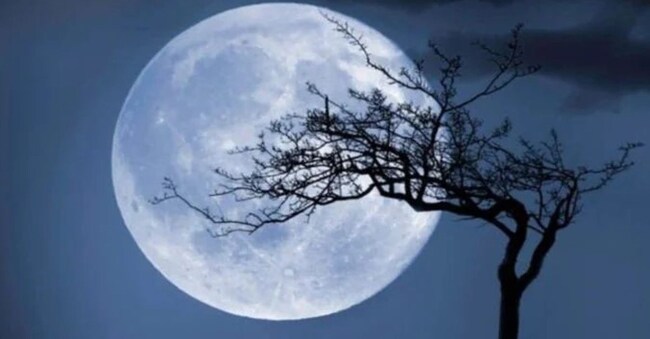
This is it: on Thursday, 4 December, we will be able to enjoy the last Supermoon of 2025, the full moon of the cold weather, given the season in which it appears in America and also by us. The idea of differentially naming the full moons of a lunar year, which may be 12 or 13, is American, a usage related to the original civilisation of the US, which had basically peasant roots three centuries ago. The cold Moon will become completely full on 4 December, will also be quite large compared to the others of the year, and will have an additional peculiarity: it will arrive very high up in its trajectory.
Between the fact that these nights are some of the longest of the year, after Christmas they will pick up again, plus the Moon will be very high in the sky, well let's just say it's a chance to see it, even if it's cold and you risk freezing, from the Latin stare ad sidera, under the stars, to translate very loosely but usefully.
But why is it now universally called the Supermoon? Our natural satellite orbits us, always showing us the same face due to an effect known in celestial mechanics as 'spin-orbit coupling', basically while it spins around its axis it also spins around our planet, so that we always see the same face, roughly speaking. Better to specify this because we often hear, or worse read, that it is because the Moon does not spin around itself.
To repeat, our satellite has an orbit around us that is not circular, but slightly elliptical, so it is sometimes closer to us, sometimes further away. In the two positions its apparent size in the sky is obviously different, though not too much, a ten per cent difference, and when the full Moon occurs, as in a couple of days' time, with the Moon closer to us, perigee, then we have a Supermoon, larger and, necessarily, also brighter.
Since it is getting dark early, there is no need to stay up at midnight or later, in fact it is better to watch it as it rises, because it will seem even bigger to us due to a perception effect and, if the sky is clear, even clearer, almost blue.


