Latin American Art: Structural Growth between Market and Institutions
From the Venice Biennale to SP-Arte to the new generation of the 1990s: an increasingly global and layered scene

Key points
In recent years, the Latin American contemporary art market has consolidated an increasingly significant presence within the global system. Between 2024 and 2026, a structural growth can be observed, supported by an increased international visibility, a renewed institutional interest and an artistic production capable of intercepting some of the most pressing issues of the present, such as identity, ecology, memory and post-colonialism.
This development is, however, part of a more cautious global context, marked by a settling phase after the post-pandemic expansion. The international market, while showing signs of recovery, now appears less prone to speculation and more oriented towards established artists or practices supported by strong curatorial legitimacy. Within this framework, Latin American art stands out for a growth that is more qualitative than purely economic, which is reflected not only in the market but also in the main institutional platforms.
Latin American artists in the lagoon
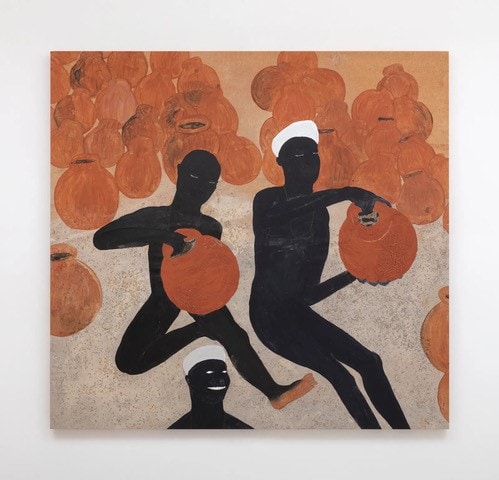
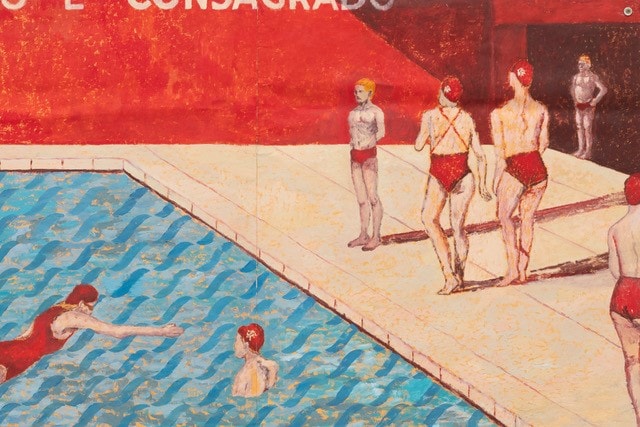
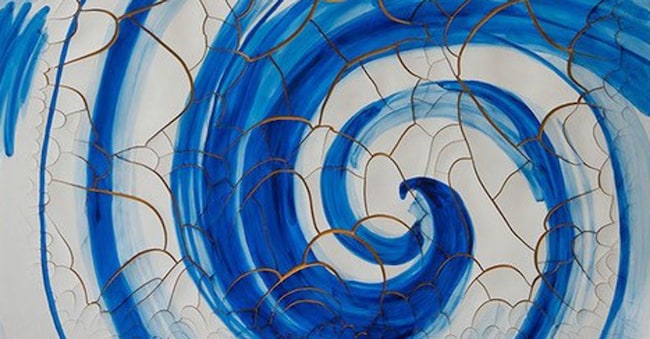
The Venice Biennale 2026, for example, features several artists from Latin America and its diasporas starting with Rosanna Paulino (1967) and Adriana Varejão (Rio de Janeiro, 1964) who represent Brazil in Venice. Both in the galleries of important international galleries present their project, 'Comigo Ninguém Pode' ('With me no one can'), which explores colonial wounds and resilience, using the toxic plant Dieffenbachia as a metaphor for beauty and ambiguity. Paulino, already present in 2022 in the exhibition 'The Milk of Dreams', in his work embraces numerous fields such as drawing, embroidery, engraving, sculpture to explore the history of racial violence and the persistent legacy of slavery in Brazil. Adriana Varejao, known for her "Azulejos", blue and white tiles symbolising the Portuguese presence in Brazil, uses them to reflect on the cultural hybridisation, often forced, that took place during colonisation (auction prices between $200,000 and $900,000, the work "Macau Wall (Blue)" sold for $845,000).
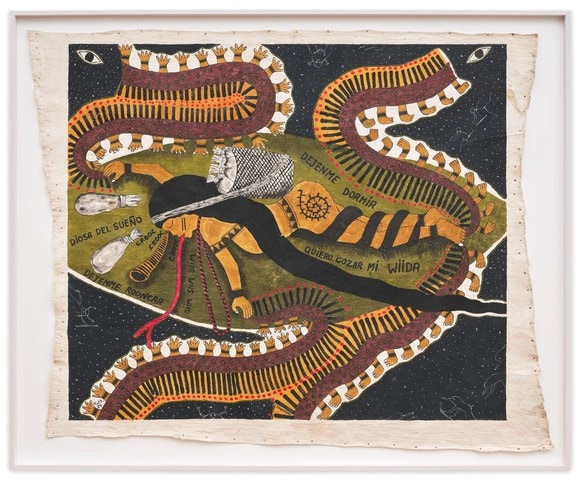
In the main exhibition "In Minor Keys" we find Ayrson Heráclito, born in 1968 (prices from $7,000 for photographs from Simões de Assis Art Gallery, Curitiba, Brazil) a Bahian artist whose work is deeply rooted in Afro-Brazilian culture and its sacred elements,Carolina Caycedo (1978) of Colombian origin (from Istituto de Vision, Bogota, $43,000 textile works) whose works intertwine environmental and social dimensions, contributing to the construction of a historical and ecological memory, and the Venezuelan Alvaro Barrington, presences that confirm the increasingly central role of the region in the global contemporary discourse.
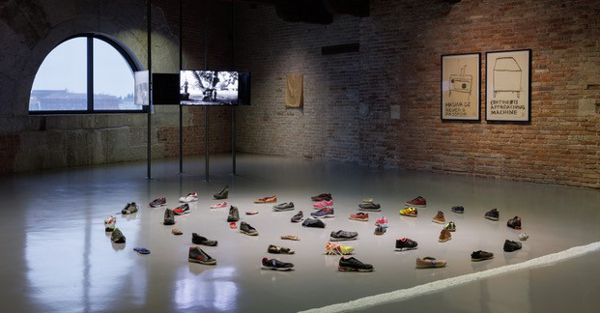
Also in Venice, the exhibition "Algebra" at the Pinault Collection at Punta della Dogana the solo show of Brazilian artist Paulo Nazareth retraces his practice based on travel, encounter and direct experience of territories. Crossing the Americas and Africa for years along the routes of migrants and diasporic communities, the artist has transformed displacement into an instrument of research and testimony, collecting stories and memories that flow into his works. The artist is strongly supported by international institutions and galleries, and his works range from thousands of euros for works on paper to significantly higher figures for installations and complex works.