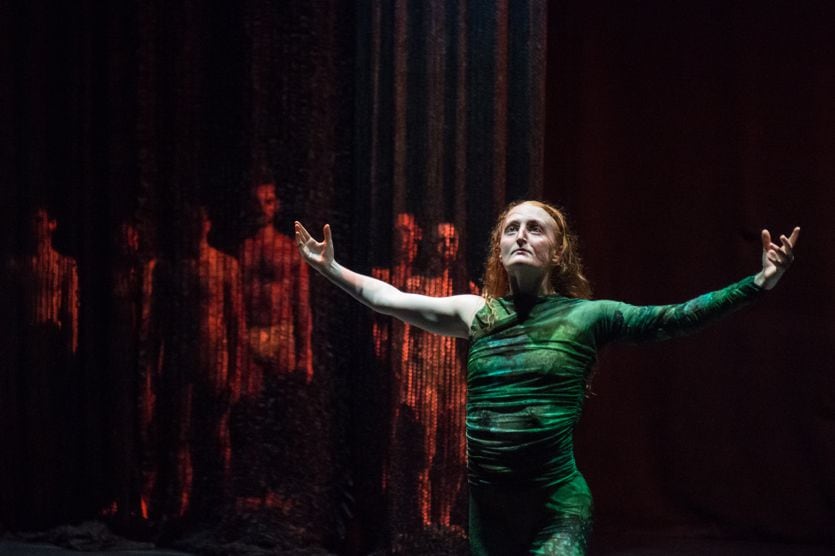
L.A.V.A., the telluric force of an ancestral dance
The show will be performed at the Teatro delle Muse in Ancona on 12 December and at the Teatro Massimo in Cagliari on 19 and 20 December

It is not often that we come across dance performances that can be likened to an earthquake. And yet the metaphor of an earthquake or a volcanic eruption lends itself well to describing the tremors and chaotic rhythms of certain vigorous dances of Dionysian origin, from which all the expressionist modernism of the twentieth century derives.
Even less predictable is that two choreographers should decide to draw inspiration from volcanic eruptions to create a performance which, taking its cue from the ever-changing form of lava, explores the very nature of dance and the possibility that different elements might collide to generate new forms, just as incandescent magma does when it cools after engulfing everything in its path.
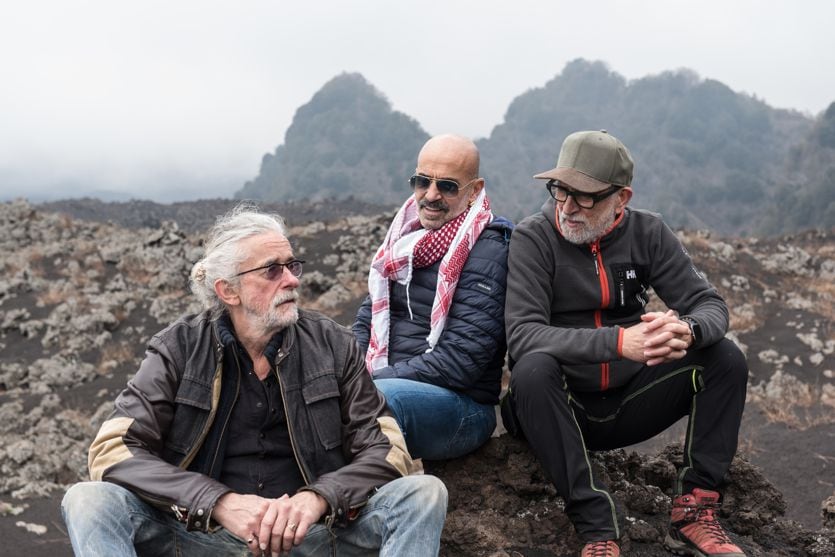
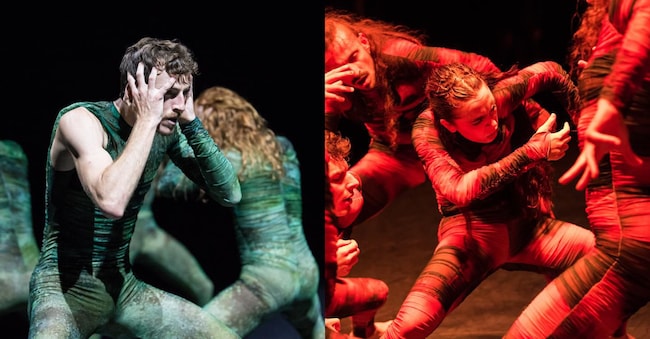
The two choreographers are Emio Greco, originally from Brindisi and a long-time resident of Amsterdam, where he co-directs the ICK Dans Company with Pieter C. Scholten, and Roberto Zappalà, who runs the company bearing his name in Catania. Their production L.A.V.A. (an acronym for struggle, aversion, void and abstraction), conceived together with Scholten, stems from the confrontation between ten dancers from the two companies – five per group – distinguished by tight-fitting leotards in different colours: red for one group, turquoise-green for the other.
Julidans Festival in Amsterdam
Following its summer debut at the Julidans Festival in Amsterdam and the subsequent tour of the Netherlands, the show recently had its national premiere at the Teatro Stabile in Catania – which is co-producing it – before embarking on a tour that will see it perform, amongst other venues, at the Teatro delle Muse in Ancona on 12 December and at the Teatro Massimo in Cagliari on 19 and 20 December.
Struggle, aversion, emptiness and abstraction define some of the situations the dancers find themselves facing in this experiment, which brings together two different yet complementary choreographic styles: Zappalà’s is more turbulent and metamorphic, whilst Greco’s is more composed and abstract. Yet it is precisely from the collision and dialectic between these two forms that an unexpected common denominator emerges: the shared aim of harnessing the telluric force of an ancestral dance which, like a driving force, erupts violently only to coalesce, like lava, into new and calmer forms. The two groups face each other, brush past one another, and finally interact, forming a single, homogeneous mass.