
Lavrov in the Sahel; Putin invites the coup leaders to the Moscow summit
The Russian Foreign Minister has stopped off in Niamey as part of his tour of Africa, ‘conveying’ the Kremlin’s invitation to the summit in Moscow in October
from our correspondent Alberto Magnani
 Aggiungi Il Sole 24 Ore
ai preferiti su Google
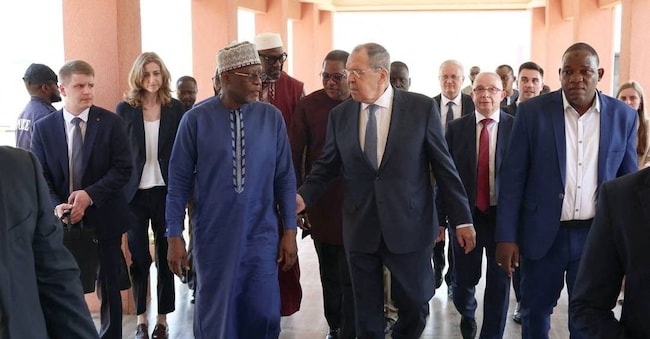
NAIROBI – Russian Foreign Minister Sergey Lavrov met his counterparts from the military juntas of Burkina Faso, Mali and Niger in Niamey, ‘conveying’ Vladimir Putin’s invitation for the three countries to attend the Africa-Russia summit in October. “President Putin [...] asked me to convey to your leaders that he would be very pleased to see the presidents of Burkina Faso, Mali and Niger at this summit,” said Lavrov, who also expressed the hope that his foreign minister counterparts would attend.
The invitation, reported by the TASS news agency, came during the second leg of Lavrov’s new tour of a continent that is crucial to the Kremlin’s strategies. The diplomatic mission began in Addis Ababa, with a face-to-face meeting between Lavrov himself and the President of the African Union, Mahamoud Ali Youssouf, followed by a series of bilateral meetings with Ethiopian companies in the mining and metallurgy sectors. On Wednesday 8 July, the tour moved on to the Nigerien capital for a meeting with the ministers of the three governments, now united within the Alliance of Sahel States: an economic and military alliance intended to result in an autonomous anti-jihadist force of over 6,000 troops – the very rationale behind the successive coups in Mali (2020, 2021), Burkina Faso (two in 2022) and Niger (2023).
The alliance with Moscow and the fragility of the juntas
Moscow is linked to the three juntas by a web of economic and security ties, channelled, in part, through agreements between the military governments and Africa Corps: the group of contractors that has taken over the operations of the former Wagner military company, coming under the direct control of the Russian Ministry of Defence. Lavrov’s visit to the Sahel marks the minister’s first trip to Niamey and reaffirms Russia’s desire to ‘strengthen relations at a difficult time for the juntas’, explains Federica Saini Fasanotti of the ISPI think tank. The three governments came to power with the aim of eradicating the jihadist violence that has been raging for years in the Sahel, severing ties with their former French and Western partners and turning to other actors such as Russia.
The results so far have been unfavourable to their efforts, against a backdrop of instability that has culminated in stinging defeats for the reputation and stability of the local councils. In 2025, the Sahel was once again the epicentre of half of the deaths from terrorist attacks estimated by the Institute for Economics and Peace, against a backdrop of an escalating number of high-impact attacks, including in recent weeks. On 25 April, jihadists from the Group for the Support of Islam and Muslims (JNIM) launched a joint attack alongside Tuareg rebels in various parts of the country, dealing an unprecedented blow to the security forces and their Russian allies. In June, JNIM itself claimed responsibility for an attack on Niamey airport.


