
Lawns and pedestrian paths, 80 million euro maxi-project for the new judicial citadel in Rome
The redevelopment of the Piazzale Clodio area was presented at the Region's headquarters with Rocca, Nordio and Gualtieri. Fears for the fate of the Via Teulada park, "the last meadow of Prati"
4' min read
Key points
4' min read
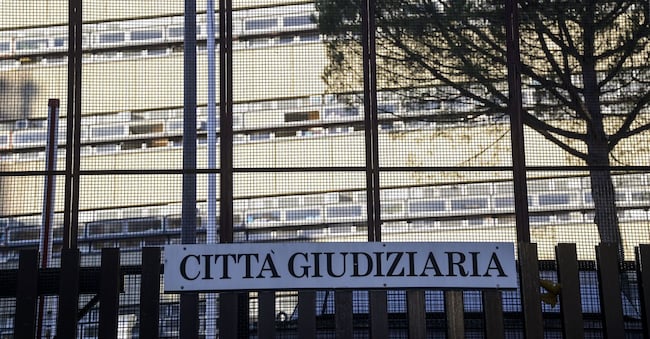
A new building with a maximum height of 24 metres, lawns and cycle paths. Rome's judicial citadel in Piazzale Clodio, close to the Monte Mario hill, is to be expanded. Today, the regional decree just signed by the governor Francesco Rocca outlining the path to realise the 80 million euro project by 2029 was presented at the Lazio Region headquarters, in the presence of the Minister of Justice, Carlo Nordio, the undersecretary for Infrastructure, Tullio Ferrante, and the mayor of the capital, Roberto Gualtieri.
International design competition launched
The measure follows up on the memorandum of understanding signed at the Lazio Regional Council on 10 July last (vice premier and minister Matteo Salvini was also present at the time), which sanctioned the inter-institutional agreement for the redevelopment of the entire area adjoining Piazzale Clodio and the construction of a new citadel building in the Prati district that houses the criminal court, setting up an ad hoc technical panel. The project goes back a long way: it dates back to on 16 May 2019 (yellow-green era in the national government and pentastellata era in the city council) the first agreement on the matter between the Justice Department, the Region and Roma Capitale. The intervention - 24,400 square metres of new building between the current parking area and the green area known as the 'pratone' of via Teulada - will be carried out through an international design competition to be announced by July and aims to modernise the entire quadrant.
Nordio: 'Positive model of synergy between institutions'
The Guardasigilli wanted to emphasise the "synergy and convergence" between the administrations that had made it possible to unblock the initiative, which was also aimed at making justice more efficient. "This is good news," Nordio emphasised, at a time when it is precisely on justice that there are no-holds-barred struggles, as demonstrated by immigration.
The new building and the increase in greenery
.The additional building to the three existing bodies, built in a rectangle based in the area where there is now a car park and intended to house the judicial offices and services such as a canteen, bar and nursery school, may not exceed 24 metres in height and must harmonise with the context. According to the indications shared by the administrations, it will have to be built without new land consumption and using as little land as possible that is currently permeable, i.e. capable of absorbing rainwater, and as much land as possible that is already environmentally compromised. All this while also providing for an increase in green areas, with the redevelopment and de-paving of part of the Piazzale Clodio area. "There was a pact made with the citizens of Rome," Rocca recalled, "so that there would be due attention to the priority need for the administration of justice, but also to that of environmental sustainability. My pride is that the decree I signed this morning sanctions this pact: not a single square metre of green will be consumed'.
The redevelopment of the via Teulada meadow
The building is to be integrated with the construction of the so-called "Porta del Parco", i.e. with the complete redevelopment and restoration of the green area of the "pratone", the vast zone between the judicial city and Monte Mario. The intention is to turn it into the gateway to the park of the same name, with a pedestrian path inside it. On the hill, the Lazio Region and Roma Capitale will plan a series of interventions for the restoration of the vegetation affected by the incendio of July 2024. Also under consideration is the possibility of constructing a protected bicycle and pedestrian path that could connect to the Lungotevere cycle path, creating a single route up to Ponte Milvio and beyond.


