Companies

Lazio: extraordinary measures to tackle the energy cost crisis for households, businesses and the agricultural sector

A package worth around 75 million euros to support those most vulnerable to rising energy costs and at risk of economic and social hardship

5' min read

Translated by AI
Versione italiana

5' min read

Translated by AI
Versione italiana

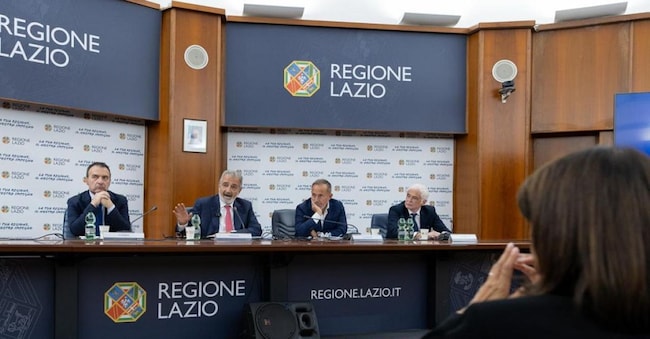
New extraordinary measures to support households – which are most vulnerable to rising energy costs – as well as agricultural businesses and production chains. The Lazio Region has launched a €75 million plan. In particular, a scheme to tackle rising energy costs, aimed at reducing the impact of energy bills on households and those in the most vulnerable circumstances, with a total budget of around 20 million euros. A further €55 million or so is earmarked to support the agricultural sector and regional production chains. Of this, 10 million will be used to limit the impact of fuel costs on business expenses and to ensure the continuity of agricultural operations. As regards specific production sectors, a large proportion of the resources will go towards the integrated production of vines, hazelnuts and olives.

“We have carried out a very thorough review of the budgets. We intend to take action with all the resources at our disposal,” commented Francesco Rocca, President of the Lazio Region. “This is an issue we will continue to monitor very closely. We are not stopping there; we are already working on drafting a 2027 Budget Bill that will strengthen and stabilise support for the most vulnerable people.”

Loading...

Support for families

The regional plan allocates 20 million euros to support vulnerable domestic households within the region. Specifically, the target group comprises domestic account holders who are in vulnerable circumstances, including:

• people aged over 75;

• individuals and households in financially disadvantaged circumstances;

• people with a recognised disability under Article 3 of Law No. 104 of 5 February 1992;

• further categories of individuals classified as vulnerable under national legislation and sector-specific regulations.

Support measures for agricultural businesses and production chains

The rise in the cost of energy, fuel and raw materials has hit the agricultural sector and the agri-food supply chains in Lazio particularly hard, reducing the profit margins of local businesses. The Region has decided to implement a comprehensive plan of measures to support the sector.

Loading...

Tackling high agricultural fuel prices: 10 million euros. The aim is to limit the impact of fuel costs on farm expenditure and to support the continuity of operations. The preliminary assessment will determine a grant commensurate with eligible and documented agricultural consumption. The reference period, ceilings, checks and compatibility with other support schemes will be established. The measure does not alter the tax regime for agricultural diesel and requires a specific source of funding and a compatible aid scheme. ‘The measure affects over 15,000 farms across the region. In the four-month period from June to September, over 42 million litres of diesel were consumed: the planned subsidy is close to 25 cents per litre and, combined with the national government’s measures and the discounts applied at the pump by oil companies, aims to bring the price of agricultural diesel back below one euro per litre’, said the Regional Councillor for the Budget and Agriculture, Giancarlo Righini. “It is an important measure, much appreciated by farmers and the result of close consultation with trade associations, whose proposals have been incorporated almost in their entirety,” added Righini.

Use of fertilisers: 1.5 million euros. The aim is to recognise the additional costs incurred in using the fertilisers required for agricultural production. Subsequent legislation will enable the implementation of this specific measure within the framework of the EU’s rural development programming documents.

Support for the sheep and goat sector: 2 million euros. The scheme is designed to ensure the financial viability of farms and the continuity of sheep and goat production. The preliminary assessment will identify the critical issues requiring support and the allocation criteria based on verifiable data, such as farm size and production activity.

Support for buffalo milk: 1 million euros. The scheme aims to support buffalo milk production, safeguarding farmers’ incomes and the continuity of the regional supply chain. The preliminary assessment will identify the beneficiaries and the support criteria on the basis of documented production and verified economic difficulties, in accordance with the applicable aid scheme. The arrangements will be coordinated with livestock and animal welfare measures, avoiding double funding of the same costs or commitments.

Integrated production of grapes, hazelnuts and olives: 13 million euros.  The scheme aims to support the continued cultivation of these crops and the continuity of specific regional supply chains.  For vine and hazelnut cultivation, the scheme provides for the allocation of resources to implement measures already in place, whilst for olive cultivation, the scope of the scheme has been extended to include this new crop. ‘We have extended the measures initially envisaged for hazelnuts to include vines and olive trees, thereby involving two further important sectors which have been severely affected in recent years in terms of production volumes,’ explained Councillor Righini.

Support for durum wheat production: 2 million euros. The measure aims to support the continued cultivation of the crop and the continuity of the regional supply chain. The preliminary assessment will propose a support mechanism based on area or other objective parameters compatible with the chosen aid scheme.

Support for the beekeeping sector: 300,000 euros. The aim is to preserve the productive capacity of apiaries and the pollination service. Subsequent regulations will set out the eligible measures, including for farm equipment, technical assistance or hive management, subject to an assessment of needs.

Animal welfare: 25 million euros, relating to measures already planned and currently being implemented. The priority is to ensure the progress of activities and projects, the completion of preliminary investigations and the timely processing of payments.

Diesel and fishing: further measures

The Lazio Region reaffirms its commitment to supporting the fisheries and aquaculture sector. Through the so-called ‘Iran Measure’, which provides support to offset rising fuel costs, 203 claims for compensation totalling over €3.1 million have been received, reflecting the difficulties currently faced by businesses in the sector. The Region is working to significantly increase the available resources, with the aim of raising the budget to over €2.3 million through a reprogramming of European FEAMPA funds, which is currently awaiting approval. The aim is to enable the first compensation payments relating to the period up to August to be made by the end of 2026, and then to complete the payments in 2027, subject to the availability of resources. At the same time, implementation of the regional scheme to support businesses affected by the fishing ban is continuing. In this regard, over 600,000 euros have already been paid out to 181 businesses.

Young people and transport

Among the special measures, for the 2026–2027 academic year, students under the age of 26 in the Lazio Region who hold a Metrebus Lazio Studenti season ticket will be able to travel free of charge, without incurring any additional costs, even on the new Unità di Rete routes. This is provided for in a council resolution approved on the proposal of the Lazio Region’s Councillor for Transport, Fabrizio Ghera. The measure is of an extraordinary, experimental and temporary nature and is intended to support families and students during the phase of adjustment and reorganisation of services following the transition from the previous service structure to the Unità di Rete system. The implementation of this measure, for which the Lazio Region has allocated 3 million euros, does not entail any structural changes to the regional fare system and does not set a precedent for subsequent years, nor does it serve as a basis for determining the historical economic value of travel tickets.

Copyright reserved ©
Loading...

Brand connect

Loading...

Newsletter

Notizie e approfondimenti sugli avvenimenti politici, economici e finanziari.

Iscriviti